
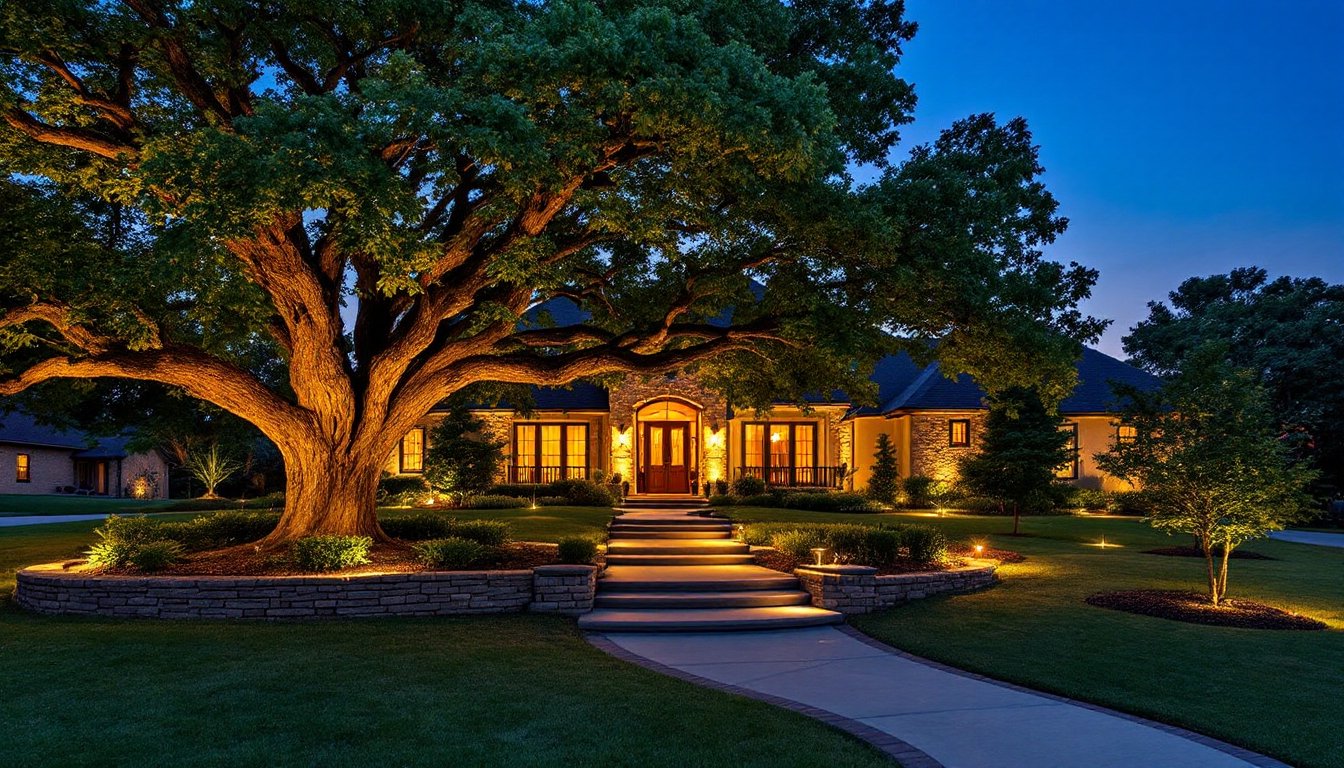

Outdoor spaces deserve the same attention to detail as the inside of a home, and landscape lighting in Tulsa is one of the most effective ways to add curb appeal, security, and usable living space after dark. A well-designed lighting scheme doesn’t just make a property look better: it extends the season and function of patios, decks, and gardens while improving safety and deterring unwanted intrusion. Whether a homeowner wants to highlight architectural features, light a pathway, or create ambient backyard ambiance, the right approach to landscape lighting transforms an ordinary property into something genuinely inviting. This guide covers what Tulsa homeowners need to know about designing, selecting, and installing outdoor lighting that works.
Key Takeaways
- Landscape lighting in Tulsa enhances curb appeal, security, and outdoor functionality while addressing safety concerns during long summer evenings and preventing unwanted intrusion.
- Accent and uplighting highlight architectural features and mature trees, while pathway and step lights provide functional safety—position fixtures 3–5 feet away at 30–45 degree angles for natural-looking illumination.
- Low-voltage LED systems cost $800–$2,000 installed and avoid electrical permits in many cases, making them more affordable than line-voltage systems while lasting 25,000+ hours.
- Choose fixtures with IP65 ratings or higher, stainless steel or powder-coated aluminum construction to resist Tulsa’s humid subtropical climate, extreme temperature swings, and UV degradation.
- Line-voltage hardwired landscape lighting requires a licensed electrician, building permit, and NEC compliance in Tulsa—improper outdoor wiring poses fire and shock hazards.
- Smart landscape lighting controllers enable scheduling and motion sensors for enhanced security, while photocells automatically activate fixtures at dusk without ongoing homeowner management.
Why Landscape Lighting Matters For Your Tulsa Home
Landscape lighting isn’t a luxury, it’s a practical investment that addresses three core needs: aesthetics, safety, and security. A lit pathway or deck railing prevents trips and falls in darkness, especially valuable during Tulsa’s long summer evenings when families use outdoor spaces late into the night. Good lighting also discourages trespassing and makes it harder for burglars to approach a home undetected.
From a design perspective, strategic lighting brings architectural details into focus, stone facades, mature trees, water features, and hardscaping all gain visual interest under thoughtful illumination. Unlike interior lighting, outdoor systems face weather exposure, extreme temperature swings (Tulsa summers reach into the 90s, winters occasionally drop below freezing), and significant UV degradation. This means choosing fixtures and electrical systems rated for outdoor duty is essential.
Tulsa’s humid subtropical climate also means fixtures need proper drainage and corrosion-resistant materials. Homeowners who invest in quality landscape lighting often see improved property value and significantly enhanced enjoyment of their outdoor living areas during evening hours.
Types Of Landscape Lighting Solutions For Tulsa Properties
Different lighting applications serve different purposes, and most comprehensive designs combine multiple types to create depth and function.
Accent And Uplighting
Accent lighting uses narrow beams or spotlights to highlight specific features, a mature oak tree, a stone chimney, a water fountain, or decorative plantings. Uplighting positions fixtures at ground level, directing light upward to create dramatic silhouettes and dimensional effects. Uplights work exceptionally well on Tulsa’s established trees and architectural elements.
When installing accent lights, position fixtures 3–5 feet away from the feature and angle them at 30–45 degrees for natural-looking illumination. Too steep an angle washes out detail: too shallow and the effect flattens. Using warm color temperatures (2700K–3000K) mimics sunset and feels welcoming, while cooler tones (4000K–5000K) suit contemporary or modern designs. Test positioning before burying conduit, shadows and angles shift with mature tree growth.
Pathway And Step Lighting
Pathway lights and step lights serve functional and aesthetic purposes. Low-voltage LED fixtures mounted 1–1.5 feet high illuminate walkways without creating harsh glare. These typically run on 12-volt systems powered by a transformer, making installation safer and simpler than line-voltage wiring. A spacing of 4–6 feet between pathway lights provides adequate visibility without overlighting.
Step lights (also called tread lights) install into stair risers or beside steps, casting gentle downward light that prevents stumbling. They’re especially practical on Tulsa decks and entryways where transitions between levels are common. LED step lights draw minimal power and last 25,000+ hours, far outlasting traditional incandescent options.
Choosing The Right Landscape Lighting Design For Your Needs
Start by identifying what a homeowner wants to achieve: security, ambiance, feature emphasis, or a mix. Walk the property at dusk and early night to observe naturally dark zones and areas where light would add value.
Budget considerations matter. A basic system with pathway and step lights might cost $800–$2,000 installed (regional pricing varies). Adding accent lighting, decorative fixtures, or smart controls pushes costs higher. Low-voltage LED systems are more affordable upfront and in operation than line-voltage hardwired systems, and they avoid the need for electrical permits in many jurisdictions, though local codes vary, so checking with Tulsa’s building department is wise.
Consider whether the design should be automated. Smart landscape lighting controllers allow scheduling, dimming, and integration with home automation systems. Motion sensors add security without constant energy draw. For homeowners not ready for smart controls, photocells (light sensors) turn fixtures on at dusk automatically, simple and reliable.
Material selection matters in Tulsa’s weather. Stainless steel, powder-coated aluminum, and quality plastics resist rust better than bare metal. Check fixture IP ratings (indicating moisture/dust resistance): IP65 or higher is appropriate for outdoor use. Avoid cheap fixtures that corrode or lose lenses to UV degradation within a year.
Professional Installation And Maintenance In Tulsa
Homeowners comfortable with outdoor wiring and basic electrical work can install low-voltage systems themselves, components are straightforward and the 12-volt output is safe. Pathway lights and step lights plug into weatherproof timers or smart controllers: no special licensing required.
Line-voltage hardwired systems, but, require a licensed electrician. Any outdoor outlet, ceiling fixture, or permanent circuit wiring in Tulsa must meet the National Electrical Code (NEC) and local building department approval. A permit is typically required for this work, and inspection ensures the installation is safe and compliant. Don’t skip this step, improper outdoor wiring is a fire and shock hazard.
Once installed, maintenance is minimal. Clean fixtures seasonally to remove dust and debris that dims light output. Check for loose connections or corrosion, especially after freezing cycles. LED bulbs rarely burn out, but occasionally review timer settings and photocell sensitivity.
For Tulsa residents without installation confidence or time, hiring a licensed outdoor lighting contractor is worthwhile. Professionals know local code requirements, can design systems appropriate to the property’s layout, and often warranty their work. Get multiple quotes and ask for references or portfolio images before committing.
Conclusion
Landscape lighting transforms a Tulsa property’s appearance and function after dark while improving security and safety. Whether starting with simple pathway lighting or planning a comprehensive system combining accent, ambient, and functional elements, the key is choosing fixtures and designs matched to local climate and building codes. Professional design and installation ensure durability and code compliance, while thoughtful material selection and maintenance keep systems performing for years.