
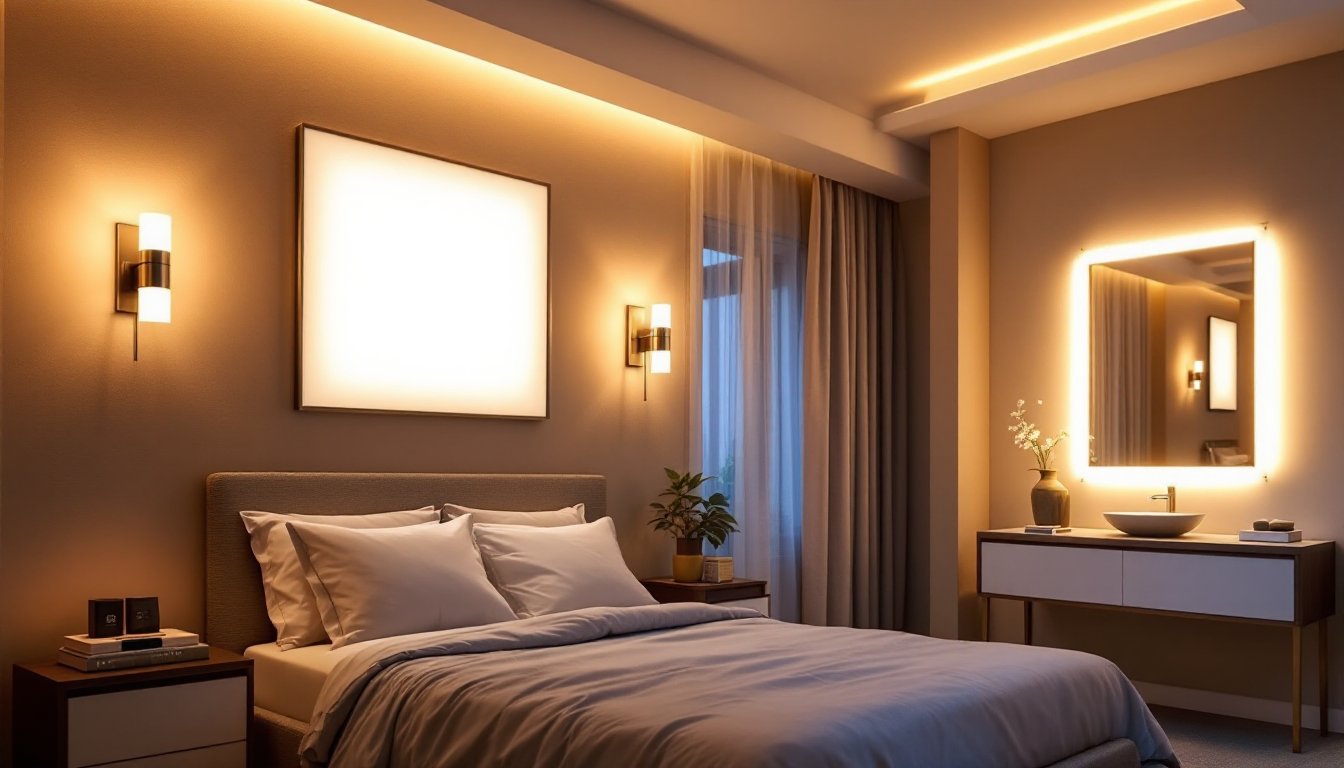

Good bedroom lighting isn’t an afterthought, it’s the foundation of a functional, comfortable space. Too many people rely solely on an overhead fixture, only to discover they can’t read comfortably in bed, apply makeup without shadows, or create a relaxing wind-down atmosphere. Bedroom wall lighting fills those gaps. Whether someone’s looking to add practical task lighting or soft ambient layers, the right wall fixtures transform a bedroom from basic to intentional. This guide walks through the types of bedroom wall lights available, how to choose finishes that complement existing décor, where to position them for maximum function, and how smart features can simplify daily routines.
Key Takeaways
- Bedroom wall lighting eliminates harsh shadows and task-lighting gaps that overhead fixtures alone cannot fill, creating a more functional and comfortable sleeping space.
- Effective bedroom wall lighting requires layering three functions: ambient lighting for safety, task lighting for reading or grooming, and accent lighting for atmosphere.
- Mount bedside reading sconces 30–36 inches apart at 36 inches above the mattress to eliminate glare and shadows, and position vanity lights at 60–66 inches from the floor on either side of the mirror.
- Choose fixture finishes like brushed nickel or matte black that complement existing décor, and select warm color temperatures (2700K–3000K) to maintain a relaxing bedroom environment.
- Smart dimmable wall lights offer flexibility to adjust brightness and color temperature for different times of day, supporting better sleep and daily routines without requiring fixture replacement.
- LED wall panels use 70–80% less energy than traditional incandescent sconces and provide even, diffused illumination superior to single-point overhead lighting.
Why Bedroom Wall Lighting Matters
Bedroom lighting does more than illuminate. It sets mood, enables specific tasks, and affects how restful the space feels. A single overhead light casts harsh shadows across the face during morning routines, strains eyes when reading in bed, and creates an impersonal, institutional atmosphere at night. Wall-mounted fixtures solve this by layering light sources around the room.
Proper bedroom wall lighting supports three core functions: general (ambient) lighting for getting around safely, task lighting for specific activities like reading or grooming, and accent lighting to highlight architectural features or create atmosphere. Most bedrooms benefit from at least two of these layers. Placing lights at eye level or slightly above prevents harsh shadows on faces and creates a more flattering, psychologically comfortable environment. Studies consistently show that layered, dimmable lighting improves sleep quality because it gives users control over brightness and color temperature as the evening progresses.
Types of Bedroom Wall Lights
Sconces and Reading Lights
Sconces are the workhorse of bedroom wall lighting. These fixtures mount directly to the wall, typically flanking a bed or positioned above a vanity. Sconces range from narrow, directional styles that focus light downward (ideal for reading) to wider, diffused designs that cast light into the room. Most sconces are mounted 60 inches from the floor to the center of the fixture, though this can shift depending on ceiling height and furniture.
Reading sconces specifically are designed to illuminate a book or device without creating glare on the reader’s face. Look for fixtures with an adjustable arm or a shade that directs light downward, such as a swing-arm sconce or a traditional library-style light. Pair two sconces on either side of a bed for balanced, shadow-free reading light. Hardwired sconces (requiring electrician installation) offer cleaner aesthetics than plug-in versions, but plug-in sconces with an adhesive backing work well as temporary solutions or in rental spaces. Hardwired fixtures do require a wall box and electrical rough-in, so factor in installation time and cost.
Wall-Mounted Panels and Accent Lighting
LED wall panels and strip lighting have become increasingly popular for creating soft, even illumination. These fixtures mount flush to the wall and emit light across a broad, diffused surface rather than from a single point. Panel lights work well as general bedroom lighting, especially when dimmable, and they’re easier on the eyes than traditional recessed downlights. They’re also highly efficient, most quality LED panels use 70–80% less energy than incandescent sconces of similar brightness.
Accent lighting, such as behind a headboard, along a shelf, or framing artwork, adds visual interest and makes a bedroom feel more intentional. Linear LED strips are simple to install (most come with adhesive backing) and cost $15–$50 per foot, depending on quality and features. They’re excellent for creating ambient warmth without glare. Accent lights should typically use warm color temperatures (2700K–3000K) to maintain a relaxing atmosphere, and they work best on a separate dimmer so they can be adjusted independently from task lighting.
Choosing the Right Style and Finish
Bedroom wall lighting should complement the room’s existing décor without competing for attention. Common finishes include brushed nickel, matte black, brass, and polished chrome. Brushed nickel is versatile and forgiving, hiding fingerprints and working with most interior styles. Matte black pairs well with modern, industrial, or minimalist designs and creates subtle contrast against light walls. Brass adds warmth and pairs naturally with mid-century modern or transitional styles. Polished chrome is less common in bedrooms because it can feel sterile, but it works in contemporary spaces.
The fixture’s shade or diffuser material also matters. Fabric shades (linen, cotton) soften light and feel residential, while glass or acrylic diffusers are easier to clean and work well in contemporary designs. Frosted or opal glass reduces glare without dimming output. Some designers recommend matte or soft finishes over shiny ones in bedrooms, they reflect light more gently, reducing eye strain at night.
Consider scale as well. A bedroom wall sconce should be roughly proportional to the nightstand or furniture beneath it, typically 12–16 inches tall for standard bedrooms. In small bedrooms, opt for slimmer profiles to avoid overcrowding the space. In larger rooms with 9-foot ceilings, slightly larger fixtures with taller proportions look more balanced.
Placement and Layout Tips
Strategic placement is crucial for avoiding shadows and ensuring fixtures serve their intended purpose. For bedside reading lights, mount sconces 30–36 inches apart (center to center) on either side of a bed, positioned about 36 inches above the mattress surface. This height places light at eye level when lying down, minimizing glare and shadows on the page.
For vanity or grooming tasks, mount lights on either side of a mirror at 60–66 inches from the floor. Two fixtures work better than one for even facial lighting without harsh shadows. If space is tight, a single fixture mounted directly above the mirror can work, but side-mounted fixtures are superior for makeup application and grooming.
For general ambient lighting, space wall panels or accent lights evenly around the room, one on each side of the bed, perhaps one above a dresser or desk, to create a cohesive glow rather than pools of light. Avoid placing fixtures where they’ll create glare on TV screens or reflective surfaces. Before committing to installation, tape paper templates to the wall and view them at different times of day and in darkness to verify placement feels balanced.
If hardwiring fixtures, plan the electrical layout carefully. Most bedrooms require a licensed electrician to run new circuits or tap existing ones, this is not typically a DIY task unless the homeowner has licensed electrical training. Wall anchors or junction boxes must be rated for the weight of the fixture, and all work should comply with local electrical codes (NEC standards apply nationally, but municipal codes vary).
Smart Lighting and Modern Features
Smart bedroom wall lights offer convenience and flexibility that standard fixtures can’t match. Wi-Fi or Bluetooth-enabled sconces and panels allow users to adjust brightness and color temperature from a smartphone, voice assistant, or wall switch. This is especially useful for bedtime routines, gradually dimming warm-colored light signals the body to produce melatonin, supporting better sleep.
Color temperature is measured in Kelvins (K). Warm light (2700K–3000K) is ideal for relaxation and evening use, while cooler light (4000K–5000K) supports alertness during morning routines or work tasks. Many smart fixtures allow switching between color temperatures without changing fixtures, which is far more practical than standard incandescent or single-temperature LEDs.
When selecting smart lights, confirm compatibility with the user’s existing ecosystem (Apple HomeKit, Google Home, Amazon Alexa, or Matter protocol). Budget $80–$250 per sconce for quality smart fixtures: cheaper alternatives often have connectivity issues or dim poorly. Smart bulbs paired with standard hardwired fixtures offer a budget-friendly alternative ($30–$60 per bulb), though they require a compatible dimmer and sometimes an additional hub.
Dimmable fixtures, smart or not, are essential. Bedrooms benefit from the ability to adjust light levels for different times of day and moods. Confirm that any fixture and dimmer are compatible before installation, not all LED fixtures work with all dimmers, and incompatible combinations can cause flickering or limited dimming range.