
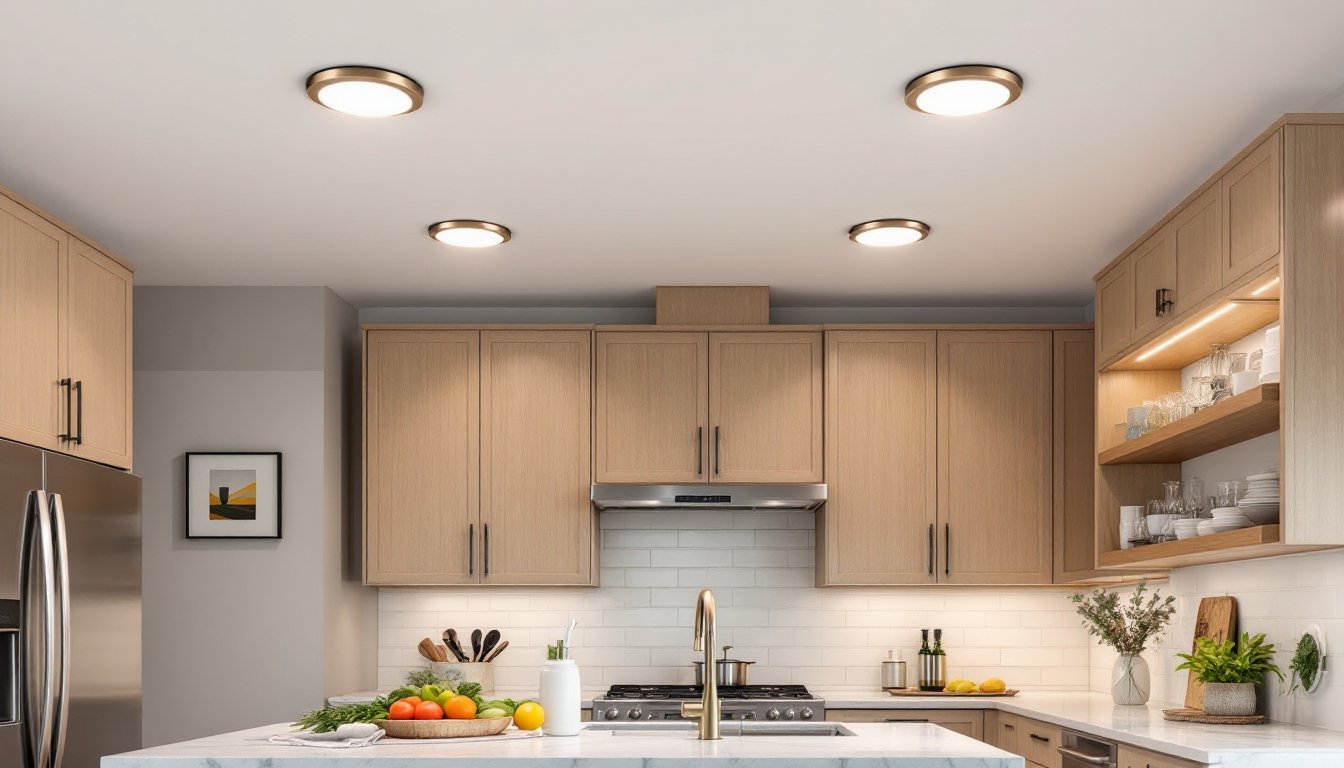

Gimbal recessed lighting has become the go-to choice for homeowners and DIYers who want flexible, professional-looking directional lighting without visible fixtures cluttering the ceiling. Unlike traditional fixed recessed lights that point straight down, gimbal recessed lights pivot and rotate, letting you aim light exactly where it’s needed, whether highlighting artwork, illuminating a kitchen workspace, or creating accent lighting in a living room. This guide walks through what gimbal recessed lighting is, why it works so well, and what to know before installing it in your home.
Key Takeaways
- Gimbal recessed lighting pivots and rotates up to 35–45 degrees, allowing you to adjust the light direction after installation without tools or moving the fixture itself.
- The primary advantage of gimbal recessed lights is flexibility—you can eliminate hot spots, highlight artwork or task areas, and adapt to room changes without ripping open your ceiling.
- Gimbal recessed lighting comes in 4-inch and 5-inch sizes with multiple trim styles (open, baffle, reflector) and typically uses dimmable LED bulbs in warm color temperatures (2700K–3000K) for residential spaces.
- Before installing gimbal recessed lights, confirm your ceiling cavity size, verify electrical capacity (especially on 15-amp circuits), and check that IC-rated housings are used in insulated ceilings to prevent fire hazards.
- Always purchase gimbal trim and housing as a matched set from the same manufacturer to ensure proper fit and avoid light leakage, and maintain at least 4 inches of clearance above the ceiling cavity.
What Is Gimbal Recessed Lighting?
A gimbal recessed light is a fixture mounted flush into a ceiling cavity with a rotating, spherical housing that tilts and swivels independently of the trim ring. The term “gimbal” comes from the mechanical design: a rotating collar within the trim allows the bulb assembly to move in multiple directions, typically 35 to 45 degrees off-axis depending on the model.
Unlike standard fixed recessed lights, which sit rigidly pointing straight down, gimbal fixtures let you angle the bulb after installation, or even adjust it later without tools. The trim ring (the visible part from below) stays centered and flush with the ceiling, while the internal housing does the moving. Most gimbal recessed lights use LED or halogen bulbs: LED is the modern standard and runs cooler, lasts longer, and costs less to operate.
These fixtures come in various trim styles: open (no ring), baffle (reduces glare with a black interior cone), and reflector (polished interior for more brightness). The size is measured by the rough-opening diameter, typically 4 inches or 5 inches, though some manufacturers offer 6-inch versions. Your existing ceiling cavity dictates which size fits.
Key Advantages of Gimbal Recessed Lights
Flexibility and Directional Control
The primary selling point is control. After installation, a homeowner can point light toward a picture on the wall, a reading nook, or a countertop without moving the fixture itself. This is especially valuable in kitchens where task lighting over an island or prep area needs precision. In living rooms or bedrooms, you can create accent lighting that highlights architectural features or artwork, then adjust it seasonally or when you rearrange furniture.
Gimbal fixtures also solve the “hot spot” problem common with fixed recessed lights. Instead of a harsh cone of light aimed straight down, you can diffuse the beam by tilting it at a shallow angle or spreading it across a wider area. This flexibility means fewer fixtures may be needed to achieve the same coverage, which saves on installation labor and materials.
For retrofits, gimbals are forgiving. If your ceiling cavity isn’t perfectly centered over where you want the light, or if an obstacle sits below (a door frame, cabinetry edge), angling the fixture compensates. You don’t have to rip open the ceiling and move the rough-in box.
Aesthetic and Design Benefits
Gimbal recessed lights maintain a clean, modern appearance. The trim sits nearly flush with the ceiling, no clunky external fixtures dangling overhead. In contemporary kitchens, minimalist bedrooms, or modern bathrooms, this streamlined look is expected.
Because the gimbal rotates within the trim ring, there’s no visible adjustment mechanism once installed. The fixture looks as polished and intentional whether pointing straight down or at a 40-degree angle. This also avoids the visual clutter of surface-mounted track lights or pendant fixtures, which work well in some spaces but can feel heavy in others.
Color temperature and beam angle matter too. Most LED gimbal recessed lights come in 2700K (warm, incandescent-like) or 3000K (soft white) for residential use. Choosing the right kelvin value and wattage equivalent ensures your accent lighting flatters the space. A 75-watt equivalent LED offers plenty of punch for accent work without wasting electricity or generating unnecessary heat.
Installation and Compatibility Considerations
Before you buy gimbal recessed lights, confirm your ceiling cavity size and whether the rough-in box is accessible. If you’re working in an existing home with drywall already installed, you’ll need a retrofit housing, these clamp into the cavity without requiring access from above. In new construction or a remodel with joists exposed, standard new-construction housings work fine and are slightly cheaper.
Electrical requirements vary. Most LED gimbal recessed lights run on standard 120-volt household current. Check the fixture’s wattage and the circuit amperage to avoid overloading, a typical 15-amp kitchen circuit can handle about 1,440 watts total. If you’re adding lights to a room with many existing loads, have an electrician verify capacity before installation.
Dim-ability is popular but requires compatible hardware. If you want to dim the lights, buy dimmable LED bulbs and a compatible dimmer switch, not all LED bulbs work with standard incandescent dimmers. This is one area where a specialist’s advice pays off: getting it wrong results in flickering or no dimming at all.
Check your local building code (most areas follow the IRC). Recessed lights in insulated ceilings must either have IC-rated housings (insulation contact-rated) or be kept 3 inches from insulation to prevent overheating. Attic spaces above bathrooms and kitchens typically require IC-rated fixtures. Failure to follow this causes fire hazard and voids warranties. If you’re unsure, ask your building inspector or have a licensed electrician handle installation.
Trim compatibility is also crucial. A gimbal trim from one manufacturer often doesn’t work with a housing from another. When ordering, buy the trim and housing as a matched set or confirm cross-compatibility with the supplier. Mixing brands can leave gaps or poor fit, which looks sloppy and allows light leakage around the trim.
One more thing: gimbal recessed lights need at least 4 inches of clearance above the ceiling cavity for the bulb and housing to fit. In tight attic spaces, measure twice. If clearance is limited, some shallow-pan LED designs work in spaces as shallow as 2.5 inches, but these cost more and offer less flexibility.
Conclusion
Gimbal recessed lighting delivers flexible, professional-grade directional lighting that traditional fixed fixtures can’t match. They’re practical for task lighting, accent work, and modern home aesthetics, and the ability to adjust the beam angle after installation solves a lot of common design headaches. The key to success is planning ahead: confirm your ceiling cavity size, verify electrical capacity, ensure IC-rating if needed, and buy trim and housing as a matched pair. Done right, gimbal recessed lights elevate your lighting design without very costly.