
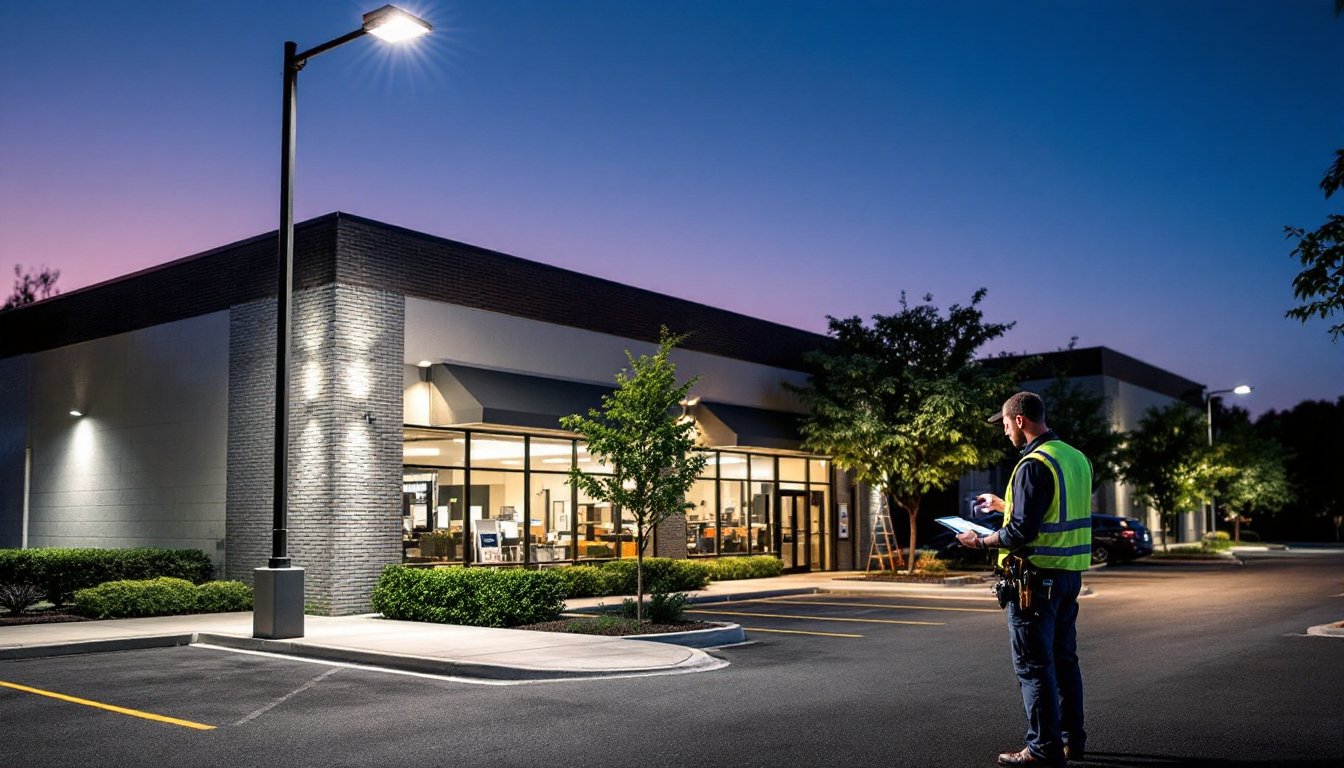

Commercial outdoor lighting is more than just illumination, it’s a critical investment in safety, security, and brand visibility. Whether a business owner needs to light a parking lot, illuminate signage, or enhance landscape features, finding the right commercial outdoor lighting provider nearby can make the difference between a hastily installed job and a professional installation that lasts years. In 2026, the landscape of commercial lighting has shifted toward energy-efficient LED systems, smart controls, and providers who understand both the technical requirements and local building codes. This guide walks through what commercial outdoor lighting entails, the types of solutions available, and how to identify reliable providers in your area who can deliver quality results.
Key Takeaways
- Commercial outdoor lighting is critical infrastructure that improves safety, security, code compliance, and brand visibility while reducing energy costs by 50–70% with LED systems.
- LED fixtures dominate modern commercial outdoor lighting solutions, offering durability, lower heat output, and lifespans of 50,000–100,000 hours with flexible color temperatures for different applications.
- When searching for commercial outdoor lighting near you, request detailed estimates from at least three providers, verify credentials and licenses, and confirm they handle permits and local code compliance.
- Parking lot and landscape lighting require proper spacing and design to prevent dark spots and ensure uniform illumination; a site survey by your installer prevents energy waste and glare pollution.
- Choose a local lighting company experienced with your business type that offers explicit warranties, maintenance contracts, and support for utility rebate programs to maximize your long-term return on investment.
Why Commercial Outdoor Lighting Matters for Your Business
Commercial outdoor lighting isn’t a nice-to-have, it’s foundational infrastructure. Poor lighting creates safety hazards for employees and customers, invites security vulnerabilities, and can actually reduce foot traffic or perceived professionalism. A well-lit parking lot, entrance, and storefront signal that a business takes its operations seriously.
Beyond safety, code compliance is non-negotiable. Most jurisdictions have minimum foot-candle requirements for parking areas, walkways, and loading zones. These standards vary by location and business type, which is why working with a knowledgeable local provider matters. They’ll know what your municipality requires and design a system that passes inspection rather than one you’ll have to retrofit.
Energy costs also factor heavily. A lighting system running 12+ hours daily can consume significant electricity. LED fixtures reduce consumption by 50–70% compared to older halogen or metal-halide systems, which translates directly to lower operating costs. Plus, many utilities offer rebates for commercial LED upgrades, something a local installer can help you navigate.
Types of Commercial Outdoor Lighting Solutions
LED Lighting Systems
LED (light-emitting diode) fixtures dominate commercial outdoor lighting in 2026, and for good reason. They’re durable, energy-efficient, and available in various color temperatures, warm white (2700K–3000K) for hospitality settings, neutral white (4000K–5000K) for general security, and cool white (5000K+) for maximum visibility.
LED floodlights work well for building facades and landscape accent lighting. LED high-bays and shoebox fixtures suit parking areas and large open spaces. One key advantage: LED systems generate less heat than older technologies, reducing cooling costs in summer and improving fixture lifespan. Most commercial LED fixtures last 50,000–100,000 hours, meaning less frequent replacement.
A local installer will spec fixtures appropriate to your lux or foot-candle requirements. They’ll also discuss control options, basic photocells, timers, occupancy sensors, or smart networked systems that integrate with building management.
Parking Lot and Landscape Lighting
Parking lots require uniform illumination to reduce accident risk and deter crime. This often involves pole-mounted fixtures spaced 100–150 feet apart, depending on fixture height and output. Proper spacing prevents dark spots where vehicles or pedestrians could be at risk.
Landscape lighting adds visual appeal while serving security purposes. Uplighting on trees, path lights along walkways, and accent lighting on signage create a welcoming atmosphere while illuminating entry and exit routes. Local providers can design layouts that balance aesthetics with function and code compliance.
Underutilizing or oversizing landscape fixtures wastes energy. A knowledgeable installer performs a site survey, measures ambient light levels, and specifies wattage and spacing that meet your goals without excessive consumption or glare pollution.
How to Find Reliable Commercial Lighting Providers in Your Area
Start by asking for referrals from neighboring businesses or your local chamber of commerce. Direct word-of-mouth feedback from other facility managers is invaluable, they’ll tell you if an installer honored timelines, handled unexpected issues, and left a job clean.
Search online for “commercial outdoor lighting near me” or “commercial lighting contractor [your city].” Review Google Business profiles, check credentials, and read recent customer feedback. Look for providers with certifications from manufacturers like Cree, Philips, or Acuity Lights, and verify they hold appropriate licenses (electrical contractor, LED installer, etc., depending on your state).
Request estimates from at least three providers. A professional quote should include a site visit, a detailed layout or schematic, fixture schedules with specifications, an installation timeline, and warranty terms. Be wary of quotes that lack detail or seem significantly cheaper than competitors, they may be cutting corners on design or using lower-quality components.
Ask prospective providers about permitting and code compliance. Do they pull permits? Are they familiar with local ordinances? Will they coordinate with the building department? A provider who handles this reduces liability on you and ensures the system passes final inspection. Also inquire about maintenance plans, who replaces burned-out LEDs, cleans fixtures, and adjusts controls over time?
Key Factors to Consider When Choosing a Local Lighting Company
Experience with your business type matters. A provider experienced in retail storefronts understands different lighting needs than one specializing in industrial facilities. Ask for references from similar properties.
Warranty and support should be explicit. LED fixtures are durable, but ballasts, power supplies, and controls can fail. Confirm what’s covered, parts, labor, how long, and who you call if something stops working. A local provider can respond faster than a distant outfit shipping replacement parts across the country.
Design flexibility counts. Some providers install cookie-cutter solutions: others collaborate to tailor lighting to your space and branding. If you want uplighting on signage or a specific color temperature, ensure they’re willing to spec it and justify the choice.
Energy audits and rebates are often overlooked. Many utilities offer rebates for LED retrofits or new efficient systems. A knowledgeable local installer has relationships with utility programs and can help you apply, reducing your net project cost.
Installation timeline and disruption affect operations. Will they work evenings or weekends to minimize impact? Do they coordinate with your maintenance team? Clarify expectations upfront to avoid surprises.
Finally, check if they offer ongoing maintenance contracts. Facilities benefit from regular cleaning, ballast checks, and recalibration of occupancy sensors. A provider who offers these services demonstrates commitment to long-term customer success, not just a one-time sale.
Conclusion
Finding the right commercial outdoor lighting provider near you means balancing technical competence, local expertise, and a track record of reliable service. Prioritize installers who understand building codes, can design for your specific needs, and offer solid warranties and ongoing support. Investing time in vetting providers upfront prevents costly rewiring or replacement later. Your facility’s safety, energy efficiency, and professional appearance depend on getting it right the first time.