
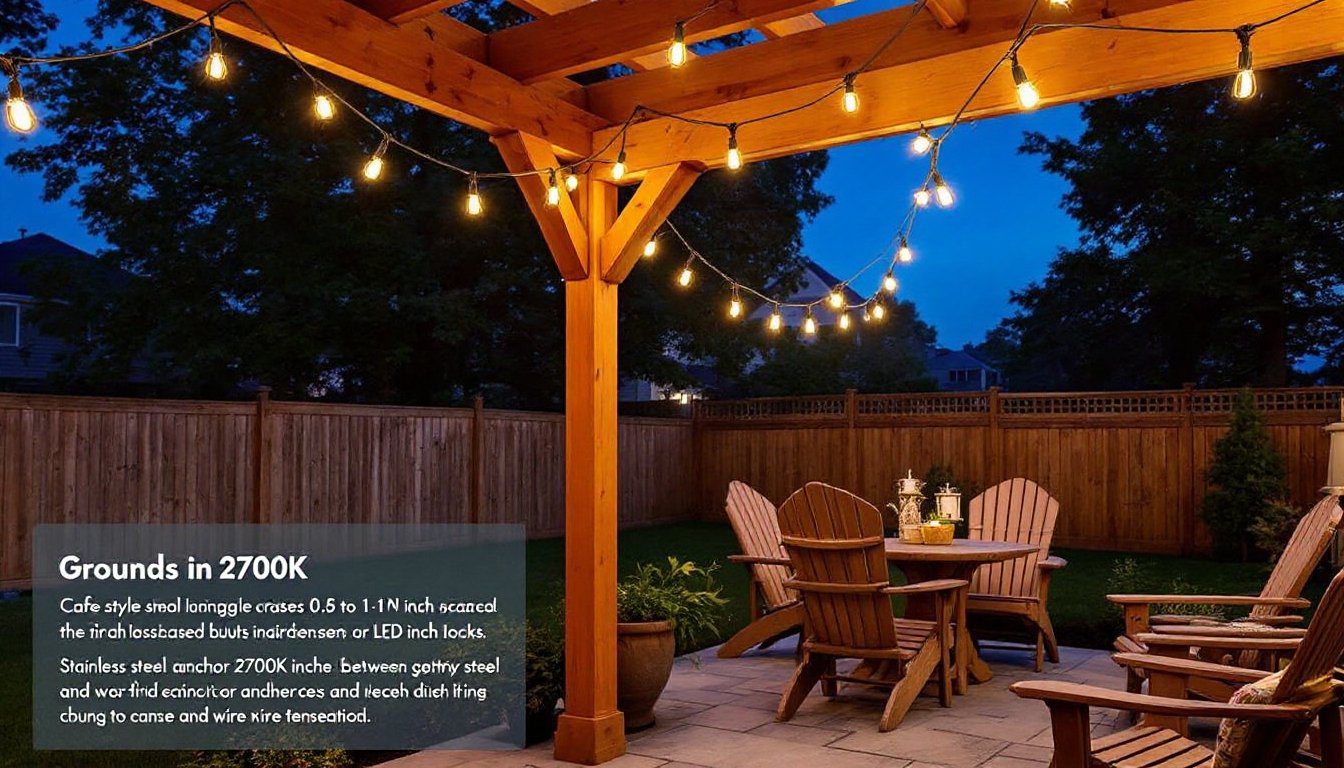

String lighting has become a backyard staple for good reason, it’s affordable, flexible, and transformative. Whether someone’s hosting a summer dinner party or simply wants to extend the usability of their patio into evening hours, the right string lighting setup delivers both practical illumination and visual appeal. Unlike fixed overhead fixtures, string lighting can be arranged in countless patterns, adjusted for seasonal use, and swapped out without permanent installation. This guide covers everything a DIYer needs to know: fixture types, LED versus traditional options, installation methods, and layout strategies that actually work. The goal is to help anyone hang string lighting that stays up through weather, looks intentional rather than haphazard, and enhances their outdoor space without requiring an electrician on speed dial.
Key Takeaways
- String lighting for patio design combines affordability and versatility, with basic 48-foot strands costing $25–$50 for incandescent or slightly more for energy-efficient LEDs that save money over time.
- Choose between café lights for subtle ambient lighting, Edison bulbs as dramatic focal points, or globe lights for balanced mid-range patios depending on your desired aesthetic and patio size.
- LED string lights use 80% less energy and last 25,000+ hours compared to incandescent options, breaking even within 2–3 seasons for frequently used patios.
- Proper installation requires stainless steel hooks rated for outdoor use, slight 2–3 inch sag per 10-foot span, and intermediate anchor points every 8–10 feet to prevent sagging and distribute weight evenly.
- Prioritize electrical safety by using outdoor-rated extension cords, GFCI-protected outlets, and grounded circuits, and consult a professional if uncertain about wiring requirements.
Why String Lighting Is Essential For Patio Design
String lighting serves a dual purpose that few other outdoor elements can match. First, it solves a practical problem: standard overhead fixtures often leave patios dark at the edges, creating shadows over seating areas and dining tables. Second, it sets mood in a way that harsh floodlights never will. The warm glow of café-style lighting softens the space and makes it feel intentional, like someone’s outdoor room, not just a backyard.
Beyond aesthetics, string lighting is cost-effective and modular. A basic 48-foot strand with incandescent bulbs costs between $25–$50: LED versions run slightly higher but save money over time through lower energy use and longer bulb life. Renters and homeowners alike appreciate that string lighting doesn’t require permanent electrical work, conduit runs, or permits in most jurisdictions (though always check local codes before installing).
The versatility matters too. String lighting can define zones, a line overhead marks a dining area, while strands crisscrossed above a seating nook create a cocoon effect. They can span long distances between trees, run along fence lines, or drape from a pergola. Unlike built-in fixtures, strings can be taken down and stored or repositioned based on how the patio is being used that season.
Types Of String Lighting And How To Choose The Right One
Cafe Lights, Edison Bulbs, And Globe Lights
Café lights are the workhorses of patio lighting. These compact string lights feature small incandescent or LED bulbs (typically 0.5 to 1 inch in diameter) spaced 12 inches apart on a thin wire. They’re unobtrusive during the day and cast a diffuse glow at night. Café lights are ideal for patios where someone wants ambient light without visual clutter, above a dining table, along a pergola, or strung diagonally across a deck. They’re also durable enough to stay up year-round in most climates if protected from extreme wind or ice.
Edison bulbs are the statement piece. These larger vintage-style bulbs (commonly 2 to 3 inches wide) have visible filaments and a warm, nostalgic aesthetic. They consume more power, run hotter, and aren’t always as weatherproof as café lights, but they command attention. Edison bulbs work best as focal points, a short run overhead, framing a doorway, or as accent lighting. Pairing them with café lights creates visual hierarchy: Edison bulbs draw the eye, while café lights fill in secondary areas.
Globe lights split the difference. These translucent or frosted spheres (typically 1.5 to 2.5 inches) diffuse light evenly and are slightly more weather-resistant than Edison bulbs. They read as more formal than café lights but less fussy than Edison styles. Globe lights suit mid-sized patios and work well in mixed arrangements.
LED Vs. Traditional Incandescent Options
Incandescent bulbs are the classic choice: they’re inexpensive ($1–$3 per bulb), warm in color temperature (around 2700K), and instantly familiar. The downside is efficiency. They draw 5 watts per bulb or more, generate heat, and burn out every 1,000 hours or so. Running a 48-foot strand of incandescent lights for an evening can noticeably bump an electric bill, and replacing bulbs becomes routine maintenance.
LED bulbs solve most of those problems. They use 80% less energy, last 25,000+ hours (10–15 years of typical use), and don’t degrade in brightness over time like incandescent bulbs do. Modern LEDs match the warm color of incandescents (2700K available), so the aesthetic difference is minimal. The trade-off: LED string lights cost more upfront ($40–$80 for a comparable 48-foot strand). For patios used frequently or left on for extended periods, LEDs break even within 2–3 seasons.
A practical tip: if someone already owns incandescent strings and they’re functional, there’s no need to replace them immediately. But for new installations, especially in climates with frequent evening use, LEDs are the smarter investment. Some higher-end LED sets also include dimming controls or color-changing options, adding flexibility at a modest cost increase.
Installation Tips And Layout Patterns For Maximum Impact
Before hanging anything, measure the patio and sketch a layout. Identify anchor points, trees, fence posts, pergola beams, roof edges, or installed hooks. String lights should be relatively taut (not drooping) but with slight sag (about 2–3 inches of dip per 10-foot span) to account for movement and reduce stress on anchor points.
Materials and Tools:
- String light strands (café, Edison, or globe)
- Stainless steel screw-in hooks (rated for outdoor use: zinc-plated corrodes faster)
- Carabiners or adjustable wire tensioners (allow for tightening without re-anchoring)
- Cordless drill (if screwing hooks into wood)
- Measuring tape
- Wire cutters (if shortening the strand, though this requires basic electrical skill)
- Eye protection and work gloves
Installation Steps:
-
Identify anchor points and check them for safety. Roof edges, pergola beams, and trees must be sturdy. If an anchor point feels weak, install a dedicated hook or bracket first. Don’t hang lights on vinyl siding or gutters, these aren’t rated for that weight.
-
Install hooks at appropriate heights. For dining or seating areas, aim for 7–8 feet above the ground. For decorative overhead patterns, 8–10 feet works well. Mark hook locations before drilling to ensure they’re aligned.
-
Screw in stainless steel hooks rated for outdoor use. Pre-drill holes in wood to prevent splitting. If attaching to masonry, use lag bolts and anchors. This step isn’t glamorous, but solid anchor points prevent lights from sagging or falling after a month.
-
String the first line and secure it loosely. Use adjustable carabiners or wire tensioners so the line can be tightened without removing the entire strand. The slight sag (2–3 inches per 10 feet) allows for wire expansion and contraction.
-
Test connections and plug in before finalizing layout. Verify all bulbs work and connections are tight. This saves troubleshooting frustration later.
-
For crisscross patterns or dense layouts, use intermediate anchor points. Every 8–10 feet, use a carabiner to support the strand. This prevents a single line from sagging and spreading stress across the setup.
Layout Patterns That Work:
- Single overhead line: Simplest. Runs from one side of the patio to the other, ideal for marking a dining or seating zone.
- Crisscross or X pattern: Creates visual interest and distributes light more evenly. Requires 4–6 anchor points but transforms a plain patio.
- Perimeter run: String lights outline the edges of a patio or deck. Visually contained and practical.
- Vertical drape: Strands hang from a pergola or overhead structure, creating a theatrical canopy effect. Requires more wire but is dramatic.
Weatherproofing and Maintenance:
- String lights rated for outdoor use are fine in rain, but extended freezing with ice buildup stresses connections. In harsh winters, consider taking down and storing expensive strands.
- Keep connections away from pooled water or standing dampness. Raise or angle the wire slightly so water runs off.
- Check connections monthly, especially after high winds or heavy rain. Moisture can accumulate in sockets.
- Once or twice a season, tighten carabiners and visually inspect the wire for damage.
Safety Reminders:
- Always use outdoor-rated extension cords and surge protectors if running multiple strands. Indoor-rated cords degrade rapidly in UV and moisture.
- Ensure the circuit powering the lights is properly grounded and has a working GFCI (ground-fault circuit interrupter) outlet. Never daisy-chain standard power strips.
- If uncertain about electrical safety, install a weatherproof outlet or consult a licensed electrician. It’s a modest cost that prevents risk.
Conclusion
String lighting transforms a patio from functional space to outdoor room. The right choice, café lights for subtlety, Edison bulbs for drama, or globe lights for balance, depends on the patio’s size and the user’s style. LED strings cost more upfront but deliver savings and convenience over time. Proper installation with solid anchor points and slight sag ensures the lights stay up and look intentional through seasons. Measure twice, secure hooks carefully, and always prioritize electrical safety. With these fundamentals in place, anyone can create an outdoor space worth spending time in, day or night.