
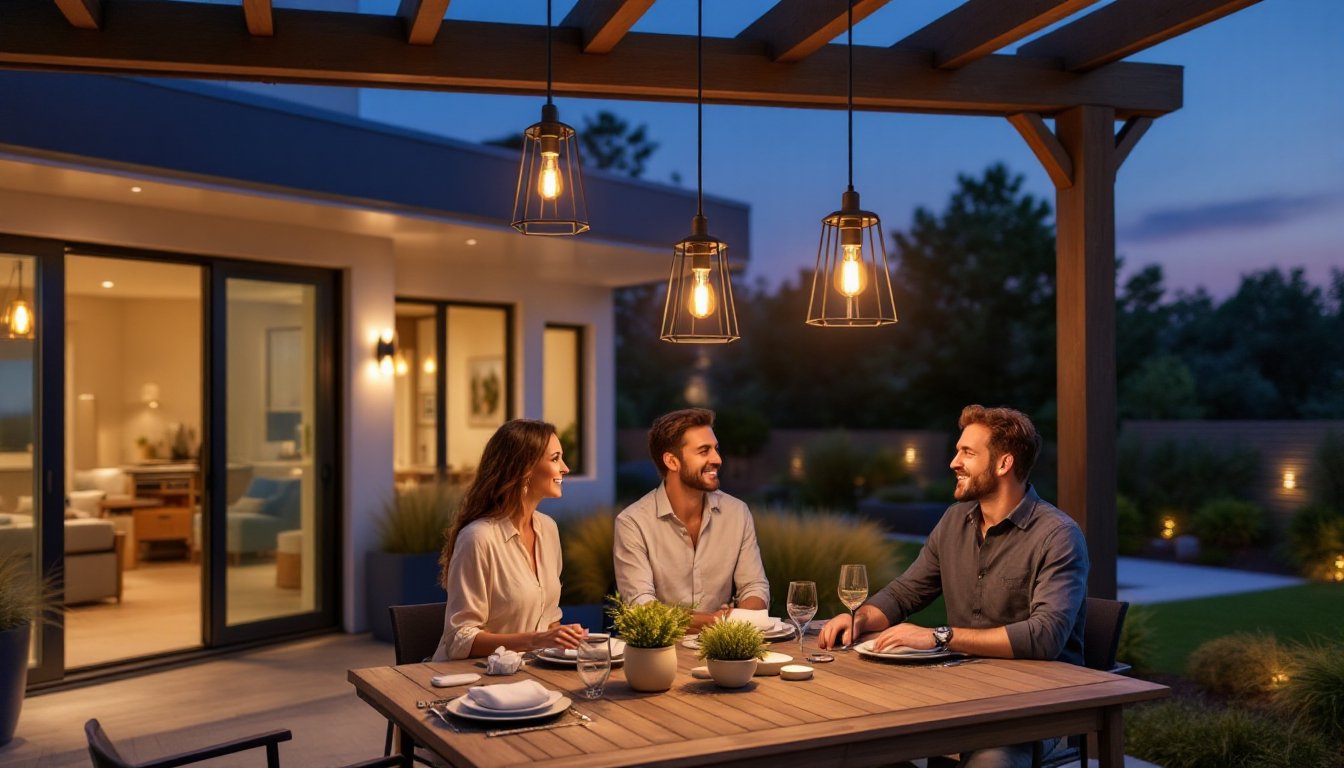

Outdoor pendant lighting has become one of the most impactful upgrades a homeowner can make to their patio, deck, or entryway. Unlike traditional overhead fixtures or string lights, modern outdoor pendants deliver focused, sculptural lighting that defines spaces and extends usable hours well into the evening. Whether someone is creating an intimate dining area, brightening a seating nook, or adding curb appeal, the right pendant fixture combines function with contemporary aesthetics. This guide covers everything needed to choose, install, and configure modern outdoor pendants that will perform reliably for years while enhancing the home’s overall design.
Key Takeaways
- Modern outdoor pendant lighting transforms patios and decks by delivering focused, sculptural illumination that creates atmosphere while improving safety, security, and extended usable outdoor hours.
- Hang pendants 30–36 inches above dining surfaces and 12–18 inches above work areas; cluster three to five fixtures at staggered heights for maximum visual impact and functionality.
- Choose aluminum with marine-grade anodized coatings or stainless steel for superior corrosion resistance, and verify wet-rated or damp-rated UL certifications to ensure durability in outdoor environments.
- Contemporary and industrial design styles—from minimalist matte black cages to geometric brass fixtures—integrate seamlessly with modern homes while serving as architectural elements that define spaces.
- Ensure sturdy structural mounting using lag bolts or beam attachments rather than drywall anchors, and select fixtures with easily removable diffusers and LED-compatible dimming for long-term maintenance and flexibility.
Why Modern Outdoor Pendant Lighting Transforms Your Outdoor Space
Modern outdoor pendant lighting goes beyond simple illumination, it creates atmosphere while solving practical lighting problems. Unlike standard wall sconces or landscape lights, pendants deliver downward-focused light at eye level, making them ideal for dining tables, bar counters, and conversation areas. They’re also architectural elements in their own right: a well-chosen fixture becomes part of the space’s visual identity.
Pendants work exceptionally well in covered spaces like pergolas, soffits, or covered patios where they hang safely away from rain exposure (or in wet-rated designs). They don’t require yard digging for electrical runs like pathway lights, and they’re often easier to install than recessed ceiling fixtures. A single pendant or cluster of three to five fixtures can instantly elevate a generic outdoor area into a designed, intentional space, one that invites lingering rather than quick pass-throughs.
Proper outdoor lighting also improves safety and security. Well-lit entry points, patios, and stairs reduce trip hazards and deter unwanted activity. Modern pendants achieve this without the harsh, unflattering glare of cheap floodlights or string-light clutter.
Key Design Styles for Modern Outdoor Pendants
Minimalist and Industrial Designs
Minimalist outdoor pendants strip away ornament and emphasize clean lines, geometric forms, and honest materials. These fixtures typically feature matte black metal cages, bare metal frames, or simple cylindrical or conical shades. Industrial designs share this aesthetic but often embrace visible hardware, heavier gauges of metal, and sometimes rough finishes that develop patina over time. Both styles pair seamlessly with modern homes, mid-century designs, and even farmhouse aesthetics.
Think powder-coated steel cones hanging from slim cables, or aluminum cylinders with translucent diffusers. The simplicity means these fixtures work in almost any context and won’t clash with landscaping or architectural details. Industrial pendants might feature Edison-style bulbs (the vintage-looking incandescent or modern LED versions) as a deliberate design choice, letting the bulb itself become a visual element rather than hidden behind an opaque shade.
Contemporary and Geometric Fixtures
Contemporary pendants play with shape and proportion. Hexagonal, dome-shaped, or sculptural fixtures in brushed brass, weathered copper, or charcoal finish aluminum appeal to homeowners seeking more design personality. Geometric designs often incorporate perforated metal or lattice patterns that cast interesting shadow patterns, adding visual interest when lit.
These pendants work especially well in clusters, three to five fixtures at varying heights over a dining table or bar counter create rhythm and drama. A geometric cage design in matte black paired with warm LED bulbs (2700K color temperature) delivers both style and intimate lighting. Many contemporary options now include integrated LED technology, eliminating the need for separate bulbs and reducing maintenance.
Materials and Finishes That Stand the Test of Time
Outdoor pendants must withstand UV exposure, temperature swings, humidity, and salt air (in coastal regions). Material choice directly impacts longevity and maintenance.
Aluminum is the industry standard for outdoor fixtures because it resists rust and is relatively lightweight. Look for fixtures with marine-grade anodized coatings if near salt water: this process adds a protective oxide layer that’s far more durable than powder coat alone. Stainless steel offers even better corrosion resistance but carries a higher price tag. Powder-coated steel works well in dry climates but can chip over time, revealing bare metal underneath that will rust.
Glass and acrylic diffusers handle weather differently. Tempered glass is more durable but heavier and can crack if struck: acrylic is lighter and won’t shatter but can cloud after years of UV exposure and requires occasional replacement. Polycarbonate (clear plastic) is a middle ground, impact-resistant and clear, though it also yellows over time.
Finishes matter as much as base materials. Matte black, charcoal, and oil-rubbed bronze hide fingerprints and weathering better than shiny finishes. Brushed brass and weathered copper develop patina, which some homeowners embrace as character. Avoid glossy finishes outdoors unless the fixture is in a fully covered, dry location. Always confirm the fixture carries an IP rating of at least IP44 (splash-resistant) or higher for exposed outdoor use. Covered-patio fixtures can sometimes use IP23-rated styles, but checking local codes is essential.
Lighting Placement and Configuration Strategies
Pendant placement determines whether lighting enhances or underwhelms an outdoor space. For dining tables, hang pendants 30 to 36 inches above the table surface. This height provides adequate downward light without creating glare in seated diners’ eyes. If using multiple pendants, space them approximately 24 to 30 inches apart along the table length.
Over a bar or kitchen counter, mount pendants 12 to 18 inches above the work surface for task lighting. Higher placement works for ambient lighting over seating areas where light doesn’t need to be as focused.
Clusters of three to five pendants create visual impact better than a single fixture, especially in larger spaces. Stagger heights slightly (varies 2 to 6 inches from each other) for a designed, intentional look rather than rigid uniformity. Hang fixtures from sturdy support structures: permanent beam attachments, ceiling joists, or lag bolts into structural headers. Never rely on drywall anchors alone for outdoor fixtures: the weight (typically 3 to 8 pounds per fixture) plus wind loading requires solid mounting.
Consider sight lines from inside the home. Pendant placement should frame views rather than obstruct them. In covered patios with ceiling soffits or beams, fixtures naturally integrate into the existing structure. For open-air decks, pendants need a robust support frame (pergola, arbor, or overhead cable system) or a dedicated post installation, which may require footings below the frost line, a detail worth discussing with a local contractor if uncertain.
Functional Features to Look For
Modern outdoor pendants should include practical features that simplify installation and long-term ownership.
Wet-rated and damp-rated certifications are non-negotiable. A wet-rated fixture can be installed in exposed locations where rain directly contacts it: a damp-rated fixture works in covered patios where moisture is present but rain doesn’t hit it directly. Check the UL listing on the fixture: it explicitly states the rating.
LED integration is increasingly standard. Fixed LED fixtures eliminate the step of selecting bulbs and often offer warm color temperatures (2700K to 3000K) out of the box, which is ideal for outdoor entertaining. Replaceable-bulb fixtures offer flexibility but require choosing damp-rated or wet-rated outdoor bulbs, which cost more than standard interior bulbs.
Dimming capability deserves consideration, especially for dining or lounge areas. Verify that any dimmable fixture uses LED-compatible dimmer switches and that wiring runs through a weatherproof junction box with appropriate breaker protection. Older fixtures designed for incandescent bulbs often won’t dim modern LEDs smoothly.
Adjustable hanging heights (pendant cords or chains that can be trimmed or adjusted) provide flexibility during installation. This is particularly useful when retrofitting existing structures where exact measurements might be tricky.
Finally, maintenance accessibility matters. Choose fixtures where glass or diffuser covers are easily removable for cleaning debris and checking for water intrusion. A fixture that’s beautiful but inaccessible for upkeep will look neglected within a season or two.
<h2 id="” data-id=””>Bringing It All Together
Modern outdoor pendant lighting is a rewarding upgrade that combines practical benefits, task lighting, security, extended outdoor living hours, with genuine design impact. Choosing fixtures in durable materials with appropriate wet ratings, mounting them at the right heights, and configuring them in clusters rather than singles yields the best results. Whether opting for minimalist industrial designs or contemporary geometric shapes, the emphasis should be on honest materials, reliable installation, and fixtures that complement the home’s existing architecture. With careful planning and proper installation, modern outdoor pendants will perform beautifully for years while making every evening outdoors feel intentional and well-designed.