
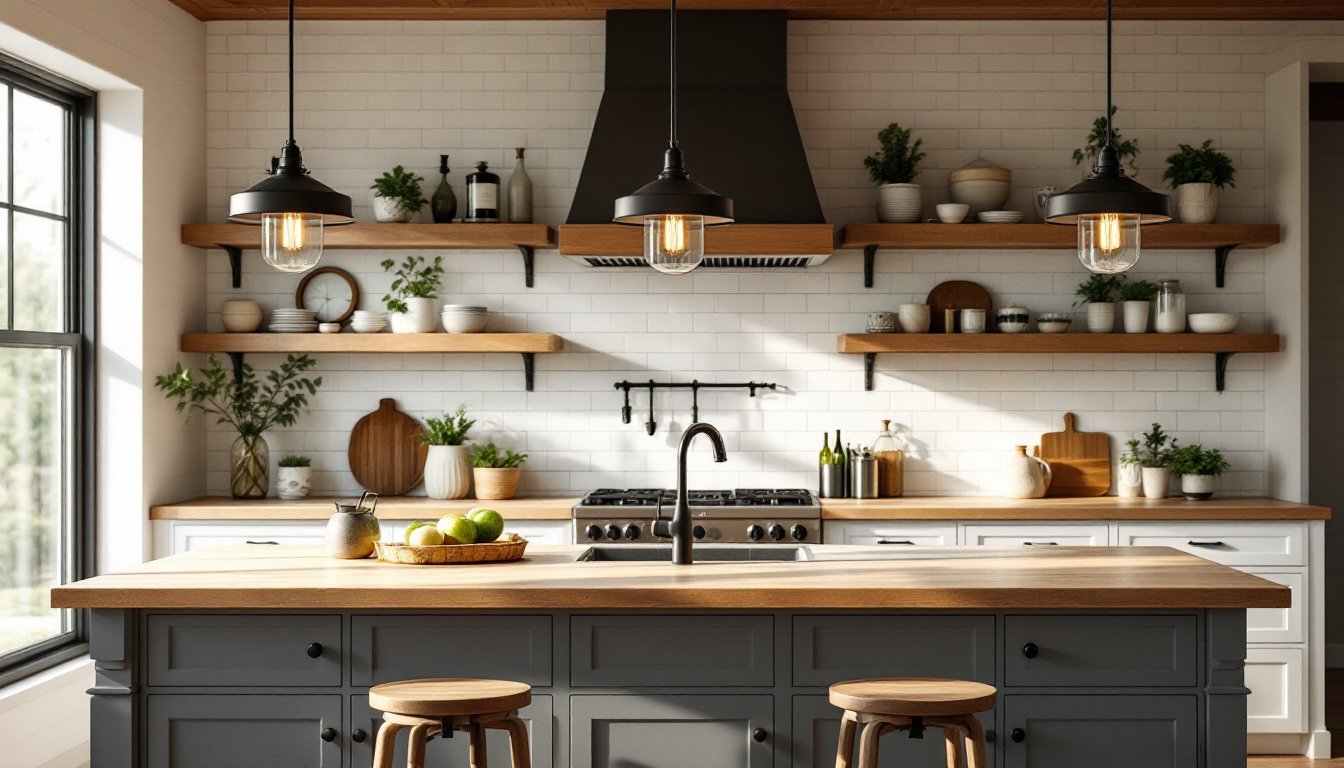

Modern farmhouse pendant lighting blends industrial edges with rustic warmth, and it’s become a kitchen and dining room staple for good reason. These fixtures feel both current and timeless, working equally well in a renovated farmhouse or a suburban cottage. Unlike trendy lighting that fades in a few seasons, the modern farmhouse aesthetic has proven staying power. If someone’s planning a kitchen remodel or just wants to upgrade pendant lights above an island or dining table, understanding the specifics of style, placement, and installation makes the difference between a cohesive design and fixtures that feel out of place. This guide covers the essentials: what makes a pendant “modern farmhouse,” which materials deliver that authentic appeal, where they perform best, and how to size and install them correctly.
Key Takeaways
- Modern farmhouse pendant lighting blends industrial edges with rustic warmth, featuring simple silhouettes in neutral colors like matte black and oil-rubbed bronze with exposed filament bulbs for authentic appeal.
- Proper sizing and spacing are critical: pendant diameter should equal one-third of island length, and fixtures should hang 30 to 36 inches above work surfaces to balance safety and visual impact.
- These pendant lights perform best in kitchens, dining rooms, and breakfast nooks—place single large fixtures or clusters of three above islands and dining tables for maximum design cohesion.
- Material and finish choices define authenticity: choose matte or brushed finishes over glossy ones, avoid mixed metallics, and pair your pendant metal with coordinating faucets and cabinet hardware.
- Installation requires shutting off power at the breaker and pre-wired fixtures that typically hang from existing or new circuits; use warm white (2700K) LED bulbs and dimmer switches for adjustable ambiance.
What Defines Modern Farmhouse Pendant Lighting
Key Design Characteristics and Style Elements
Modern farmhouse pendants marry two aesthetics that shouldn’t work together, but do. They combine farmhouse elements (wood, wrought iron, vintage inspiration) with modern clean lines and minimalism. The result feels intentional rather than cluttered.
A true modern farmhouse pendant typically features a simple, unfussy silhouette. Shapes lean toward cylindrical cages, dome covers, or lantern forms, nothing ornate or heavily embellished. The fixture usually sits in the neutral color family: matte black, oil-rubbed bronze, weathered wood, or brushed steel. Exposed filament bulbs (vintage-style Edison or clear LED equivalents) are common: they add an artisanal edge without looking costumey.
Scale matters here. Modern farmhouse pendants are rarely delicate. A homeowner will see a 10- to 14-inch diameter shade paired with a 60- to 80-inch drop on a standard 8-foot ceiling, substantial but not overwhelming. The key is balance: one large statement pendant above an island, or a cluster of three smaller ones (8 to 10 inches each) spaced evenly. Ornamental details, if present, should read as functional or understated: a simple cage frame, a metal ring detail, or raw wood grain visible. Avoid fussy hardware, crystal accents, or glossy finishes, those pull away from the farmhouse vibe.
Popular Materials and Finishes for Authentic Appeal
The material and finish combination is what sells the farmhouse story. Metal cages in matte black or oil-rubbed bronze are workhorses: they’re durable, easy to clean, and let light diffuse nicely. Wrought iron or cast iron details add weight and character, not literally heavy, but visually anchoring. Reclaimed wood or distressed wood finishes bring warmth, though some wood finishes are painted metal (which is fine and easier to maintain). Brushed or matte steel reads as modern while keeping an industrial feel.
Shade material typically defaults to clear or frosted glass or metal. Clear glass shows off the bulb and wiring, which is part of the appeal. Frosted glass softens the light output and hides the electrical guts if that’s preferred. Metal shades (perforated or solid) create interesting shadow patterns on ceilings and walls, a bonus design detail.
Finishes should be matte or brushed, never high-gloss. Matte black hides dust and fingerprints better than brushed nickel, which shows every smudge. Oil-rubbed bronze develops a patina naturally over time, which many homeowners love: it’s honest and ages well. If choosing wood, look for finishes labeled weathered, distressed, or reclaimed-looking rather than varnished and shiny. The goal is a “lived-in” feel, not showroom perfection.
Best Spaces for Modern Farmhouse Pendant Fixtures
Modern farmhouse pendants shine (literally) in kitchens and dining rooms. An island is the classic home, one large pendant or a trio spaced 18 to 24 inches apart above a 3-foot-wide or longer countertop. The pendants should hang 30 to 36 inches above the work surface: any lower and they obstruct sightlines, any higher and they lose impact.
Dining tables are equally at home with modern farmhouse pendants. A single large fixture or a cluster of two to four smaller ones centered over the table works well. Measure the table width: pendants should be roughly two-thirds of the table width for visual proportion. For an 36-inch-wide table, two 10-inch-diameter pendants work: for a 48-inch table, three 10-inch pendants or one 14-inch pendant is standard.
Beyond kitchens and dining, these fixtures work in breakfast nooks, butler’s pantries, mudrooms, and even over bathroom vanities (though moisture-rated finishes matter there). They’re less suitable for formal living rooms or master bedrooms, where a softer or more traditional aesthetic might fit better. Bedside pendants in farmhouse style exist but feel unusual to most homeowners. The versatility lives in transitional spaces, areas that bridge casual and gathered functions.
Sizing, Spacing, and Installation Considerations
Sizing is math, but straightforward. For an island pendant, the fixture diameter should be one-third of the island length. A 36-inch island calls for a 12-inch pendant: a 48-inch island, a 16-inch pendant. If hanging multiple pendants, divide the island length by the number of fixtures and use that spacing, typically 18 to 24 inches center-to-center.
Hang height is critical. Measure from the bottom of the fixture to the work surface below: 30 to 36 inches is standard. Lower than 30 inches creates a safety hazard (heads bump) and glare into the eyes. Higher than 36 inches and the light is too diffused over the work area. For dining tables, the same rule applies, 30 to 36 inches from the table surface.
Installation requires shutting off power at the breaker. If replacing an existing fixture, the wiring is already in place: installation is a 30-minute job. If running new pendant circuits, hire an electrician. Building code (NEC Article 210) requires dedicated circuits for kitchen countertop outlets: pendant lighting over islands typically draws from the main kitchen circuit. Check local code, some jurisdictions require GFCI protection in kitchens. Most modern fixtures come pre-wired with a J-box or canopy plate: follow the manufacturer’s instructions. Use a stud finder to locate joists if ceiling-mounted, and use appropriate anchors (heavy fixtures need joists, not just drywall). Install LED bulbs rated for the fixture type, many pendants use candelabra or standard E26 bases. Ensure the bulb wattage matches the fixture rating (usually 40 to 60 watts equivalent for LED).
How to Style Modern Farmhouse Pendants With Your Decor
Pendant fixtures anchor the look, but surrounding elements amplify or undermine it. Pair matte black pendants with white subway tile backsplashes, open wood shelving, or black window trim. Oil-rubbed bronze works with warm wood cabinetry, warm-tone stone countertops, or brick. Brushed steel plays well in kitchens leaning toward industrial-farmhouse (exposed brick, concrete, vintage signage).
Countertops and cabinetry set the stage. Farmhouse kitchens typically use white, cream, or soft gray cabinetry: pendant color should either contrast (black fixtures against white cabinets) or harmonize (bronze fixtures with warm wood). Avoid mismatched metallics, don’t mix oil-rubbed bronze pendants with polished chrome faucets, for example.
Bulb choice matters visually. Vintage Edison bulbs add nostalgia: clear LED filament bulbs look similar and last longer. Avoid bright white or daylight-temperature bulbs in farmhouse settings: opt for warm white (2700K color temperature) for that golden glow. Dimmer switches are worthwhile, they let homeowners adjust ambiance and reduce glare during task work.
Groupings and clusters should feel deliberate. Three pendants in a row reads intentional: five random pendants feel scattered. Balance the hardware finish with other fixtures in the room: pendant metal should coordinate with faucet finish, cabinet hardware, and any exposed light switches or outlet covers.
Conclusion
Modern farmhouse pendants work because they’re unapologetically useful while looking refined. They need honest sizing, proper hanging height, and material choices that read authentic. A well-chosen fixture over a kitchen island or dining table grounds the entire room’s aesthetic. Get the scale right, pick a finish that coordinates with existing hardware, and leave the overwrought details to other design trends. This approach delivers a kitchen that feels current, lived-in, and timeless.