
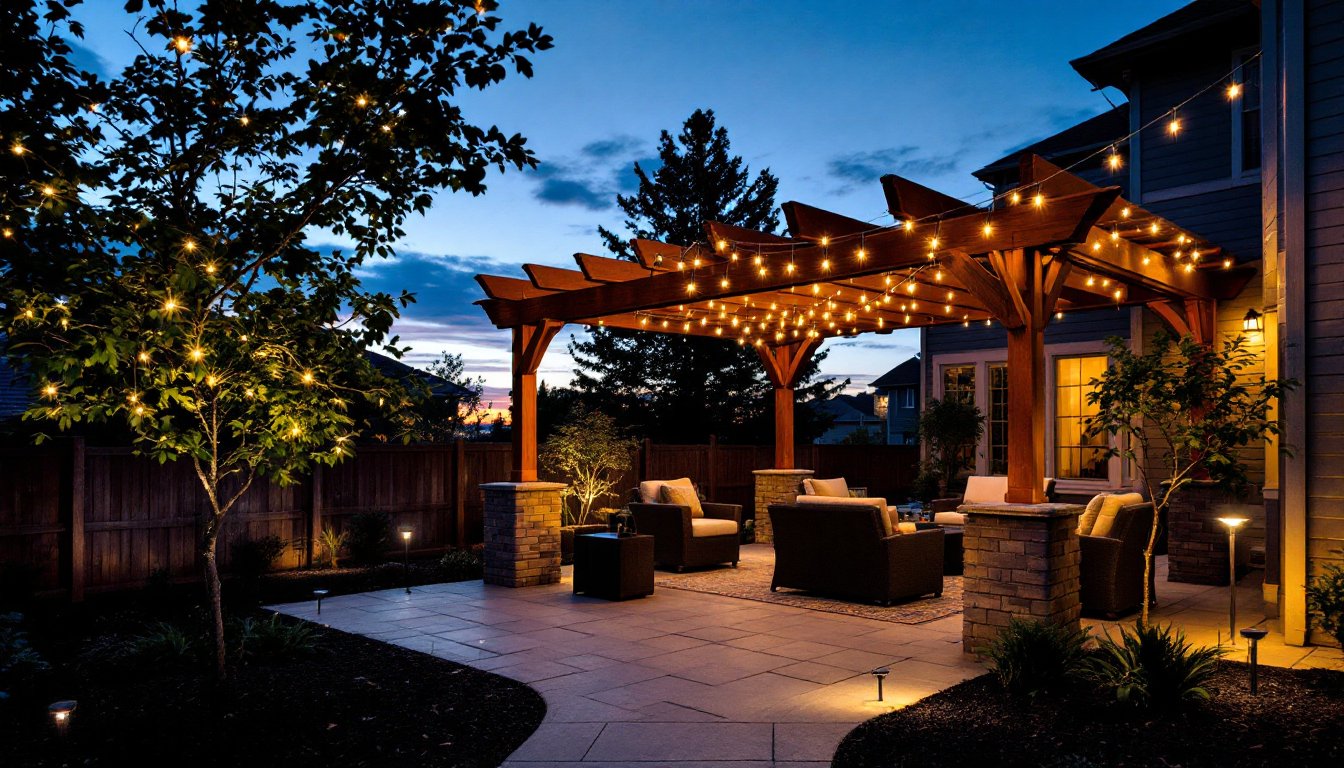

When the sun dips below the horizon, your outdoor space doesn’t have to disappear into darkness. Walmart patio lighting offers an accessible, budget-friendly way to extend the usability and ambiance of decks, patios, and yards. Whether you’re looking for warm string lights to frame a gathering space or practical landscape lighting for pathways and gardens, Walmart stocks options for every budget and style. This guide walks through what’s available, how to pick what fits your needs, and the practical steps to get lights installed and working properly. You’ll learn why outdoor lighting matters beyond aesthetics, and how to avoid common installation mistakes that leave homeowners with flickering disappointment.
Key Takeaways
- Walmart patio lighting extends outdoor usability and safety while creating ambiance, making your deck or patio a functional living space year-round.
- String lights and bistro lights offer affordable ambiance for patios, while LED versions last 20,000-50,000 hours compared to 1,000-2,000 hours for incandescent bulbs.
- Solar landscape lights are simple to install but require 6+ hours of daily sunlight, while hardwired LED systems provide more reliable illumination in variable weather conditions.
- Proper installation requires measuring twice, using GFCI outlets for electrical safety, burying low-voltage wire 6-12 inches deep, and planning anchor points before purchasing fixtures.
- Avoid common mistakes like hanging lights from gutters, undersizing transformers, skipping GFCI protection, or placing solar lights in partial shade to ensure long-lasting performance.
Why Patio Lighting Matters for Your Outdoor Space
Patio lighting does more than look nice, it changes how your outdoor area functions. Properly lit patios and decks extend usability well into the evening, letting you entertain guests, read, or simply relax without artificial spillover from interior lights. Good lighting also improves safety: clear pathways reduce trip hazards, and illuminated deck edges and stairs prevent stumbles.
There’s a practical security angle too. Lit outdoor spaces deter unwanted activity and make entry points more visible. Beyond that, the right warm-colored lighting creates an inviting atmosphere that draws people outdoors and establishes a distinct “room” separate from your home’s interior.
Most homeowners underestimate how much time they’ll actually spend outside once proper lighting is in place. A well-lit patio becomes an extension of your living space, not an afterthought used only on special occasions.
Types of Patio Lighting Available at Walmart
Walmart carries several patio lighting categories, each suited to different purposes and aesthetics.
String Lights and Bistro Lights
String lights (also called café or bistro lights) feature small incandescent or LED bulbs spaced along a cord, typically 10 to 100+ feet in length. They create warm, intimate ambiance and work well stretched across patios, decks, or pergolas. Walmart stocks both plug-in electric and solar-powered versions: the electric options deliver consistent brightness regardless of weather, while solar strings are simpler to install (no outlet needed) but dim on cloudy days.
Incandescent bistro bulbs produce classic warm color (around 2700K), while LED versions last far longer and use less electricity. If you choose LED string lights, expect 20,000 to 50,000-hour lifespans compared to 1,000-2,000 hours for incandescent. The upfront cost is higher, but you won’t be replacing bulbs yearly.
When sizing strings, measure the area you want to cover and add 10-15% extra length for catenary sag (the natural droop when hanging). Plan anchor points, trees, posts, or roof lines, before purchasing.
Solar and LED Landscape Lighting
Solar landscape lights are stake-in fixtures with built-in panels and rechargeable batteries. They work best in consistently sunny locations and are ideal for marking pathways, garden beds, or accent lighting around trees. Walmart offers both soft white and color-changing variants. These require zero wiring and install in minutes, but output is modest (typically 30-80 lumens per light) and they won’t illuminate large areas.
Hardwired LED landscape lighting (also available at Walmart) connects to a transformer and low-voltage wiring system. This setup costs more to install but delivers brighter, more reliable illumination. Spotlights highlight architectural features, downlighting softens deck overhead lighting, and path lights safely mark walkways. Most systems use 12-volt wiring, which is safer than standard household voltage and requires no permit in most jurisdictions, but check local codes before digging.
How to Choose the Right Patio Lighting for Your Needs
Start by defining what you’re lighting and why. Are you framing a seating area for ambiance, lighting a walkway for safety, or doing both?
For ambiance: String lights or bistro lights are your best bet. They’re affordable, flexible, and instantly transform a space. A 25-50 foot string is typical for a 12×12 to 16×16 patio. Choose LED over incandescent if you’ll use them frequently, the energy savings pay for the higher upfront cost within two seasons.
For safety and function: Landscape lighting works harder. Path lights (6-12 inches tall) mark walkways and stairs. Deck step lights and riser lights prevent falls on elevated surfaces. Spotlights highlight trees or architectural features, improving overall visibility. A good rule: aim for 20-30 foot-candles (a unit of illumination) on pathways, enough to walk safely without tripping but not so bright it creates glare.
For reliability: If your area has unpredictable weather or limited sun, hardwired LED landscape systems outperform solar. Solar lights dim or fail completely on consecutive cloudy days: hardwired systems don’t care. But, hardwired setups require a transformer (typically 60-100 watts for a small system), trenching or conduit for wire protection, and basic electrical competence. If you’re not comfortable with wiring, hire a licensed electrician, low-voltage work is usually inexpensive.
Budget considerations: Solar landscape lights cost $10-30 each, string lights run $20-100 depending on length and quality, and hardwired systems start around $150-300 for a basic transformer plus fixtures. Factor in labor if you’re trenching or running conduit: that’s the biggest wildcard in total cost.
Installation Tips and Outdoor Lighting Best Practices
Preparation is everything. Measure twice, install once. Sketch your patio layout, mark anchor points for string lights, and test outlet locations before buying hardware. For landscape lighting, plan sightlines to avoid glare directly into seating areas.
For string light installation:
- Install hooks, swags, or cable runs at anchor points first (trees, posts, or eye bolts anchored into soffits). Use stainless steel hardware to resist corrosion.
- Run the cord loosely along the planned route before tensioning. This lets you adjust placement and ensures the sag is even.
- For sagging sags over 20+ feet, use a mid-span support or heavier gauge cable underneath the light string.
- Plug into a GFCI outlet (ground-fault circuit interrupter), a standard safety feature on outdoor outlets. If your patio lacks one, have an electrician install it, don’t settle for extension cords as a workaround.
- Test all bulbs before final tightening. A dead bulb at the start of a 50-foot run is frustrating to diagnose later.
For solar landscape lights:
- Place units in areas receiving 6+ hours of direct sun daily. Shade reduces charging and dims nighttime output.
- Space path lights 4-6 feet apart for safe foot traffic: 2-3 feet for accent lighting.
- Ensure stakes are fully seated: loose stakes cause lights to tip in wind.
- Clean panels monthly: dust and debris block sunlight.
For hardwired landscape lighting:
- Bury low-voltage wire 6-12 inches deep or run it through PVC conduit if you’re trenching across high-traffic areas. Shallow burial risks striking the line with a shovel.
- Use the appropriate gauge wire, 10 gauge for transformer to first fixture, 12 gauge for longer runs. Undersized wire causes voltage drop and dimming.
- Install a timer or photocell so lights activate at dusk automatically. This saves energy and eliminates nightly switch flips.
- Leave a visible marker or sketch map showing wire routes. Future digging or repairs become a nightmare if no one knows where lines run.
Safety reminders: Wear work gloves and safety glasses when installing hardware. If using a drill to set hooks or fasteners, wear eye protection for flying debris. For electrical work, shut off power at the breaker before touching wires. If you’re uncomfortable with any electrical step, call an electrician, it’s cheaper than a shock or fire.
Common mistakes to avoid:
- Hanging lights from flimsy gutters or downspouts: use structural beams or posts.
- Underestimating transformer wattage: a 60-watt transformer won’t run a 20-light landscape system. Calculate wattage of all fixtures and add 20% headroom.
- Skipping the GFCI outlet: water and electricity are a dangerous mix.
- Installing solar lights in partial shade, expecting full output. They won’t deliver.
Conclusion
Walmart patio lighting offers practical, affordable solutions for extending outdoor usability and creating ambiance. Whether you choose string lights for warmth, solar fixtures for simplicity, or hardwired landscape lighting for reliability, success depends on matching the lighting type to your space and priorities. Take time to plan placement, invest in quality (especially LED over incandescent), and don’t skip safety steps like GFCI outlets or proper wire burial. Start small if you’re new to outdoor lighting, test the setup, and expand as needed. A properly lit patio becomes a genuine outdoor room, one worth finishing before the growing season ends.