
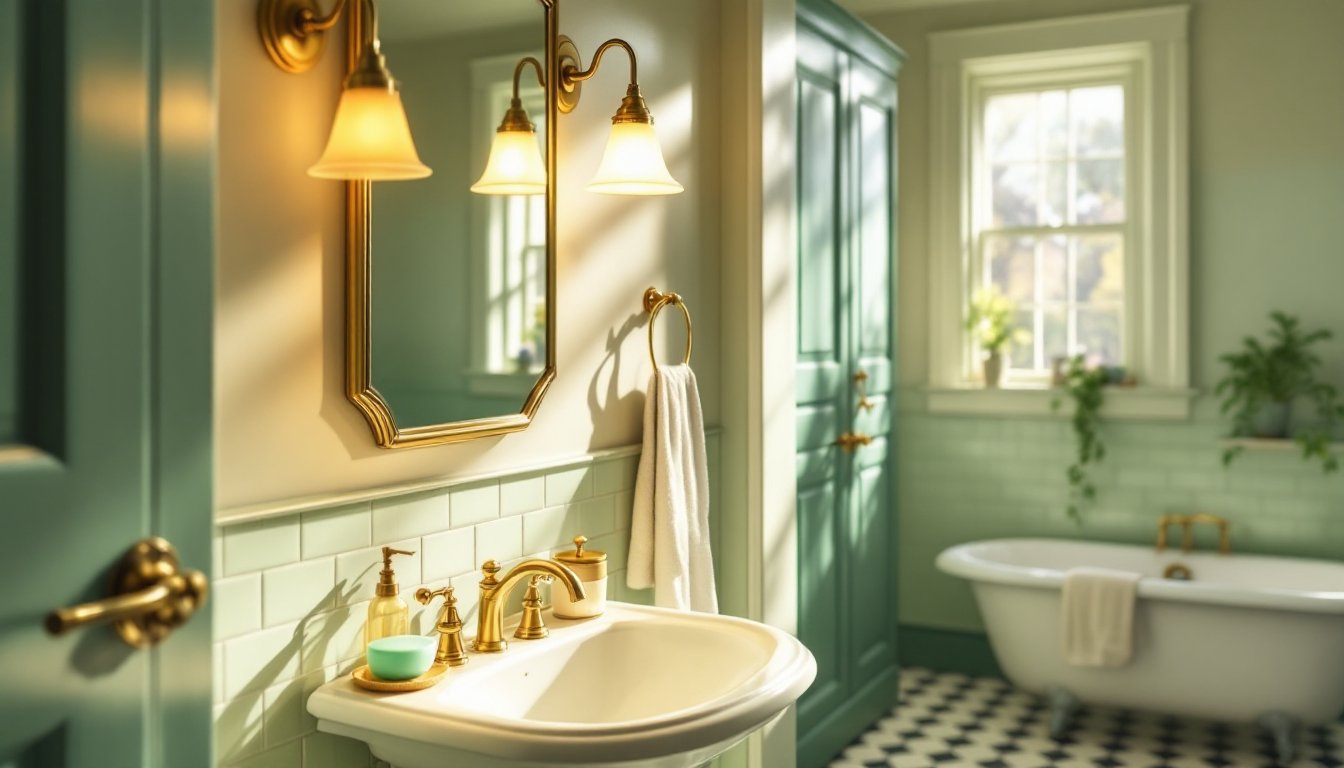

Vintage bathroom lighting brings character and warmth to a space that often defaults to sterile recessed cans or chrome strips. Whether someone’s restoring a 1920s bungalow or simply drawn to the timeless appeal of older fixtures, vintage lighting tells a story while providing essential task and ambient illumination. The right vintage pieces don’t just hang on the wall, they anchor the entire bathroom’s aesthetic, balancing nostalgia with modern function. This guide walks through what makes vintage bathroom lighting distinctive, which styles work best, and how to choose and install fixtures that suit both the space and personal style.
Key Takeaways
- Vintage bathroom lighting combines superior craftsmanship, material quality, and durability that mass-produced modern fixtures often lack, while creating softer shadows that flatter skin tone.
- Art Deco, Mid-Century Modern, Victorian, and Farmhouse styles each offer distinct design aesthetics; choose based on your bathroom’s era and existing finishes like faucets, cabinet pulls, and mirror frames.
- Proper vanity light placement should sit 12 to 18 inches above the sink counter and span approximately 3/4 the width of the mirror for balanced task lighting.
- Frosted glass and milk glass shades provide better light diffusion and hide dust better than clear glass, while LED bulbs in 2700K color temperature preserve vintage warmth without damaging older fixtures.
- Always turn off power at the breaker before installation, verify the junction box weight rating, and layer your lighting with vanity sconces, ceiling fixtures, and ambient accents to prevent harsh shadows.
What Makes Vintage Bathroom Lighting Special
Vintage bathroom lighting stands out because it combines craftsmanship, material quality, and design intention that newer mass-produced fixtures often lack. Older fixtures were built to last, cast brass, solid glass shades, and heavy-duty wiring were standard, not premium upgrades. They also tend to have wider beam spreads and warmer color temperatures than modern LED equivalents, creating softer shadows that flatter skin tone in the mirror.
Beyond durability, vintage fixtures signal a deliberate design choice. A homeowner installing a 1940s sconce over a pedestal sink or a Victorian-style vanity bar isn’t just choosing functional hardware: they’re setting a tone for the entire room. Modern bathrooms often feel generic because every element is interchangeable. Vintage lighting creates a focal point and context, suddenly, subway tiles, black hex floor, and a clawfoot tub feel intentional rather than trendy.
There’s also a practical sustainability angle. Rehabbing an old brass or copper fixture costs far less than buying new, and the original materials often outperform budget replicas. That said, vintage doesn’t mean outdated electrical safety. Any piece pulled from estate sales or antique shops should be rewired to current code before installation.
Popular Vintage Lighting Styles and Eras
Art Deco and Mid-Century Modern
Art Deco bathrooms (1920s–1930s) favor geometric shapes, chrome or polished nickel finishes, and glass or enamel accents. Fixtures often feature stepped profiles, sharp angles, and sometimes frosted or amber glass. These work beautifully in master baths with period tile or concrete vanities. Mid-century modern (1940s–1960s) shares chrome and clean lines but adds softer curves, sculptural arms, and sometimes teak or walnut wood accents. A typical mid-century vanity light has two to four arms with bell-shaped or cylindrical shades, often in milk glass or frosted glass.
Both styles pair well with contemporary plumbing fixtures since they already break from ornate traditions. But, they demand clean walls and minimal fussiness elsewhere, too much visual competition and they get lost. A monochromatic tile palette or simple painted walls work best.
Victorian and Farmhouse Styles
Victorian-era fixtures (1880s–1900s) feature brass or cast iron, ornate details, and often frosted, etched, or stained glass. Picture a two-light sconce with decorative arm brackets, Victorian-style shades, and possibly art glass. These fixtures can feel heavy in a small bathroom, but in a spacious master or powder room with period millwork, they’re stunning.
Farmhouse styling borrows from rural and cottage traditions, simpler shapes, wrought iron or aged bronze finishes, and clear or milk glass. A farmhouse vanity bar might use simple arms, linen or glass shades, and mounting hardware with minimal decoration. These feel lighter and work in smaller spaces without overwhelming the room. Both Victorian and farmhouse pieces pair well with wood-frame mirrors, vintage tile, or shiplap walls.
Choosing the Right Fixtures for Your Bathroom
Start by measuring the bathroom and identifying wall space. Vanity lighting should sit 12 to 18 inches above the sink counter and ideally span 3/4 the width of the mirror, too small and it feels skimpy: too large and it dominates the room. A standard 18-inch to 24-inch vanity light works for most sinks: if there’s a larger mirror or double sink, consider a 36-inch bar or two separate sconces.
Next, consider the fixture’s finish. Polished brass and brushed bronze are durable and timeless: chrome reads modern and clinical unless paired with Art Deco styling. Aged or antiqued finishes hide fingerprints better in a high-moisture bathroom than polished finishes. Check whether the fixture’s materials (brass, steel, glass) suit the room’s other hardware, faucet finish, cabinet pulls, and mirror frame should echo each other.
Shade material matters for both aesthetics and function. Frosted glass scatters light evenly and hides dust: clear glass provides brighter task light but shows every fingerprint. Milk glass (opaque, creamy white) offers a vintage feel with soft diffusion. For vanity duty, recessed or downward-facing shades direct light where it’s needed. Upward-facing or open-bottom designs risk glare and uneven facial lighting.
Electrically, confirm the fixture accepts LED bulbs, important for vintage pieces with smaller sockets or heat-sensitive components. A vintage-style LED bulb (2700K to 2400K color temperature) mimics incandescent warmth without the fixture overheating. Check the fixture’s rated wattage and bulb type before purchasing: a 60-watt equivalent LED in a 40-watt-rated fixture can damage the socket.
Installation Tips and Design Considerations
Before installation, turn off power at the breaker and verify with a non-contact voltage tester, don’t skip this step. Most vintage fixtures are heavy, so check that the existing junction box is rated for the fixture’s weight. Anything over 50 pounds often requires a ceiling-rated brace box (IRC requirements vary by jurisdiction). Most bathroom vanity lights weigh 5 to 15 pounds, so the standard box usually suffices, but confirm before removing the old fixture.
When mounting, use a level and stud finder to locate studs behind the wall. Mark mounting holes in pencil, then drill pilot holes to prevent cracking tile or drywall. For masonry or older plaster walls, use appropriate anchors, plastic toggles work for drywall: concrete anchors (lag bolts with shields) suit masonry. Screw torque matters: hand-tight plus a quarter-turn is usually correct: overtightening strips threads and cracks plaster.
Electrical rough-in is critical. The junction box should sit flush with the wall surface. If installing a new fixture in a location where the old one sat, you’ll likely reuse existing wiring. Have a second person support the fixture while you connect wires, black to black (hot), white to white (neutral), and green or bare copper to ground. Use wire nuts rated for the gauge you’re connecting (typically 14/2 or 12/2 for bathroom circuits). Wrap the connection with electrical tape for extra security in moisture-prone bathrooms.
Design-wise, layer your lighting. Vanity sconces provide task light for grooming, but add a ceiling fixture or recessed lights for general room illumination and a wall sconce or picture light above art or a decorative mirror for ambient warmth. This approach prevents harsh, shadowy grooming light and makes the bathroom feel lived-in rather than sterile.
Conclusion
Vintage bathroom lighting transforms a functional space into one with personality and craftsmanship. By choosing fixtures that match the bathroom’s era and materials, measuring carefully for proper placement, and installing safely with proper support and electrical work, homeowners create lasting character. The result isn’t just better lighting, it’s a bathroom that feels intentional and connected to its design story.