
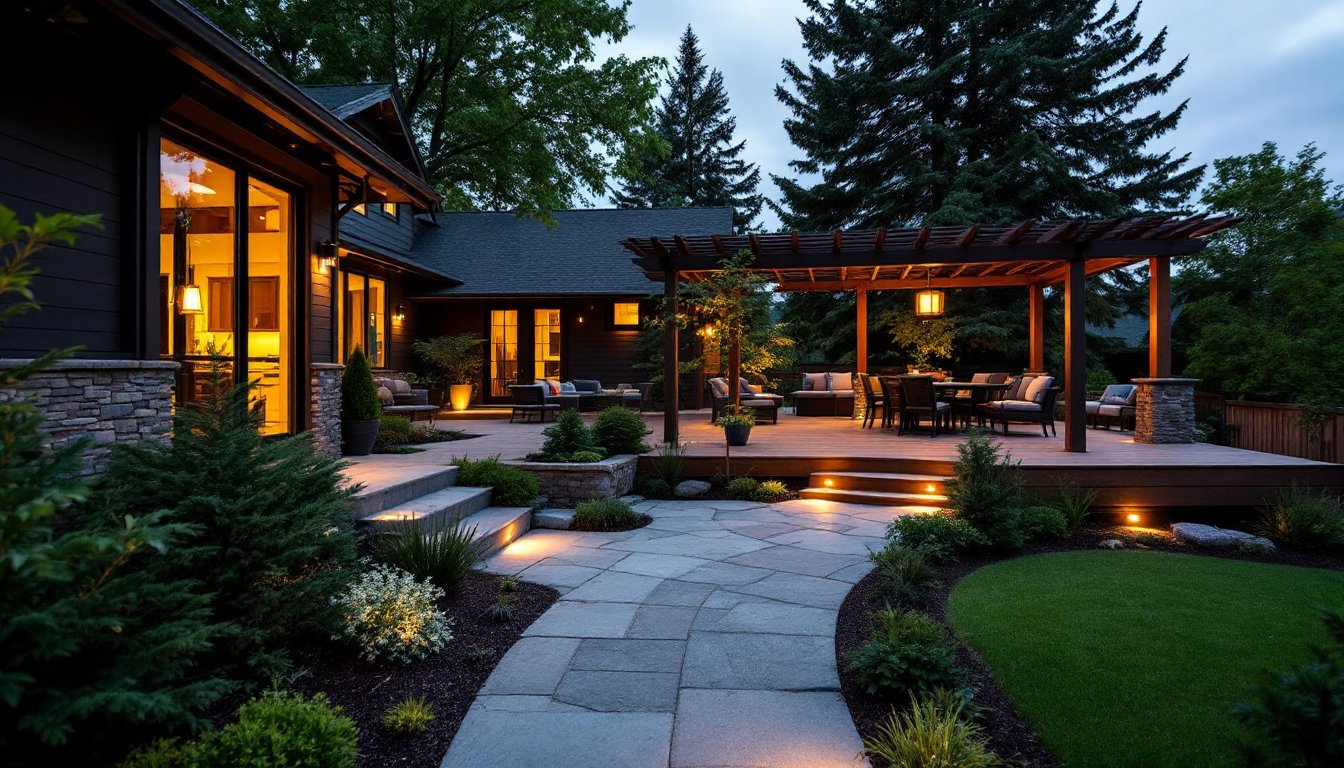

Portland’s mild winters and long, overcast days make outdoor lighting a practical necessity rather than an afterthought. Unlike sunnier regions where dusk arrives late, Portland homeowners benefit from strategic outdoor lighting that extends usable outdoor space, boosts security, and highlights landscape features during those short winter days. Whether planning a new patio lighting system or upgrading existing fixtures, understanding local climate factors, fixture types, and energy efficiency options ensures outdoor lighting solutions work year-round. This guide covers everything a Portland homeowner needs to know about outdoor lighting design, installation, and maintenance.
Key Takeaways
- Outdoor lighting in Portland extends usable outdoor space and enhances security during long winter nights, when sunset arrives as early as 4:45 p.m. from October through March.
- Choose weatherproof fixtures with IP65 or higher ratings to protect against Portland’s wet climate and prevent corrosion, moisture damage, and electrical issues.
- LED pathway lights and landscape lighting are the most practical choice, using 80% less energy than incandescent fixtures and lasting 25,000+ hours while costing only $20-30 in annual electricity.
- Layer your outdoor lighting design with ambient (general illumination), task (functional areas), and accent (architectural highlights) lighting, using timers and motion sensors to balance safety and energy efficiency.
- Low-voltage (12-24V) outdoor lighting systems are DIY-friendly and safe, while high-voltage circuits require a licensed electrician and GFCI protection as mandated by code in wet climates.
- Always call 811 before installation to locate buried utilities, and use waterproof sealant around recessed fixtures to prevent rot and water infiltration in Portland’s rainy environment.
Why Outdoor Lighting Matters in Portland’s Climate
Portland’s location in the Pacific Northwest means darker evenings extend from October through March, with some months seeing sunset as early as 4:45 p.m. That’s not just an inconvenience, it affects how you navigate driveways, use patios, and feel about home security. Outdoor lighting serves multiple practical functions in Portland’s climate: it keeps pathways safe, prevents trip hazards on uneven terrain, deters trespassers, and makes evening entertaining possible during those long dark months.
The region’s frequent rain and overcast conditions also mean outdoor lighting needs durability. Wet winters can corrode fixtures, damage wiring, and cause electrical issues if not properly sealed and grounded. Choosing weatherproof materials rated for wet climates, look for fixtures with IP65 or higher ratings (indicating dust and water resistance), prevents premature failure. Portland’s mild temperatures (rarely below freezing for extended periods) are actually an advantage: you don’t need extreme cold-weather rated materials, but you do need moisture protection.
Types of Outdoor Lighting for Portland Properties
Landscape and Pathway Lighting
Landscape and pathway lights define spaces and improve safety without being intrusive. These low-voltage fixtures (typically 12V or 24V) mount along garden beds, tree lines, or walkways to guide foot traffic and highlight plantings. Unlike high-voltage systems, low-voltage options are safer to install yourself and don’t require a licensed electrician in most cases, though local codes vary, check with your city or county before starting.
Pathway lights work best when spaced 3 to 4 feet apart and positioned to illuminate edges rather than create harsh shadows. Uplighting mounted at ground level shines upward to silhouette trees and hardscape features, while downlighting mounted on eaves or posts casts light downward, ideal for security or ambient evening ambiance. LED pathway lights have become the standard because they run cooler, use 80% less energy than incandescent equivalents, and last 25,000+ hours.
Deck and Patio Lighting
Decks and patios demand brighter, more focused lighting than landscape areas. Recessed deck lights (mounted flush into deck boards) provide subtle ambient light without creating trip hazards, while post-cap lights mounted on deck railings or pergolas illuminate work surfaces and create visual interest. For dining and entertaining, pendant lights hung from pergolas or ceiling joists at 7 to 8 feet high deliver task lighting for table surfaces.
Consider the color temperature of bulbs: warm white (2700K-3000K) creates welcoming evenings, while cooler tones (4000K+) suit security or task-focused areas. On a covered patio, pendant or track lighting works well. On open decks, recessed or post-mounted fixtures perform better against wind and weather. Make sure fixtures are rated for wet locations and that deck boards supporting recessed lights are solid, avoid placing lights in knots or defects that compromise structural integrity.
Choosing the Right Lighting Design for Your Portland Home
Effective outdoor lighting uses layering, combining ambient (general space illumination), task (functional work areas), and accent (architectural highlights) lighting. Start by identifying what you want to illuminate: entryways, patios, pathways, and garden features. Walk your property at dusk and note shadowy, hazardous, or visually appealing areas.
A practical approach for Portland homes: place softer ambient lighting (pathway and landscape fixtures) on timers or motion sensors to run from dusk to dawn, and reserve brighter task lighting (deck and patio fixtures) for when you’re actively using those spaces. This balances safety, ambiance, and energy use. Motion sensors are especially useful in Portland, where you might step outside during winter rain, a light that activates as you approach prevents stumbling.
When placing fixtures, avoid over-lighting. Too many bright lights wash out landscape features, create glare, and waste energy. One well-positioned uplighting on a mature tree creates more visual impact than three dim lights scattered around the yard. Measure distances and sight lines before purchasing: 3-inch fixtures and 6-inch fixtures read very differently from 10 feet away. For decks, ensure railings meet code (typically 36-42 inches for residential), and position lights so they illuminate step edges without shining directly into eyes.
Energy-Efficient LED Options and Smart Lighting
LED technology has matured significantly: a modern LED pathway light outperforms older incandescent or halogen equivalents in every way: brightness, lifespan, and efficiency. The upfront cost is higher, but an LED fixture running 12 hours nightly for 25,000 hours costs roughly $20-30 in electricity, versus $100+ for halogen fixtures burning through bulbs yearly.
Smart outdoor lighting, fixtures controllable via phone apps or voice commands, adds convenience without complexity. Smart dimmers and color-tuning lights let you adjust brightness and warmth from your couch, and automation schedules turn lights on at sunset and off at bedtime without timers. Brands like Philips Hue, LIFX, and Kasa offer weatherproof outdoor bulbs and fixtures, though they typically cost 2-3 times more than basic LED options. For most Portland homes, basic LED fixtures on simple mechanical timers deliver 90% of the benefit at half the cost.
If you’re hardwiring outdoor lighting, low-voltage systems (12-24V) are DIY-friendly and safe. High-voltage (120V) circuits require a licensed electrician to run conduit, install proper junction boxes, and ensure GFI (ground fault interrupt) protection. Never skip the GFI, it’s a safety requirement for outdoor circuits in wet climates and is mandated by code (NEC Article 210) in nearly all jurisdictions.
Installation and Maintenance Considerations
Before you install anything, locate buried utilities. Call 811 (the national locating service) or your local utility notification center to mark underground lines. In Portland, PGE gas lines, water mains, and fiber optic cables are common, and hitting one is expensive and dangerous.
For low-voltage pathway lighting, dig a shallow trench (4-6 inches) along your planned route, lay the low-voltage cable (typically 12 or 14 gauge), and secure it with landscape staples. Position lights every 3-4 feet, keeping them level. Most low-voltage kits include a transformer (converting standard 120V household current to 12V) mounted near a GFCI outlet on your house or garage. The transformer itself doesn’t require a permit in most cases, but confirm with your local building department.
For deck or patio work, if you’re installing recessed lights into existing decking, drill carefully to avoid hitting structural joists or creating water leak points. Waterproof sealant around recessed fixtures prevents rot: use silicone caulk rated for below-grade or wet locations. If running hardwired circuits to new deck fixtures, trenching and conduit require code compliance, that’s contractor work unless you hold an electrical license.
Maintenance is minimal with LED fixtures: annual inspection for debris, checking that fixtures are still level (settling occurs), and replacing any loose seals or gaskets. Portland’s rain means periodic debris accumulation: a quick spray with a garden hose keeps lenses clear. Every few years, verify timers are working and replace batteries in solar lights or motion sensors.