
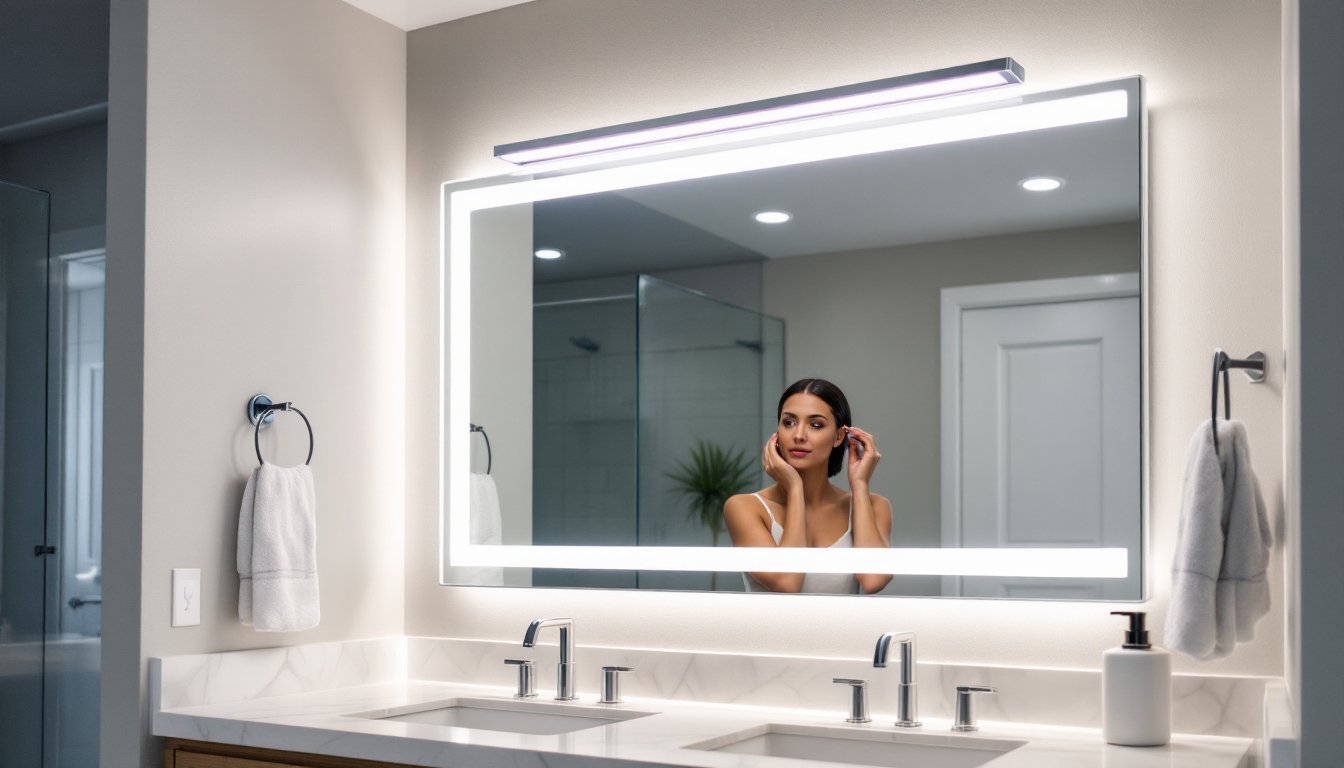

Bathroom lighting isn’t an afterthought, it’s the difference between squinting at your reflection and actually seeing what you’re doing. If you’ve ever tried to shave or apply makeup under dim, unflattering light, you know the frustration. Bathroom bar lights have become essential fixtures in modern homes, offering focused, functional illumination that flatters the user while keeping the space bright enough for safety. Whether you’re renovating a full bathroom or just upgrading aging fixtures, understanding the right bar light for your space matters. This guide walks through what makes bathroom bar lighting work, the main types available, how to pick the best fit for your needs, and the practical steps to install one properly.
Key Takeaways
- Bathroom bar lighting mounted at 36–40 inches above the countertop provides flattering, shadow-free illumination that follows industry standards and improves safety in wet environments.
- Choose a bar light that spans roughly 75% of your mirror’s width and select a color temperature between 3500K–4100K to balance functionality with a non-clinical appearance suitable for grooming tasks.
- LED bathroom vanity bar lights consume 75% less energy than incandescent bulbs and last 15–25 years, making them the most cost-effective and sustainable choice for long-term use.
- Calculate your bathroom’s total lighting needs at 50–100 lumens per square foot, and pair a vanity bar (1,000–1,600 lumens) with recessed ceiling lights for complete, even coverage.
- For wall-mounted vanity bars, secure fixtures into wall studs or use toggle bolts rated for at least 15 pounds, and always hire a licensed electrician for hardwired or ceiling-mounted installations to ensure code compliance and safety.
What Are Bathroom Bar Lights and Why They Matter
A bathroom bar light is a linear fixture, typically mounted above or beside the vanity mirror, that provides direct illumination across the face and workspace. Unlike single overhead bulbs or chandeliers, bar lights spread light evenly across a wider area, reducing harsh shadows and giving you a true-to-life view of your appearance.
Proper bathroom bar lighting serves three key functions: task lighting for grooming activities, ambient illumination for the entire space, and visual balance in your bathroom’s design. Bar lights mounted at eye level (usually 36 to 40 inches above the countertop) deliver the most flattering and practical light without creating shadows under the eyes or chin. This positioning follows industry standards set by the American Lighting Association and aligns with building codes requiring adequate illumination in bathrooms.
Barrier-free, shadow-free lighting reduces accident risk, especially important in wet environments where poor visibility can lead to slips or missteps. It also makes the bathroom feel larger and more open, an important consideration in smaller homes or apartments.
Types of Bathroom Bar Lighting Fixtures
Vanity Bars and Wall-Mounted Options
Vanity bar lights are the most popular choice for bathrooms and come in horizontal configurations that sit above or beside mirrors. A bathroom vanity bar light typically spans 24 to 48 inches, with multiple bulbs or an integrated LED array. Wall-mounted vanity bars can be installed directly above the mirror (most common) or on either side for balanced, shadow-free lighting.
These fixtures come in several styles. Modern designs feature clean lines and minimalist aesthetics, while traditional vanity bars incorporate chrome, oil-rubbed bronze, or brushed nickel finishes. Some vanity bars are dimmable, allowing you to adjust brightness for morning showers versus evening wind-down routines. Bathroom vanity bar light fixtures with adjustable brightness add flexibility without requiring rewiring.
Wall-mounted bars work best when centered above the mirror at eye level. If your mirror is wider than 48 inches, consider installing two smaller bars (one on each side) rather than one oversized fixture, this distributes light more evenly and looks proportional.
Ceiling-Mounted and Recessed Bar Lights
Ceiling-mounted bar lights hang from overhead joists and suit bathrooms with higher ceilings or when vanity space is limited. These fixtures provide general ambient lighting for the entire room while complementing a vanity bar’s task lighting. Recessed bar lights (integrated into the ceiling) offer a sleek, built-in appearance and work well in modern or minimalist bathrooms.
Recessed options require cutting into drywall and running wiring through the ceiling cavity, this is structural work best suited to experienced DIYers or professionals. If you’re uncomfortable working in ceiling cavities or live in an area requiring permits for electrical work, hire a licensed electrician. Ceiling-mounted pendants that hang on chains or brackets are less invasive and can be added to existing wiring without major drywall cuts.
How to Choose the Right Bar Light for Your Space
Selecting the right bar light starts with measuring and assessing your bathroom’s layout. First, determine your mirror’s width, the bar light should be roughly 75% of the mirror’s width, centered above it. A 36-inch mirror pairs well with a 24- to 28-inch bar light: a 48-inch mirror works with a 36- to 42-inch bar light. This proportion prevents the fixture from looking too small (underpowered) or too large (overwhelming).
Second, consider light color temperature, measured in Kelvin (K). Warm light (2700K–3000K) feels cozy but may not provide enough contrast for detailed grooming. Cool light (4000K–5000K) mimics daylight and reveals true skin tone and color, making it ideal for makeup application and shaving. Many designers recommend 3500K–4100K as a balanced middle ground that’s functional without feeling clinical.
Brightness (measured in lumens) matters too. Bathrooms typically need 50–100 lumens per square foot. A 5-by-8-foot bathroom requires roughly 2,000–3,200 lumens total from all fixtures. A single vanity bar might provide 1,000–1,600 lumens, so pair it with recessed ceiling lights or a second bar for adequate coverage.
Also check energy efficiency. LED bathroom vanity bar lights consume 75% less energy than incandescent bulbs and last 15–25 years. Most modern fixtures come with LED or use standard socket types (E26 or GU10), giving you flexibility to upgrade bulbs later. If dimming is important, confirm the fixture and bulbs are dimmable-compatible, not all LED bulbs work with older dimmer switches.
Installation and Placement Best Practices
Installation difficulty depends on your fixture type and existing electrical infrastructure. A plug-in or hardwired vanity bar requires basic tools: a stud finder, level, drill, screws, and the fixture’s hardware. Most vanity bars mount with two or three anchors into studs or drywall.
Step-by-step for wall-mounted vanity bars:
- Locate studs behind the wall using a stud finder. Mark two studs (or one stud and wall anchors if studs don’t align with your mirror center). Studs are typically 16 inches apart.
- Hold the fixture at eye level (36–40 inches above the vanity countertop) and mark mounting holes with a pencil. Use a level to ensure the fixture sits perfectly horizontal.
- If mounting into drywall without studs, use toggle bolts or heavy-duty anchors rated for at least 15 pounds per anchor (vanity bars weigh 3–8 pounds typically).
- Drill pilot holes slightly smaller than your screws to prevent cracking drywall.
- Install the mounting bracket or backplate using the provided hardware. Tighten screws snugly, over-tightening strips threads and weakens the mount.
- Connect the fixture’s wiring to your existing bathroom circuit (typically 20-amp). If you’re uncomfortable with electrical work, hire a licensed electrician. Local codes may require permits for hardwired fixtures.
- Install bulbs, attach the fixture cover, and test for proper operation.
For ceiling-mounted or recessed fixtures, run wiring through ceiling joists and ensure the circuit breaker can handle the additional load. This work almost always requires a licensed electrician: attempting it without experience risks fire hazard or code violations.
Safety notes: Turn off power at the breaker before handling wires. Wear safety glasses when drilling overhead. Confirm the fixture’s rated voltage and amperage match your circuit. In wet zones (within 3 feet of a shower or tub), fixtures must be rated for damp or wet locations per the National Electrical Code (NEC).
Conclusion
Bathroom bar lighting transforms your grooming space from dim and frustrating to bright and functional. Whether you choose a sleek vanity bar above the mirror, side-mounted options, or recessed ceiling fixtures, proper placement, adequate brightness, and appropriate color temperature make all the difference. Measure carefully, assess your electrical setup honestly, and don’t hesitate to call a professional for hardwired or ceiling work. With the right fixture installed correctly, you’ll wonder how you ever managed without it.