
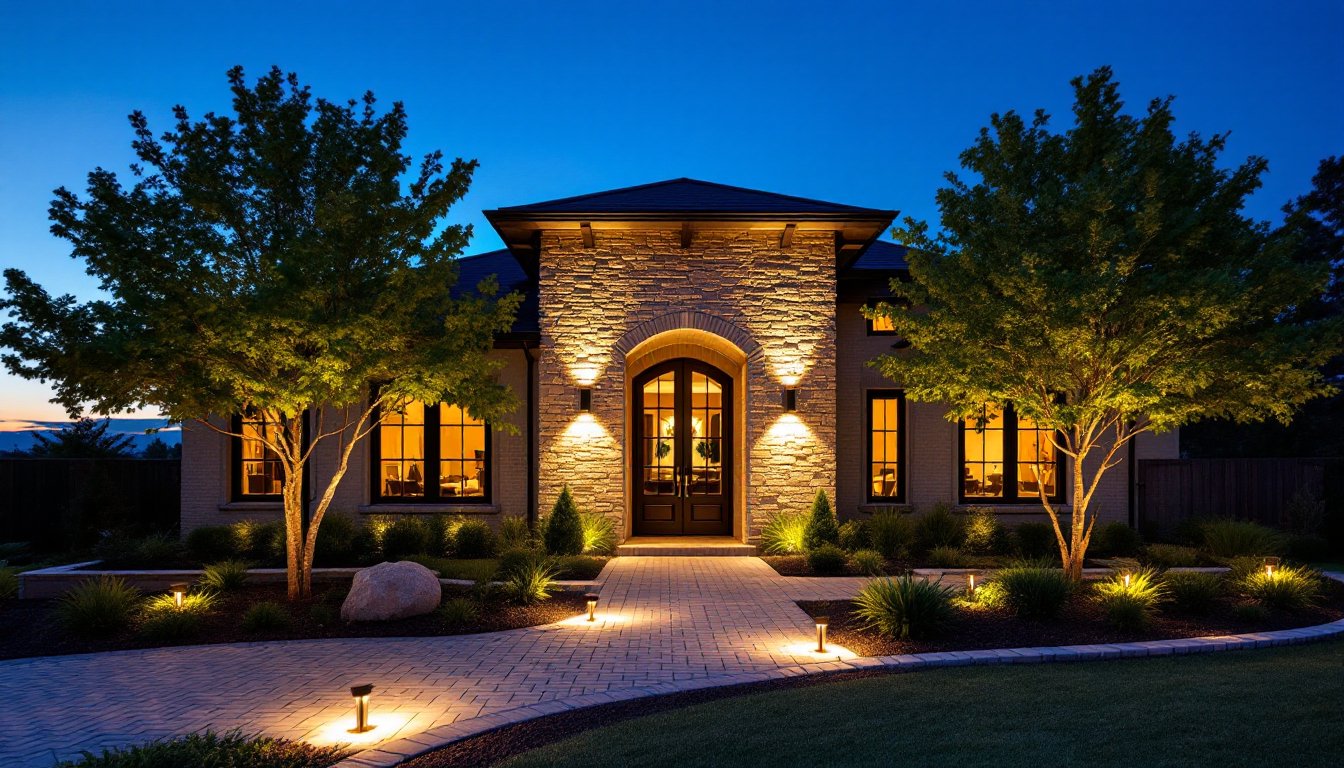

Architectural landscape lighting transforms outdoor spaces from flat and featureless after dark into visually dynamic environments. Unlike standard floodlights that wash a yard in uniform brightness, thoughtful lighting design draws the eye to focal points, creates depth, and extends the usability of patios, gardens, and pathways well into the evening. When executed properly, outdoor lighting enhances both the home’s curb appeal and the functionality of its exterior living areas. This guide walks through the core principles and practical choices that separate amateur backyard lighting from professionally designed schemes.
Key Takeaways
- Architectural landscape lighting emphasizes structure, form, and selective brightness to transform outdoor spaces into visually dynamic environments rather than uniformly flooding yards with light.
- Layering your outdoor lighting across three tiers—ambient, task, and accent—creates depth and dimension while avoiding hot spots and flat illumination.
- Intentional contrast between lit focal points and shadowed areas makes landscapes more interesting; stick with warm color temperatures (2700K–3000K) for an inviting, residential feel.
- LED technology has become the standard for landscape fixtures, offering 80% greater energy efficiency, 25,000+ hour lifespans, and precise beam angle control (15°, 24°, 40°).
- Invest in outdoor-rated materials like copper, stainless steel, or cast brass with IP65 minimum weatherproofing, and use low-voltage systems for DIY safety or 120V for longer fixture runs.
- Start with a simple architectural lighting scheme—ambient light for high-traffic areas, accents on one or two focal points, and warm tones—then build incrementally while observing how light performs at dusk.
Understanding Architectural Landscape Lighting
Architectural landscape lighting is a strategic approach to illuminating outdoor areas by emphasizing structure, form, and atmosphere rather than simply flooding a yard with light. It’s the difference between a motion-sensor floodlight that turns everything white and a system that highlights tree canopies, accentuates building lines, and creates visual interest through selective brightness.
This discipline borrows techniques from theatrical and architectural lighting design. A landscape lighting designer considers the home’s architectural style, the existing plants and hardscape, sight lines from the house and street, and how light will move across surfaces and into the viewer’s eye. The goal is to make outdoor spaces feel intentional and curated, not utilitarian.
Architectural lighting serves several practical functions: it enhances security by illuminating walkways and entry points, increases property value through improved curb appeal, and makes yards more enjoyable for entertaining and recreation. But the real payoff is emotional, a well-lit landscape creates a sense of refinement and extends the home’s living space into the night.
Key Design Principles for Effective Outdoor Illumination
Effective outdoor lighting relies on a few core principles applied consistently. These principles separate a cohesive, attractive landscape from one that looks chaotic or overlit.
Layer Your Lighting for Depth and Dimension
Layering means using multiple light sources at different heights and intensities to build visual depth. Think of it in three tiers: ambient lighting provides general visibility and sets the mood, task lighting targets specific areas like patios or pathways where people actually move, and accent lighting highlights architectural or natural features like a stone fireplace, mature tree, or garden wall.
A practical example: a backyard might use warm downlighting mounted in trees or eaves to create soft ambient glow, add path lights along walkways for safe foot traffic, and install uplighting at the base of a specimen tree to silhouette its canopy against the night sky. Each layer serves a purpose and works in concert with the others.
When layering, spacing and height matter. Lights placed too close together create hot spots and wash out texture. Spread them out and vary their mounting heights, some at 20 feet in trees, others at 3 feet on the ground, to avoid flat, even illumination.
Balance Brightness and Shadows
A common mistake is making everything equally bright. Contrast between lit and unlit areas actually makes a landscape more interesting and inviting. A shadowed corner draws the eye elsewhere: a brightly lit focal point becomes a visual anchor.
The key is intentional contrast. Light the front entry and patio generously, but allow the perimeter to fall into softer shadow. Highlight one or two specimen trees, not every shrub. Use uplighting on a feature wall, but let neighboring surfaces fade to shadow.
Brightness levels also affect mood. 2700K color temperature (warm white, like incandescent) feels intimate and residential: 3000K (neutral warm) suits transitional zones: 4000K and above (cool white) reads clinical and is best reserved for security needs. Most landscape designs favor 2700K to 3000K for their inviting quality.
Another balance to strike: light the front of features, not the back. If a tree is lit from behind, it becomes a silhouette: lit from the front, its form and texture become visible. Position lights to graze surfaces at shallow angles, emphasizing texture rather than flattening features with direct overhead light.
Choosing the Right Fixtures and Technology
Fixture selection drives both the aesthetic and functional outcome. The market offers traditional path lights, uplights, spotlights, wall sconces, and in-ground options. Material, weatherproofing, and beam angle all factor into the choice.
LED technology has become the standard for landscape lighting. LEDs consume 80% less energy than incandescent equivalents, last 25,000+ hours, and allow precise color temperature control. Most quality landscape fixtures now use LED modules sized for specific beam widths, 15°, 24°, 40°, affecting how tightly or broadly light spreads. A tight 15° beam creates dramatic spotlighting: a wider 40° beam covers more area with softer effect.
Fixture materials matter outdoors. Copper, stainless steel, and powder-coated aluminum resist rust and UV degradation. Cast brass holds up well and develops a patina over time. Plastic lights are budget-friendly but degrade in UV and look cheap within a few years. Invest in fixtures rated IP65 minimum (dust and water resistant) if they’ll be submerged, splashed, or exposed to harsh weather.
Wiring and control systems have evolved too. Low-voltage (12V) systems are safest for DIY installation and don’t require a licensed electrician like line-voltage (120V) systems do. But, 120V systems allow longer runs without voltage drop and support more fixtures on a single circuit. If running more than 100 feet or powering many lights, 120V may be practical.
Smart controls (timers, dimmers, color-changing options) add flexibility. A basic digital timer costs $20–50 and ensures lights turn on at dusk. WiFi-enabled systems let homeowners adjust brightness or color temperature from a phone, ideal for entertaining or adjusting seasons. Cost jumps to $200–500 for quality smart systems, but they’re optional, a simple timer works fine for most installations.
Must-have tools for installation: a voltage tester (non-negotiable for electrical safety), wire connectors rated for outdoor use, a shovel for trenching if burying wire, wire cutters, and a multimeter to troubleshoot. For fixture aiming, a headlamp lets you see where light falls without ambient glare masking your view.
Safety reminder: if wiring above ground or near water features, keep it clear of traffic and pets. Bury outdoor wiring in PVC conduit if it crosses a pathway. Never splice outdoor wires above ground, use weatherproof junction boxes. And always call 811 before digging to locate underground utilities.
Conclusion
Architectural landscape lighting is achievable for homeowners willing to think strategically about hierarchy, contrast, and fixture quality. Start with a simple scheme: ambient light in high-traffic areas, accent lights on one or two focal points, and warm color temperature for a welcoming feel. Build incrementally rather than installing every fixture at once. Step outside at dusk to observe how light interacts with your specific landscape, then adjust brightness and aiming accordingly. The best outdoor lighting looks effortless but requires thoughtful planning, the mark of professional-caliber work.