
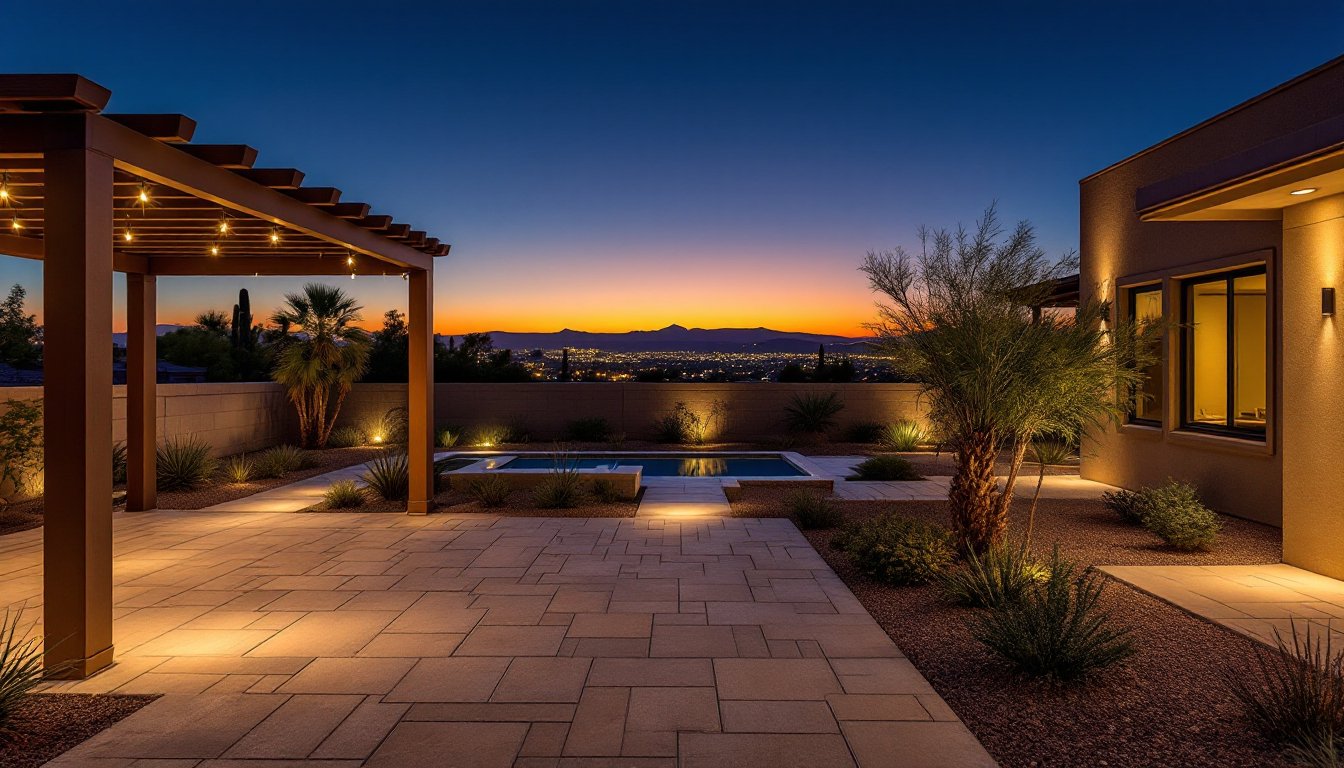

Las Vegas homeowners face a unique lighting challenge. The intense desert sun dominates daytime hours, but once it sets, outdoor spaces vanish into near-total darkness, and that darkness arrives fast. Without thoughtful outdoor lighting, a Las Vegas backyard becomes unusable after sunset, wasting valuable evening hours. Strategic outdoor lighting in Las Vegas transforms a dark yard into a functional, safe, and visually appealing extension of the home. Whether someone wants to entertain, improve security, or simply enjoy their landscape, the right lighting design makes all the difference in this high-heat, low-humidity climate.
Key Takeaways
- Strategic outdoor lighting in Las Vegas extends usable evening space and counters the desert’s rapid sunset transition, transforming dark backyards into functional, safe retreats.
- LED fixtures consume 75–80% less energy and last 25,000–50,000 hours—far superior to incandescent bulbs—and handle desert heat better when rated IP65 or higher with anodized aluminum housings.
- Layer outdoor lighting into three categories—ambient for general movement, task for specific activities, and accent for visual interest—using lumens rather than watts to avoid glare and energy waste.
- Outdoor lighting in Las Vegas improves security by deterring trespassers, illuminating entry points, and ensuring safe movement around pools and landscaped areas.
- Choose fixtures with removable lenses and account for mineral-rich Las Vegas water deposits; always use a licensed electrician for hardwired systems near water features due to local building code requirements.
Why Outdoor Lighting Matters in the Las Vegas Climate
Las Vegas’s desert climate creates specific lighting demands that differ from other regions. The area experiences extreme temperature swings, scorching days and surprisingly cool nights, which affects how outdoor fixtures perform and degrade over time. Intense UV radiation from the relentless sun breaks down plastics, wires, and paint finishes faster than in humid climates, making material durability a real concern for outdoor lighting installations.
Beyond material challenges, Las Vegas’s rapid sunset creates a sharp transition from daylight to darkness. Unlike northern climates with gradual twilight, the desert sun disappears quickly, leaving homeowners with limited time to prepare outdoor spaces for evening use. Strategic lighting bridges this gap, extending usable outdoor living time and improving visibility for pathways, patios, and entry points.
Security is another critical factor. Well-placed outdoor lighting deters trespassers, illuminates dark corners, and makes homes less vulnerable to break-ins. Motion-activated fixtures around perimeters and entry points add an extra layer of protection. Also, proper lighting ensures safe movement around pools, decks, and landscaped areas where trips and falls become more likely in darkness.
Types of Outdoor Lighting Solutions for Desert Homes
LED and Energy-Efficient Options
LED (light-emitting diode) lighting dominates modern outdoor installations, and for good reason in Las Vegas. LEDs consume 75–80% less energy than incandescent bulbs, a significant advantage given Nevada’s summer cooling demands and year-round heat. They also last 25,000–50,000 hours compared to 1,000 hours for traditional incandescent bulbs, reducing replacement frequency in hard-to-reach fixtures.
LEDs handle desert heat better than older technologies. While extreme temperatures can reduce lifespan slightly, quality LED fixtures designed for outdoor use include proper heat sinks and weatherproofing that protect against both heat and UV exposure. Look for fixtures rated IP65 or higher (indicating water and dust resistance) and anodized aluminum housings that resist corrosion from mineral-laden Las Vegas water.
Solar-powered LED lights offer an additional option for pathway and accent lighting. Modern solar fixtures store enough energy to run through the night, even in late fall and winter when daylight hours shorten. They eliminate wiring and electrical costs, though they perform best in areas that receive direct sunlight during the day. Hybridize the approach: use solar for pathways and accent areas where consistent brightness isn’t critical, and hardwired LEDs for main activity zones.
Landscape and Accent Lighting
Landscape lighting shapes how people perceive outdoor space. Uplighting, directing light upward toward plants, trees, or architectural features, creates dramatic shadows and highlights textures. A 30–50 watt LED uplight positioned 3–4 feet from the base of a desert shrub or palm creates visual interest without glare. Downlighting, placing fixtures above and aiming light downward, illuminates pathways and patios while reducing glare in the eyes.
Accent lighting emphasizes focal points: a water feature, specimen plant, or architectural detail. This category includes spotlights, well lights (recessed into the ground), and step lights (mounted on deck or patio edges). Accent fixtures often use narrower beam angles (15–40 degrees) compared to general illumination (60+ degrees), concentrating light for visual drama.
String and hanging lights add ambiance for entertaining. Warm-color LED string lights (2700K color temperature, measured in Kelvin) create a welcoming, outdoor-room feel. 2700K to 3000K LEDs produce a warm, almost-incandescent appearance, while cooler 4000K to 5000K options feel more clinical. For Las Vegas patios, warmer color temps work best, especially during evening entertaining when cooler light can feel harsh against desert landscaping.
Designing a Lighting Plan for Your Las Vegas Property
Start with a site audit. Walk the property at dusk and note areas that feel dark, unsafe, or underutilized after sunset. Mark high-traffic zones (main entry, pathways to garage), entertainment areas (patio, pool), and accent opportunities (specimen plants, water features). Take photos with a smartphone in low light to see how the space actually appears at night without any artificial lighting.
Layer your lighting into three functional categories. Ambient lighting provides general illumination for movement and basic visibility, overhead fixtures, pathway lights, or soft uplighting. Task lighting targets specific activities: bright lights near a grill, counter lighting on an outdoor kitchen, or pool lights for swimming. Accent lighting creates visual interest through uplighting, spotlights, or silhouetting.
Calculate brightness in lumens, not watts. A common mistake is buying oversized fixtures that create glare and waste energy. For pathways, aim for 50–100 lumens per fixture spaced 8–10 feet apart. Patios typically need 100–300 lumens per fixture, depending on activity and size. A 1500–2000 lumen fixture covers a small seating area: larger gathering spaces may need 3000+ lumens. Lumen requirements depend on surrounding darkness, reflective surfaces (light concrete reflects more than dark pavers), and personal preference.
Choose fixture placement strategically. Avoid placing lights at eye level where they cause direct glare. Mount uplights in planting beds rather than on the ground. Position path lights along edges, not in the middle of walkways. For deck or patio lighting, consider recessed soffit lights (mounted under the eaves or pergola beams) that spread light downward without drawing eyes upward.
Account for Las Vegas’s mineral-rich water. Hard water deposits build up on fixture lenses over time, reducing light output. Choose fixtures with removable, replaceable lenses or design the system with regular cleaning in mind. Polycarbonate and tempered glass hold up better than acrylic, which yellows faster under desert sun.
Wiring runs should be planned for efficiency and safety. Outdoor wiring must be rated UF (underground feeder) cable if buried, or use GFCI (ground fault circuit interrupter) outlets if running above ground. Local Las Vegas building codes typically require permits for any hardwired outdoor lighting, especially near pools or decks. A licensed electrician should handle the main circuit and any work within 5–10 feet of water features. DIY installation works for solar lights and low-voltage LED systems, but high-voltage circuits demand professional work.
Conclusion
Outdoor lighting transforms a Las Vegas property from an unusable dark zone into a functional evening retreat. Thoughtful placement, energy-efficient LED fixtures, and a layered design approach ensure safety, ambiance, and usable outdoor space year-round. Start with a simple plan, invest in quality fixtures rated for desert conditions, and consider professional help for hardwired systems. The right outdoor lighting pays dividends in enjoyment, safety, and home value.