
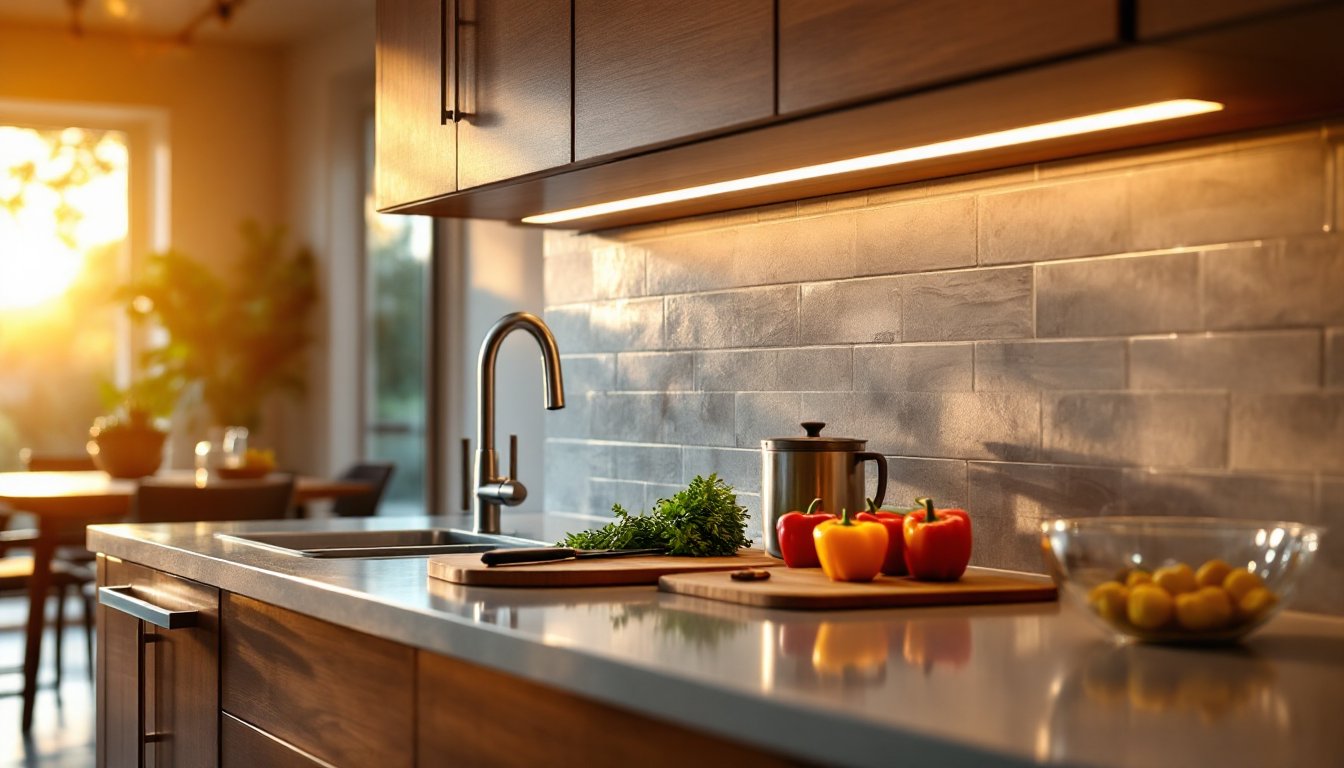

Under cabinet lighting does more than look polished, it solves a real kitchen problem. When a cook reaches for a knife or reads a recipe, poor lighting creates shadows right where they’re needed least. LED under cabinet lights deliver focused task lighting without the heat of older halogen strips, and they’ve become one of the easiest DIY upgrades a homeowner can tackle. Whether someone’s updating a galley kitchen or a full remodel, choosing the right LED under cabinet lighting hinges on brightness, color temperature, installation method, and budget. This guide breaks down what actually works, what looks good in different kitchen styles, and how to separate solid performers from the overhyped stuff.
Key Takeaways
- The best LED under cabinet lighting delivers 50–100 lumens per linear foot to eliminate counter shadows and improve task visibility without harsh glare.
- Choose 3000K warm white for traditional kitchens or 4000K neutral white for contemporary spaces, and prioritize a CRI of 90+ to ensure accurate food prep colors.
- Aluminum extrusions with frosted diffusers outperform bare plastic strips in light distribution, durability, and professional appearance across all kitchen styles.
- Mid-range LED under cabinet lighting ($150–$300 per 10-foot run) offers the best value for DIY installations, balancing brightness, longevity, and dimming capabilities.
- Hard-wired installations provide the cleanest aesthetic, while plug-in strips offer easier setup for rentals; verify local building codes before choosing your installation method.
- Smart-enabled under cabinet lighting integrates seamlessly with existing home automation systems, adding flexibility through app or voice control dimming and color adjustments.
Why LED Under Cabinet Lighting Transforms Your Kitchen
Under cabinet lighting solves the fundamental problem that overhead fixtures create: shadow directly on the work surface. When a cook stands at the counter with their back to the main light, their hands and cutting board fall into a shadow zone. LED strips mounted to the underside of cabinets throw light directly onto the countertop, eliminating that blind spot.
Beyond function, this lighting elevates the whole kitchen experience. It highlights countertop textures, backsplash finishes, and adds a welcoming ambiance for evening entertaining. Unlike older halogen or incandescent under cabinet options, LEDs run cool, no heat risk to cabinetry or food prep areas.
Modern LED strips are efficient, long-lasting (typically 30,000–50,000 hours), and don’t require replacement bulbs every season. They also pair easily with smart home systems, dimming switches, and motion sensors. For a modest investment and a Saturday morning of installation, the return in usability and appearance is hard to beat.
Key Features to Look for in Quality Under Cabinet Lights
Not all LED under cabinet lights perform the same way. The best choices share a few core traits worth understanding before buying.
Brightness and Color Temperature
Lumen output matters more than wattage for LEDs. Aim for 50–100 lumens per linear foot of counter space to eliminate shadows without creating harsh glare. A typical 24-inch run should deliver around 400–600 lumens. If cabinets hang high, reach for the upper range: if they’re low, aim lower.
Color temperature is measured in Kelvin (K). For kitchens, 3000K (warm white) suits traditional and transitional designs and feels inviting in the evenings. 4000K (neutral white) works well in contemporary kitchens and provides better task-lighting visibility. Avoid anything below 2700K (too amber) or above 5000K (too clinical). Some premium strips offer color-adjustable options, letting homeowners dial in the warmth they prefer, handy if kitchen design shifts or personal taste changes.
Look for a CRI (Color Rendering Index) of 90 or higher. This ensures colors appear true, important when food prep and color-matching finishes are on the agenda. A CRI below 80 can make fresh vegetables look dull and cabinet stain look off.
Installation and Control Options
Hard-wired strips offer the cleanest look, wires run inside cabinets and connect to a dedicated circuit or junction box. This requires basic electrical knowledge and usually involves running romex cable or conduit. Building codes vary, so check local requirements: most jurisdictions require a licensed electrician for hard-wired kitchen work, though some permit homeowners to do their own labor under inspection.
Plug-in strips use a standard outlet and a power cord tucked behind the cabinet or countertop. Easier to install and no permit hassle, but less polished. They work well for rentals or temporary setups.
Wireless or battery-powered strips exist but rarely deliver enough lumen output for true task lighting. Reserve these for accent or ambient use only.
Dimming and control matter. Many LED strips work with standard dimmers, but not all, check the spec sheet. Smart-enabled options connect to Wi-Fi or Bluetooth, allowing dimming and color adjustments via phone or voice command. These cost more upfront but add flexibility and work seamlessly if a kitchen already has smart home integration.
Look for strips with aluminum extrusions (the channel the LED sits in). These diffuse light evenly, reduce glare, and last longer than bare-PCB strips. A diffuser lens (milky or frosted) further softens hot spots and creates a professional appearance.
Best Lighting Solutions for Different Kitchen Styles
Kitchen design shapes what under cabinet lighting makes sense aesthetically and functionally.
Modern and minimalist kitchens benefit from sleek, thin-profile aluminum strips with frosted diffusers. 4000K color temperature complements stainless steel appliances and clean lines. A low-profile bar-style extrusion (roughly 0.5 inches tall) keeps visual clutter to a minimum. Smart dimming adds tech polish without visible switches cluttering countertops.
Traditional and transitional kitchens pair better with 3000K warm white and slightly larger aluminum channels that look intentional rather than hidden. Avoid strips so thin they look like an afterthought. Consider whether the lighting will be visible from dining or living areas, if so, a professional-grade profile with a frosted lens ensures it looks like a design choice, not a retrofit.
Industrial or farmhouse aesthetics can actually showcase the light source. Open aluminum strips without full diffusers, or even thin vintage Edison-style LED tubes, create character. The visual exposure plays into the design language rather than fighting it.
Galley kitchens or small spaces need every lumen working hard. Opt for higher brightness (75–100 lumens per foot) and longer strip runs if possible. A single run down the center of a galley’s work surface is often enough: side-by-side runs add bulk without commensurate benefit in tight quarters.
Regardless of style, avoid mismatched color temperatures across the kitchen. If the main overhead is 3000K, match under cabinet strips to it. Mixing 3000K and 4000K in the same space creates visual discord.
Budget-Friendly vs. Premium Options
LED under cabinet lighting ranges from $50 to over $500 per 10-foot kit, depending on features and build quality.
Budget options ($50–$150 per 10-foot run) typically feature basic LED strips with plastic clips or adhesive backing. These work fine for temporary or accent lighting, but brightness drops with age faster than premium units, and the plastic diffusers yellow over time. Installation is foolproof, just clean the cabinet underside with rubbing alcohol and press the strip on, but the stripped-down design looks like what it is: a quick add-on. Warranty periods are often 1–2 years.
Mid-range options ($150–$300 per 10-foot run) offer aluminum extrusions, better LED components, and higher lumens. Most support dimming and include better mounting hardware (metal clips rather than adhesive). Warranty typically extends to 3–5 years. This is where most DIYers find strong value. Brands in this tier often achieve CRI 90+, decent color temperature accuracy, and reasonable longevity.
Premium options ($300+ per 10-foot run) feature architectural-grade aluminum, advanced optics, smart home integration, and extended warranties (5–10 years). Some use modular designs that let homeowners upgrade components without replacing entire strips. Build quality is noticeably better, and they hold brightness longer. Worth considering if the kitchen is newly renovated and the homeowner plans to stay in the home for 10+ years.
A practical approach: Start with mid-range strips for the main task areas (over the sink and primary prep zone), then add budget-friendly strips for accent or ambient use elsewhere. This balances cost with performance where it matters most. Avoid the absolute cheapest plastic-heavy options if the kitchen sees heavy daily use: the slight upfront investment pays dividends in longevity and appearance.
Conclusion
Choosing the right LED under cabinet lighting comes down to matching brightness and color temperature to the kitchen’s needs and style, ensuring the installation method fits the homeowner’s comfort level and commitment, and aligning the budget with how long they plan to stay in the home. Quality strips with aluminum extrusions and frosted diffusers outperform bare-PCB plastic alternatives in nearly every way. Mid-range options deliver genuine value for most kitchens. With proper selection, under cabinet LED lighting becomes an invisible hero, solving the real shadow problem and adding both function and warmth to the most-used room in the house.