
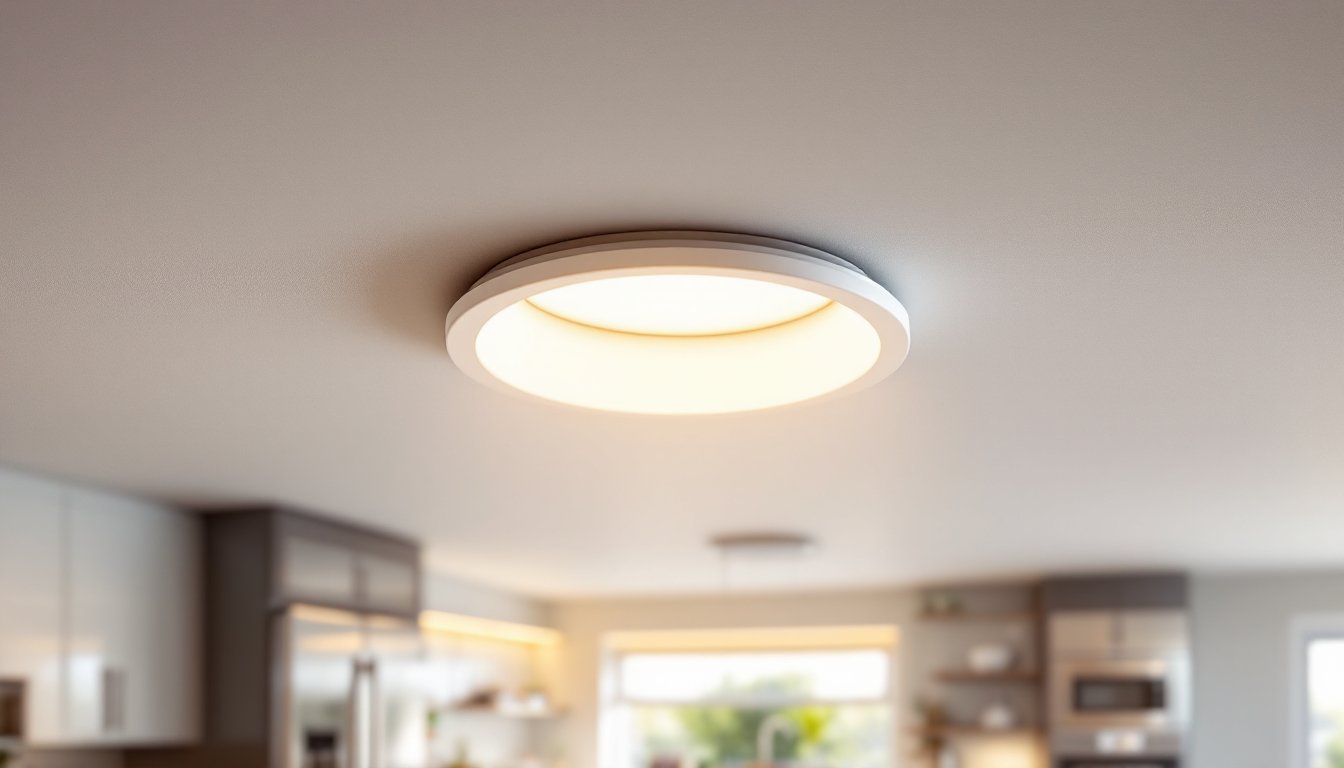

3-inch LED recessed lighting has become the go-to choice for homeowners updating their lighting systems. These compact fixtures fit into tight ceiling spaces while delivering modern efficiency and clean aesthetics that larger 4-inch or 5-inch models can’t match. Whether upgrading an older home with shallow joist cavities or refreshing a kitchen, bathroom, or living area, 3-inch LED recessed lights solve real installation constraints. This guide walks through brightness levels, color options, installation requirements, and cost trade-offs so a homeowner can make an well-informed choice without hiring an electrician for every detail.
Key Takeaways
- 3-inch LED recessed lighting consumes 75–80% less energy than traditional halogen or incandescent fixtures, with a typical payback period of 2–4 years through reduced utility bills and maintenance.
- Choose 3-inch LED recessed lights based on room type: 500–700 lumens for bedrooms, 750–1,000 lumens for kitchens and bathrooms, and 600–800 lumens for living areas.
- Select the right color temperature for your space—2700K for warm ambiance, 3000K for balanced lighting, and 4000K for task-focused areas like kitchens and bathrooms.
- Ensure compatibility by verifying dimmable LED fixtures work with your existing dimmer switches, and confirm your ceiling housing accepts 3-inch trim rings before purchasing.
- 3-inch LED recessed lights fit tight joist cavities in older homes where larger 4-inch or 5-inch fixtures cannot, lasting 25,000–50,000+ hours compared to 1,000–5,000 hours for traditional bulbs.
What Makes 3-Inch LED Recessed Lights Stand Out
Key Advantages Over Traditional Recessed Lighting
3-inch LED recessed lights deliver several practical benefits over older halogen or incandescent recessed fixtures. First, they consume 75–80% less energy, which translates to real savings on utility bills over time. A typical 60W equivalent LED uses only 8–10 watts while producing the same brightness as a 60-watt incandescent bulb.
Second, lifespan matters. LEDs last 25,000 to 50,000 hours (some models exceed 100,000 hours), compared to 1,000–2,000 hours for incandescent or 2,000–5,000 hours for halogen. That means fewer bulb changes and lower maintenance headaches.
Third, heat output is minimal. Traditional recessed lights dump heat into the attic or between-floor cavities, which wastes cooling energy in summer and can damage insulation. LEDs run cool, critical for older homes with minimal attic ventilation or when installing near fiberglass insulation.
Finally, 3-inch trim rings fit into shallow ceiling cavities that 4-inch or 5-inch fixtures cannot. Many older homes, especially 1960s–1980s construction, have tight floor-to-joist spacing or existing ductwork that rules out larger fixtures. A 3-inch recessed light operates within this constraint without sacrifice.
Brightness and Color Temperature Options for Every Room
LED recessed lights come in a range of brightness levels and color temperatures, so matching the right combination to each room prevents both under-lit and over-lit spaces.
Brightness is measured in lumens (total light output). A typical 3-inch LED recessed light produces 500–1,000 lumens, depending on wattage equivalent and design. For comparison:
- Bedrooms: 500–700 lumens per fixture works well, especially if dimmable. Multiple lower-output fixtures beat one or two bright ones.
- Kitchens and bathrooms: 750–1,000 lumens per light is standard, with 3–4 fixtures covering a 100–120 sq. ft. space.
- Living areas: 600–800 lumens suits relaxed seating: accent lighting needs less output.
Color temperature ranges from warm to cool. It’s measured in Kelvin (K):
- 2700K (warm white): Resembles incandescent bulbs: cozy for bedrooms and dining areas.
- 3000K (neutral warm): Balanced, works nearly everywhere: popular choice for kitchens.
- 4000K (cool white): Energizing: good for task lighting or bathrooms.
- 5000K and above (daylight): Rarely needed in homes: typically for workshops or detail work.
Many dimmable 3-inch LED fixtures maintain color at reduced brightness, though cheaper non-dimmable models can flicker or shift color when dimmed. Check product specs before assuming dimming compatibility.
How to Choose the Right Wattage and Lumens
Wattage on an LED label doesn’t mean brightness, it means power consumption. A 9W LED replaces a 60W incandescent in brightness, not wattage. Lumens are what count.
Use this basic formula: multiply the square footage of the room by 2–3 (for moderate task lighting) or 1.5 (for ambient light). For a 150 sq. ft. kitchen, aim for 300–450 lumens total. Divide by the number of fixtures, if four fixtures cover it, each should produce 75–112 lumens. That sounds low, but four distributed fixtures feel brighter than one overhead.
Consider beam angle too. A standard recessed trim has a 40°–50° beam spread, concentrating light downward. Reflector trims or diffusers spread light wider (65°+), useful for accent walls or broad ambient light. Narrow beams (25°–30°) highlight artwork or architectural features.
Dimmable LEDs require compatible dimmers, not all standard dimmer switches work with LED. If planning dimming, buy LED fixtures and dimmers rated together, or use a 0–10V dimming control system, which is more forgiving across brands. Don’t assume a 20-year-old dimmer will cooperate with new LEDs: test first or replace it. Incompatibility causes flickering, buzzing, or failure to dim smoothly.
Installation and Compatibility Considerations
3-inch LED recessed lights require a 3-inch remodel or new-construction housing, depending on whether the ceiling is already open. New construction housings are cheaper and deeper: remodel housings sit in existing ceilings and don’t need joist access.
For drywall ceilings, measure the opening first. A nominal 3-inch opening accommodates most trim rings, but verify your housing diameter. Fixtures mounted too close to insulation risk overheating: most require a 3-inch minimum air gap around the housing. If insulation is overhead, buy IC-rated (insulation contact) fixtures designed to tolerate direct contact.
Electrical: Each fixture draws 8–12 watts typically. A standard 15-amp circuit handles roughly 1,400 watts usable load, so you can run 100–150 individual LEDs on one circuit (far more than on incandescent). Wiring must be 12-gauge copper for circuits longer than 50 feet to avoid voltage drop: 14-gauge works for shorter runs. If cutting into joists or wiring near attic insulation, know your local electrical code, most jurisdictions follow the National Electrical Code (NEC), but requirements vary.
Compatibility with existing fixtures: Some older recessed cans accept pin-based LED modules: most 3-inch LEDs come with integrated dimmers or screw-in bases (GU10, E26, or similar). Check if your housings are compatible before buying bulbs. Buying mismatched components leads to wasted money and frustration.
Cost Comparison: LED vs. Halogen and Incandescent
Upfront cost for 3-inch LED recessed fixtures runs $15–$50 per fixture (trim, housing, and integrated LED), compared to $8–$15 for halogen or incandescent setups. A typical kitchen retrofit with 4–6 fixtures costs $80–$300 in LED hardware.
But, operating costs tell the real story. A 60W equivalent LED uses 9W: a halogen 60W uses 60W. Running eight fixtures 5 hours daily for one year:
- LED: 8 × 9W × 5 hr × 365 days = 13.1 kWh annually (~$1.60 at $0.12/kWh)
- Halogen: 8 × 60W × 5 hr × 365 days = 87.6 kWh annually (~$10.50)
- Savings: ~$8.90/year per fixture, or ~$70–$90 annually for a typical install
Add in replacement labor (halogen bulbs need changing every 1–2 years: LEDs last 10+ years), and the payback period is typically 2–4 years. After that, it’s pure savings.
Pricing varies by region, retailer, and whether fixtures are smart-enabled (WiFi dimming, color-changing). Basic dimmable 3-inch LEDs from reputable brands cost $25–$40: premium smart models run $50–$100+. Don’t buy the cheapest off-brand fixtures: poor color rendering and early failure defeat savings.
Top Applications for 3-Inch Recessed Lights in Modern Homes
Kitchens: Recessed lights pair with under-cabinet task lighting. Install 3–5 fixtures spaced evenly across the ceiling (roughly 4–5 feet apart), using 3000K or 4000K. Pair with dimmers for ambiance during dinners. Never rely on recessed lights alone in a kitchen: add counter lighting or pendants.
Bathrooms: A 3-light fixture above the vanity (using 3000K, ~800 lumens total) combined with 2–3 ceiling lights (2700K–3000K) works well. Ensure fixtures are rated for high-humidity environments (look for “damp” or “wet” ratings) to prevent corrosion. Exhaust fans generate moisture: install recessed lights away from duct pathways.
Bedrooms: 2–4 dimmable 2700K fixtures create warmth. Position them off-center to avoid glare when lying down. Add wall sconces or bedside lamps for reading rather than relying solely on overhead recessed lights.
Living areas and hallways: 3-inch recessed lights work as accent or ambient lighting. Use narrow beams (25°–30°) to highlight artwork or architectural features: wider beams (50°+) for general ambiance. Layer with table lamps or floor lamps for flexibility.
Older homes: 3-inch fixtures excel in homes with shallow joist cavities, log cabins, or cottages where larger fixtures won’t fit. They’re the practical choice when existing framing is non-negotiable.
Making the Right Choice
3-inch LED recessed lighting combines efficiency, longevity, and design flexibility. By understanding lumens, color temperature, and installation constraints, a homeowner avoids costly mistakes and ends up with lighting that truly fits the space, not just fills it. Start with one room, measure carefully, and buy compatible dimmers before installation. The energy savings and maintenance relief pay dividends for years.