
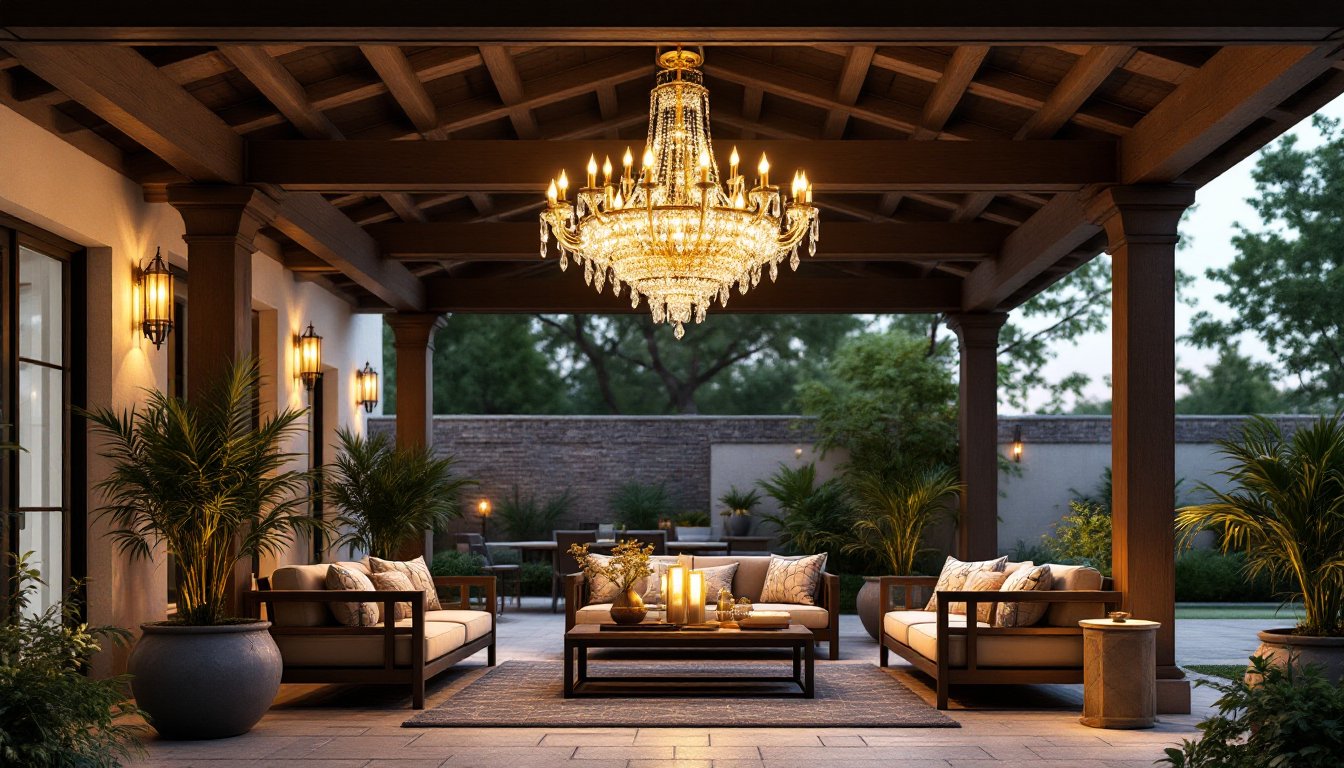

Outdoor chandeliers have evolved far beyond the stuffy Victorian parlor aesthetic. Today’s outdoor chandelier designs blend elegance with durability, turning a basic patio into an outdoor room worthy of evening gatherings and entertaining. Whether hung under a covered pergola, suspended from a gazebo frame, or mounted on a masonry column, an outdoor chandelier serves dual purposes: it provides functional ambient lighting and anchors the space with visual impact. Unlike string lights or standard fixtures, a quality outdoor chandelier makes a design statement while handling moisture, UV exposure, and temperature swings without fading or corroding. For homeowners ready to move beyond basic landscaping lights, an outdoor chandelier upgrade delivers both immediate curb appeal and lasting functionality.
Key Takeaways
- An outdoor chandelier serves as both functional ambient lighting and a design focal point that transforms a basic patio into an elegant entertaining space.
- Modern outdoor chandeliers use weather-resistant materials like brass, stainless steel, and marine-grade aluminum with damp-rated or wet-rated components to withstand moisture, UV exposure, and temperature swings for over a decade.
- Crystal chandeliers work best in semi-protected spaces like covered porches, while rustic and industrial styles are more budget-friendly ($150–$400) and better suited for exposed pergolas and gazebos.
- Proper installation requires mounting to substantial structural supports like ceiling joists or masonry, hanging at least 7 feet above high-traffic areas, and running outdoor-rated electrical wiring with GFCI protection for safety.
- Layer your outdoor chandelier lighting with uplighting and wall sconces using warm white LEDs (2700K) and dimmable controls to create intentional ambiance while minimizing shadows and insect attraction.
- Maintain your outdoor chandelier with twice-yearly cleaning, quarterly crystal dusting, annual LED bulb checks, and post-storm inspections to prevent corrosion and water intrusion for long-term performance.
Why Outdoor Chandeliers Are The Ultimate Upgrade For Your Backyard
An outdoor chandelier does what standard porch lights and pathway fixtures can’t: it creates an intentional focal point and sets the mood for your entire outdoor entertaining space. Unlike recessed deck lights or simple wall sconces, a chandelier draws the eye upward and establishes a sense of destination. Guests step into your backyard and immediately register that effort went into the design.
From a practical standpoint, modern outdoor chandeliers are built for exposure. Materials like brass, stainless steel, and marine-grade aluminum resist corrosion far better than indoor-only fixtures. Many models feature weather-sealed wiring and UL-rated outdoor bulbs rated for damp locations (damp-rated) or wet locations (wet-rated), which matters when you’re dealing with humidity, rain splash, or morning dew. A properly specified outdoor chandelier can handle a decade or more of seasonal weather with minimal deterioration.
The lighting quality also differs. Indoor chandeliers often use candle-shaped bulbs in glass shades: outdoor versions frequently employ LED bulbs rated for temperature extremes and Edison-style or frosted glass designs that don’t attract insects as aggressively as clear glass. The result is softer, warmer light that flatters your space without turning your patio into a bug convention.
Types Of Outdoor Chandeliers: Finding Your Perfect Style
Outdoor chandeliers come in a surprising range of styles. The key is matching the fixture to your home’s architecture and your patio’s overhead structure.
Crystal And Formal Chandeliers
Crystal or glass-accented outdoor chandeliers bring elegance to covered porches, screened patios, and pergolas with solid roofing. These fixtures feature Swarovski-grade crystals or frosted glass pendants that catch light beautifully in evening settings. They work best in semi-protected spaces because repeated heavy rain and direct UV exposure can dull crystal over time. If your patio has a pergola roof or solid overhang, crystal varieties deliver that high-end resort feel. Look for models with all-weather brass bases and stainless steel hardware to prevent corrosion of fasteners.
Formal chandeliers typically hold four to eight bulbs and range from 24 to 36 inches in diameter, making them suitable for patios roughly 12×14 feet or larger. Smaller spaces risk an overcrowded feel.
Rustic And Industrial Options
Rustic and industrial chandeliers suit exposed outdoor areas, pergolas, and gazebos. These use materials like wrought iron, aged bronze, and black powder-coated steel, finishes that weather gracefully and actually look better with a patina. Industrial styles often feature bare Edison bulbs or candelabra-style LED bulbs, which complement farmhouse and modern aesthetics equally.
Rustic models handle full sun and rain exposure better than crystal versions. They’re also typically lighter on the budget, a quality wrought-iron outdoor chandelier runs $150–$400, while crystal equivalents start at $300–$600 or more. For pergolas and gazebos without side protection, rustic and industrial are the smarter choice.
Installation And Placement Essentials
Installation location and hanging method matter as much as fixture choice. An outdoor chandelier must be supported by something substantial, not just drywall. It needs either a ceiling joist, pergola beam, or a mounting bracket bolted to masonry.
Ceiling height and clearance: Hang outdoor chandeliers at least 7 feet above floor level in high-traffic areas (walkways, seating zones) to prevent head bumps. Above a dining table, aim for 12 to 18 inches above the tabletop. For pergolas without a solid ceiling, aim for the 8- to 9-foot range so the fixture doesn’t catch wind as aggressively.
Electrical requirements: Run outdoor-rated wiring (typically 12/3 or 14/3 UF cable, depending on distance and amperage) from an existing junction box or outdoor breaker circuit. An outdoor chandelier usually draws 60–150 watts total, so it doesn’t demand a dedicated 20-amp line in most cases, but check local electrical code (NEC Article 210), some jurisdictions require GFCI protection for all outdoor lighting. This isn’t optional: GFCI outlets detect moisture and ground faults, preventing shock.
Mounting hardware: Use stainless steel bolts and lock washers to attach the fixture’s mounting bracket. Galvanized hardware corrodes faster in coastal or humid climates. For masonry mounting, install lag bolts with plastic anchors or lead anchors depending on your wall type: brick and stone require different anchor specs.
When to hire a professional: If the junction box is more than 30 feet away, if you’re running cable through rafters or walls, or if your home lacks an outdoor circuit, bring in a licensed electrician. Outdoor wiring mistakes don’t just cause code violations, they create fire and shock hazards.
Maintaining Your Outdoor Chandelier For Long-Term Beauty
A brass or bronze outdoor chandelier will develop a protective patina, a dull, darker surface that actually prevents deeper corrosion. Don’t mistake patina for damage. If you want to keep a shinier finish, rinse the fixture with a soft brush and mild soap solution twice yearly, then dry with a microfiber cloth.
Crystals and glass: Dust quarterly with a soft brush to prevent mineral buildup from water spray. If you’re in a hard-water region, wipe glass components with a vinegar solution (one part white vinegar, three parts water) to dissolve deposits. Never use abrasive cleaners or rough cloths, they scratch the surface.
Bulb maintenance: Check LED bulbs annually and replace any that dim noticeably. Most quality outdoor LEDs last 15,000–25,000 hours, but weather stress can shorten lifespan. Keep spare bulbs on hand in the right wattage and color temperature (typically 2700K for warm, inviting light).
Wiring and seals: After major storms or heavy rain, inspect the fixture’s base and mounting bracket for water intrusion. Small gaps should be sealed with outdoor silicone caulk (not latex). If you notice corrosion on fasteners, unscrew them, clean with a wire brush, apply a light coat of metal protectant spray, and reinstall.
Seasonal prep: In winter or off-season, dust and clean before storage if your fixture is removable. For permanent installations in harsh climates, consider a weatherproof fabric cover to reduce UV and salt exposure.
Lighting Design Tips For Maximum Impact
An outdoor chandelier’s visual and functional impact depends on how you layer light and position the fixture within your space.
Focal point placement: Center the chandelier over the main seating or dining area, not off to one side. If your patio is 20 feet long, hanging it above a dining table at 15 feet in creates an unbalanced feel. Dead center or one-third from an architectural feature (a corner fireplace, entry door, or garden wall) feels intentional.
Combining light layers: A chandelier alone won’t light a whole patio evenly. Add uplighting on landscape features or wall sconces flanking an entry for depth. Aim for a mix of ambient (the chandelier), task (spotlights on a grill or kitchen counter), and accent lighting (uplighting on trees or architectural details). The chandelier sets the mood while other fixtures handle practical needs.
Bulb color and intensity: Warm white LEDs (2700K) feel inviting for evening entertaining: 3000K leans slightly more neutral. Avoid anything cooler than 4000K outdoors, it looks clinical and attracts more insects. Dimmable bulbs let you adjust ambiance without rewiring: install a weatherproof dimmer switch in a sealed outdoor box to avoid moisture damage.
Deck or ground-level patios: If you’re hanging the chandelier above ground level, watch for shadows cast by the fixture onto seating areas. Aim for 20–25 feet of horizontal spread from the fixture to minimize hard shadows, this typically means holding back from very low installations directly over tables.
Correct placement and layering transform an outdoor chandelier from a pretty decoration into a space-defining lighting solution that works hard every evening.