
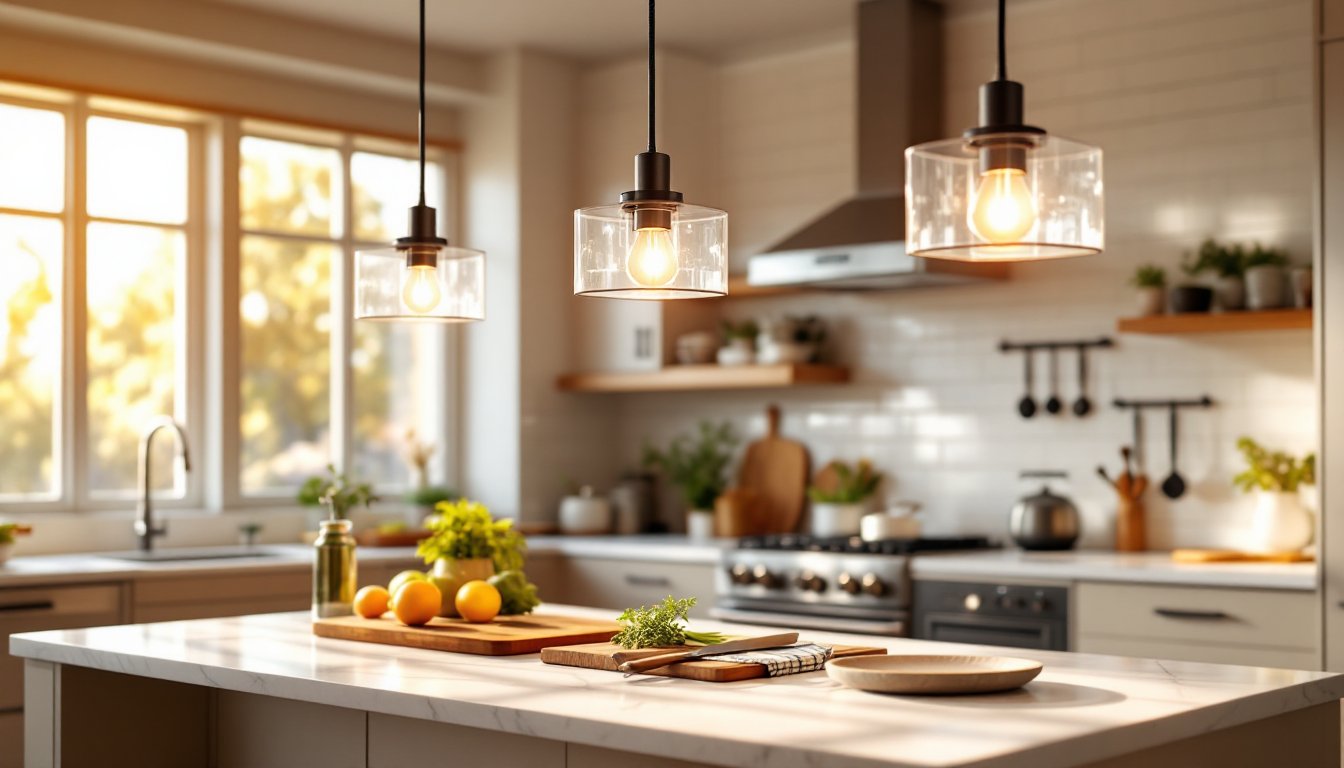

Pendant lighting fixtures have become a staple in contemporary home design, and for good reason. Unlike ceiling-mounted flush fixtures that wash a room in uniform light, pendant lights hang from a cord, chain, or rod and create focused pools of illumination that double as statement décor. Whether installed over a kitchen island, dining table, or entryway, they add visual interest while solving real lighting challenges. A homeowner upgrading their kitchen or remodeling a bedroom should understand how pendant lights work, where they perform best, and which styles fit their space and budget. This guide walks through selection, installation, and design considerations so that any DIYer can make an informed choice.
Key Takeaways
- Pendant lighting fixtures hang 12 to 36 inches below the ceiling and create focused pools of light while adding sculptural design elements to any room.
- Proper sizing and placement are essential: the fixture diameter should be about one-third the width of the surface it illuminates, and height should be 30–36 inches above kitchen work surfaces or 60–66 inches above dining tables.
- Contemporary, industrial, vintage, and artisan pendant styles cater to different design preferences, with materials ranging from powder-coated steel and brushed aluminum to mouth-blown glass and brass.
- Pendant lights are more energy-efficient and cost-effective than recessed fixtures, with modern LED bulbs consuming 75% less energy than incandescent equivalents and lasting 25,000+ hours.
- Kitchens, dining rooms, bedrooms, entryways, and home offices are ideal applications for pendant lighting fixtures, which are easier to install and adjust than built-in recessed lighting.
- Choose pendant fixtures with standard bulb bases (E26 or E12), adjustable color temperatures (2700K for warmth, 4000–5000K for task lighting), and moisture-resistant finishes over sinks or in humid areas.
What Are Pendant Lighting Fixtures and Why They Matter
A pendant light is a single or multi-fixture luminaire suspended from the ceiling by a cord, chain, rod, or tube. Unlike recessed lights or flush mounts, pendants hang 12 to 36 inches below the ceiling, depending on the application and room height. They deliver direct or ambient light to a specific zone, a kitchen counter, dining surface, or workspace, making them highly functional as well as decorative.
Pendants matter in modern interiors because they solve multiple design problems at once. They add layered lighting (combining pendants with ambient overhead light creates flexible, energy-efficient illumination for different tasks). They also act as sculptural elements: a well-chosen pendant fixture instantly upgrades a room’s personality. From an electrical standpoint, they’re straightforward to install if you’re replacing an existing ceiling fixture, you’re typically tapping into the same junction box and wiring already in place.
For a DIYer, the key advantage is flexibility. Pendant lights work in almost any room and are easier to adjust or swap than built-in recessed lighting. If you want to change your kitchen’s look in two years, you simply unscrew the fixture, not replumb and rewire.
Popular Pendant Lighting Styles and Materials
Contemporary and Industrial Designs
Contemporary pendants emphasize clean lines, geometric shapes, and minimal ornamentation. Think frosted glass globes, sleek metal cones, or matte black cylinders. These fixtures work well over kitchen islands and in modern minimalist spaces because they don’t compete with existing décor, they enhance it. Materials often include powder-coated steel, brushed aluminum, or mouth-blown glass. Many contemporary designs accommodate LED bulbs natively, with integrated dimming or color-temperature adjustment built into the fixture itself.
Industrial pendants take cues from factory and warehouse lighting. Expect exposed Edison-style bulbs, weathered brass, raw steel, and sometimes cage or hobnail glass shades. These fixtures typically require a medium-base E26 socket and work best with vintage-style bulbs (though modern dimmable LED Edison bulbs are now standard and far more energy-efficient than incandescent). Industrial pendants are forgiving, they look equally at home in a loft, farmhouse kitchen, or garage workspace.
Vintage, Transitional, and Artisan Options
Vintage pendants draw from mid-century modern, Art Deco, or Victorian design. Brass, blown glass, and turned wood are common. These fixtures often feel nostalgic but aren’t a strict historical recreation. Transitional pendants blend traditional and contemporary elements, perhaps a classic dome shade in a modern finish, or ornate metalwork paired with minimalist glass. Both styles work in eclectic or traditional spaces.
Artisan and handmade pendants often command higher price points but offer uniqueness. Blown-glass artisan fixtures, hand-turned wood frames, and custom metalwork create focal-point lighting that can’t be replicated in mass-produced imports. If budget allows and the piece fits your space, artisan fixtures elevate a room in ways that off-the-shelf options cannot.
Choosing the Right Size, Height, and Placement
Size matters more than homeowners realize. An undersized pendant over a large island looks skimpy: an oversized one dominates the view line. A general rule: the fixture diameter should be about one-third the width of the surface it illuminates. For a 36-inch-wide island, a 12-inch-diameter pendant is proportionate. For multiple pendants, space them 24 to 36 inches apart (center-to-center) to avoid harsh shadows and gaps in light coverage.
Height is critical for function and aesthetics. Over a kitchen counter, hang the bottom of the fixture 30 to 36 inches above the work surface. This positions the light where you need it (on your hands and cutting board) without glare in your eyes. Over a dining table, aim for 60 to 66 inches from the floor to the fixture bottom, low enough to feel cozy and intimate, high enough that people can see across the table without the shade blocking sightlines.
Before you drill, confirm the ceiling structure. Many kitchens have soffit boxing (built-out framing) above cabinetry. Check inside the junction box to see if a joist or header runs perpendicular to where you plan to hang. If mounting to drywall alone, use heavy-duty toggle bolts or a ceiling medallion-mounted brace. For joists, a standard pancake box or old-work box works fine. Measure, mark, and hold up a template (or even cardboard mock-up) to preview placement before cutting drywall.
Best Rooms and Applications for Pendant Lights
Kitchens are the most obvious choice. A pair or trio of pendants above an island provides task lighting, defines the island as a gathering spot, and serves as jewelry for the room. Over the kitchen sink, a single pendant softens the utilitarian feel and improves lighting for dish duty.
Dining rooms benefit hugely from a linear pendant or cluster positioned 36 to 48 inches above the table’s center. This draws the eye downward, creates intimacy, and makes table settings more visible. Bedrooms can use smaller pendants as nightstands (flanking a headboard) to free up floor space and add a designer touch.
Entryways, hallways, and stairwells are less obvious but equally effective. Pendants above an entryway console make a strong first impression, while a series down a hallway creates visual interest without the bulk of wall sconces. Avoid pendants in high-traffic passages where a hanging shade could create a head-bump hazard, stick to areas where people pause, not where they walk at a hurried pace.
Home offices, studios, and workshops benefit from task-focused pendants. A swag pendant (hung from a hook, not a ceiling box) over a desk is easy to install and adjust. Garages and mudrooms tolerate industrial or utilitarian styles gracefully.
Lighting Performance and Energy Efficiency
Lumens (brightness) and color temperature (warmth) are two specs that matter. Most kitchen pendants range from 400 to 800 lumens per fixture: dining and living room pendants often sit at 300 to 600. Check the manufacturer’s lumen output rather than relying on wattage, a modern 9-watt LED can outshine a 60-watt incandescent.
Color temperature is measured in Kelvins (K). Warm white (2700K) feels cozy and is best for dining, bedrooms, and living areas. Cool or daylight white (4000K to 5000K) mimics natural light and suits kitchens and workspaces. Most modern LED bulbs are dimmable, so you can shift the mood in the evening without swapping fixtures.
Energy efficiency has transformed pendant lighting. LED bulbs use 75% less energy than incandescent and last 25,000+ hours. A pendant consuming a 9-watt dimmable LED (equivalent to a 60-watt incandescent) over a kitchen island running 3 hours a day costs pennies annually. If you’re installing multiple pendants, the savings compound. Recessed fixtures feel obligatory: pendants feel like a design choice, and they’re cheaper to operate and upgrade than most other ceiling-mounted alternatives.
When shopping, look for fixtures that accommodate standard bulb bases (E26 medium or E12 candelabra). This ensures you can swap bulbs as technology improves or your preference shifts from warm to cool tones. Sealed and moisture-resistant fixtures are necessary over sinks or in steamy bathrooms to prevent corrosion.