
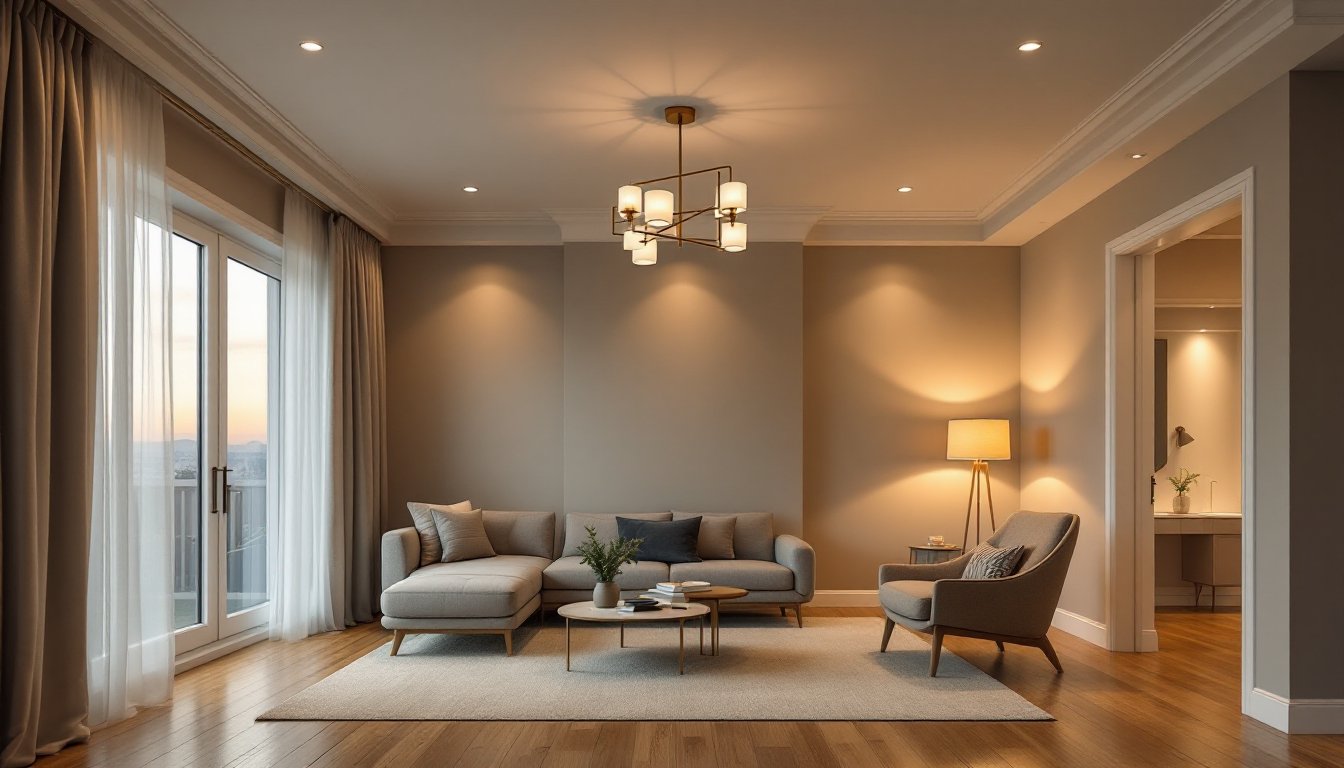

A poorly lit living room feels cramped and uninviting, no matter how nice the furniture. The right ceiling lighting transforms the space into somewhere people actually want to spend time. Whether someone prefers a classic chandelier, sleek recessed lights, or a combination of fixtures, the key is choosing options that match the room’s size, style, and how they plan to use it. This guide walks through the major ceiling lighting types, sizing considerations, and design strategies that work for any living room aesthetic.
Key Takeaways
- Choose ceiling lighting for living room based on ceiling height: chandeliers for 9+ feet, pendant lights for 8 feet or less, and recessed lights that work at any height.
- Size your ceiling fixture to be one-tenth of your room’s diagonal measurement to ensure it complements rather than dominates the space.
- Measure brightness in lumens (1,500–3,000 for living rooms), not watts, and select dimmable LED bulbs for flexibility and energy efficiency.
- Layer your lighting with ambient (ceiling fixture), task (floor lamp), and accent (wall sconces) to create functionality and mood without eye strain.
- Match fixture style to your room’s design aesthetic—rustic chandeliers for farmhouse, sleek recessed lights for modern, and brass fixtures for transitional spaces.
- Use warm color temperature (2700K) for living rooms to create a cozy atmosphere that invites relaxation.
Types Of Ceiling Lighting Fixtures
Chandeliers And Pendant Lights
Chandeliers work best in living rooms with 9-foot or taller ceilings, they need headroom to look proportional and not dominant. A traditional crystal or glass chandelier reads formal: a modern geometric or industrial design leans casual. Install them at least 7 feet above the floor to avoid head-bumping and ensure light spreads evenly across the room.
Pendant lights are smaller, hanging fixtures ideal for lower ceilings (8 feet or less) or smaller seating areas. They focus light downward, making them useful over a coffee table or reading nook. Multiple pendants clustered together create visual interest: single pendants work fine as accent lighting over an accent chair or bar counter. Both require ceiling-rated electrical boxes and proper wiring, if the existing fixture box isn’t rated for the weight, have an electrician reinforce it.
Recessed And Flush Mount Options
Recessed lights sit inside the ceiling and direct light downward, creating a clean, uncluttered look. They’re excellent for smaller rooms or modern aesthetics. Space them 4–6 feet apart for even coverage: too far apart and you get pools of light and dark zones. They work with any ceiling height and work well as primary lighting in combination with task or accent fixtures.
Flush-mount fixtures sit close to (or directly against) the ceiling, ideal for rooms with 8-foot or lower ceilings. They provide broad, even illumination and come in dozens of styles, from minimalist drum shades to ornate semi-flush designs. They’re straightforward to install if you’re replacing an existing fixture: cut power, disconnect the old one, and follow the new fixture’s instructions. If you’re adding a completely new circuit, call a licensed electrician.
How To Choose The Right Size And Brightness
Fixture size should complement the room, not fight it. A good rule: the fixture’s diameter (in inches) should equal or be slightly less than one-tenth of the room’s diagonal measurement. A 12 × 16 foot room has a diagonal of roughly 20 feet: a fixture 18–20 inches wide works proportionally.
Brightness is measured in lumens, not watts. A typical incandescent 60-watt bulb produces about 800 lumens: modern LED equivalents do the same at 9–10 watts. Living rooms need 1,500–3,000 lumens of general illumination, depending on wall color and natural light. Dark walls absorb more light, so aim for the higher end. Use dimmable bulbs and a dimmer switch to adjust mood and energy use throughout the day.
Check the fixture’s wattage limit and compare it to available bulb options. Some fixtures support only lower-watt bulbs due to heat dissipation: trying to force a higher-wattage bulb risks overheating and shortening bulb life. LED bulbs are cooler and more efficient, so they’re ideal for enclosed fixtures. Always verify compatibility before buying bulbs.
Layering Lighting For Functionality And Ambiance
Professional designers use three layers: ambient, task, and accent. Ambient lighting is general overall illumination (think ceiling fixture or recessed lights). Task lighting focuses on specific activities, reading, cooking snacks in the kitchen area, or working on hobbies. Accent lighting highlights artwork, architectural features, or creates mood.
In a living room, the ceiling fixture provides ambient light. Add a floor lamp next to a reading chair for task light, and consider wall sconces flanking a fireplace or shelving for accent. Dimmer switches on the ceiling fixture and floor lamp let someone adjust as needed. Without layering, a room feels either too bright or too dim depending on the task, leading to eye strain or frustration.
Recessed lights are particularly flexible for layering, install them for general light, then add a decorative pendant or chandelier as a focal point. Some install track lighting for accent, which pivots to highlight artwork or architectural details. The combination feels intentional and functional, not like an afterthought.
Design Considerations For Your Living Room
Match the fixture style to the room’s overall design. A rustic farmhouse living room suits wrought-iron chandeliers or wood-accented pendant lights. Minimalist, mid-century, or contemporary spaces call for sleek recessed lights, geometric metal fixtures, or sculptural flush mounts. Transitional spaces (which blend traditional and modern) work with both, a clean-lined fixture in brass or brushed nickel bridges the gap.
Color temperature matters. Warm light (2700K Kelvin) feels cozy and is ideal for living rooms where people relax. Cool light (4000K or higher) is more energizing and suits task-focused areas. Mixing both temperatures, warm ceiling fixture, cool under-cabinet lights, creates depth and functionality.
Building codes don’t strictly regulate living room lighting brightness or fixture type (unlike kitchens or bathrooms), but electrical installation must meet the National Electrical Code. All new wiring, boxes, and switches must be properly grounded and secured. Renting or buying in an area with strict permits? Confirm whether fixture installation requires a licensed electrician before starting.
Conclusion
Smart ceiling lighting begins with honest assessment: room size, ceiling height, existing decor, and how the space gets used. Mixing fixture types, a main chandelier or flush mount with recessed accents and task lamps, yields the most flexible, livable result. Measure twice, confirm electrical safety, and don’t skip the dimmer switch. The right lighting investment pays dividends in comfort and style.