
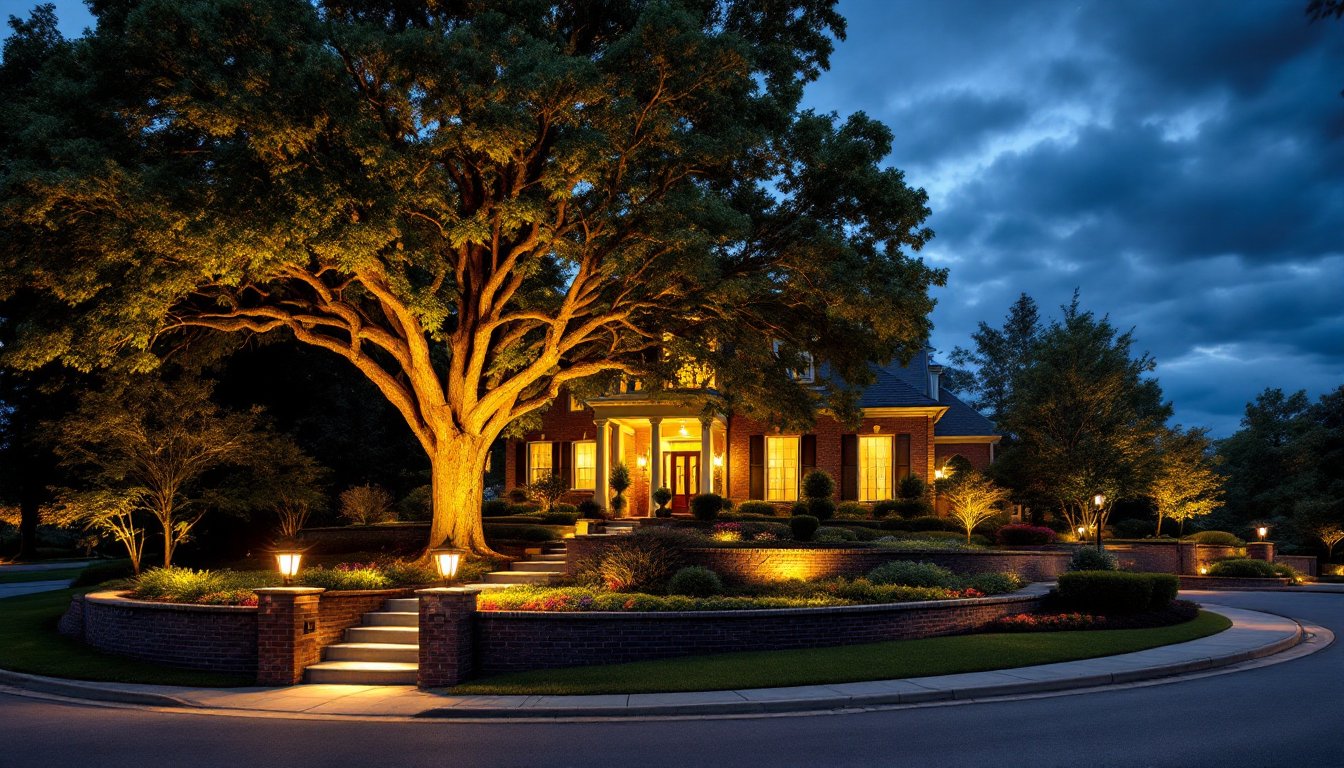

Franklin homeowners know the appeal of a well-lit landscape, it extends usable outdoor time, boosts curb appeal, and adds security around the property. Whether someone’s looking to highlight architectural details, illuminate a pathway, or create ambiance for entertaining, landscape lighting transforms how a yard functions after sunset. Franklin’s rolling terrain and mature trees offer natural canvas for strategic lighting design. The key is understanding what types of outdoor lighting work best, weighing professional installation against DIY options, and maintaining fixtures through Tennessee’s humid summers and occasional freeze-thaw cycles. This guide walks through practical landscape lighting decisions tailored to Franklin properties.
Key Takeaways
- Landscape lighting in Franklin TN enhances safety, property value, and outdoor entertaining by illuminating pathways, architectural details, and natural features like mature trees.
- Accent and uplighting showcases focal points using warm LED tones (2700K–3000K), while path lights spaced 4–8 feet apart provide functional navigation on slopes common to Franklin properties.
- Professional landscape lighting installation ($1,500–$4,000+) ensures proper conduit burial, transformer sizing, and NEC compliance, though simple solar path light projects work for DIY.
- Effective lighting design prioritizes entry accents, continuous pathways, and featured landscapes over over-lighting everything equally, avoiding glare and light spill into neighbors’ properties.
- Tennessee’s humidity and occasional ice storms require annual connection checks, stainless steel fixtures, and seasonal maintenance like removing tree-mounted lights before winter to prevent damage.
- Low-voltage systems need documented wire locations and periodic transformer checks, while solar fixtures require battery replacements every 2–3 years for reliable performance year-round.
Why Landscape Lighting Matters For Franklin Homeowners
Good landscape lighting does three jobs: safety, aesthetics, and property value. A well-lit driveway, walkway, and entry reduce trip hazards and deter intruders, two practical reasons alone worth the investment. Beyond security, thoughtful outdoor lighting emphasizes landscaping features homeowners have already invested in. That mature oak tree, the brick facade, the tiered flower beds, they’re invisible after dark without lighting. From a resale perspective, homes with professional landscape lighting often command higher asking prices and sell faster in Franklin’s competitive market.
Tennessee’s humidity and occasional ice storms mean outdoor fixtures take a beating. Choosing weather-resistant materials and correct installation prevents costly replacements. Also, landscape lighting extends entertaining season: a backyard with ambient lighting becomes usable through evening gatherings, which adds genuine functional value beyond the initial expense. Homeowners in Franklin specifically benefit from lighting that highlights the property’s natural elevation changes and tree canopy, features that many regional homes share but lighting helps distinguish.
Types Of Landscape Lighting For Your Franklin Property
Not all outdoor lighting serves the same purpose. Understanding the main categories helps homeowners choose fixtures and placement wisely.
Accent And Uplighting
Accent lighting (sometimes called uplighting) directs light upward or at an angle to highlight focal points. Think spotlights aimed at a specimen tree, the front of the house, or architectural columns. LED uplights have become standard, they’re energy-efficient, run cool, and come in warm (2700K–3000K) or cool (4000K–5000K) color temperatures. Warm tones feel welcoming on a home’s facade: cool whites work better for landscaping detail. Accent lights are typically installed at ground level and should be positioned 4–6 feet from the object being highlighted to avoid harsh shadows. In Franklin yards with mature trees, strategically placed uplights create drama without over-lighting.
Path And Step Lighting
Path and step lights are lower-wattage fixtures (typically 4–12 watts for LED) mounted along walkways, deck edges, and entry stairs. These aren’t primarily decorative, they’re functional safety fixtures that help people navigate without stumbling. Path lights usually sit 12–18 inches above ground and should be spaced 4–8 feet apart for even illumination. Solar path lights are budget-friendly but often fade or fail in cloudy stretches: low-voltage LED path lights (running off a 12-volt transformer) offer reliable brightness and longer lifespans. On Franklin properties, path lighting becomes especially important on sloped yards where missteps carry real consequences.
Professional Installation Vs. DIY Landscape Lighting
This decision hinges on complexity, tools, and budget. Solar path lights are pure DIY, stick them in the ground, no wiring or transformers needed. For anything beyond that, consider the tradeoffs.
Professional installers have experience designing layouts that balance aesthetics with function. They run conduit properly (buried 6–12 inches deep per local codes), size transformers correctly, and position fixtures to avoid light spill into neighbors’ yards or street, a real consideration in Franklin’s residential neighborhoods. A licensed electrician ensures the installation meets National Electrical Code (NEC) standards, which typically requires a GFCI-protected outdoor circuit for low-voltage systems. Most homeowners don’t have transformer experience: sizing it wrong wastes money or leaves fixtures dimly lit.
DIY installation works if the project is small, a handful of path lights or uplighting a single tree. But a whole-yard design with multiple zones and hardwired fixtures? That’s professional territory. DIY mistakes include: underburying wire (pets dig it up or lawn equipment hits it), choosing non-rated outdoor cabling (it fails faster), and overloading a transformer. If something goes wrong, troubleshooting a low-voltage system can be time-consuming. Budget $1,500–$4,000+ for professional landscape lighting installation on a typical Franklin lot, depending on scope: solar-only approaches run $200–$800 for a starter kit but sacrifice reliability and adjustability.
Choosing The Right Lighting Design For Your Home
Effective landscape lighting design starts with priorities. Is the goal security, curb appeal, or entertaining? A focused brief prevents over-lighting and wasted fixtures.
Accent the entry: Most designs start here. Uplighting on either side of the front door, subtle lighting on architectural details, and a softly lit number sign guide visitors and police. Keep entry lighting warm and inviting, avoid harsh blue-white tones.
Light the path: A continuous, softly lit path from driveway to entry feels intentional and guides foot traffic. This is low-wattage, functional work, not dramatic.
Feature the landscape: If a mature oak or ornamental shrub exists, a single accent light positioned 5–8 feet away at ground level showcases it without obvious fixtures (good fixture placement is invisible). In Franklin yards with natural slopes, lighting the elevation change itself, a tiered planting bed or retaining wall, adds dimension.
Avoid common mistakes: Lighting everything equally looks chaotic and wastes energy. Backlight trees (light from behind them toward the home) rather than front-lighting them, it’s more natural and dramatic. Don’t point lights directly at windows or guests’ faces. Glare is uncomfortable and defeats the ambiance goal. Color temperature matters: stick to 2700K–3000K for residential settings: that warm, golden-white tone feels comfortable and doesn’t disrupt neighbors’ nighttime quiet.
Dimmers and smart controls: Many low-voltage systems accept LED-compatible dimmers. Being able to dial back intensity for a quiet evening versus brightening for a gathering gives real flexibility. Some systems integrate with smart home platforms, allowing remote or scheduled control, useful for leaving lights on while away.
Maintenance And Seasonal Considerations In Franklin
Tennessee weather demands attention. Franklin’s humid summers create corrosion risk on brass and steel fixtures: marine-grade stainless steel or powder-coated aluminum fixtures last much longer. Check connections annually for oxidation, especially after rain-heavy springs.
Ice storms, though infrequent, can snap branches and damage fixtures mounted on trees. Consider removing tree-mounted lights before winter or choosing low-profile, damage-resistant styles. Buildup of pollen and dust on LED lenses reduces brightness, a rinse with a soft brush and soapy water twice yearly keeps fixtures working at full output.
Low-voltage systems need occasional checks: Transformers can fail (usually indicated by all fixtures dimming together), and buried conduit occasionally gets nicked during yard work. Keep documentation of where wire runs in case repair becomes necessary. If using solar fixtures, clear debris from panels and replace batteries every 2–3 years, the cheap lithium batteries in budget solar lights degrade faster.
For outdoor lighting Franklin TN properties appreciate: test after storms, trim tree limbs away from fixtures before they become hazards, and don’t ignore a single light that stops working. One failed fixture often indicates a wiring issue affecting others in that zone. Catch it early: it’s cheaper than replacing half a system later. Spring and fall (before cooling and heating seasons change) are good times for a quick fixture inspection and cleaning.