
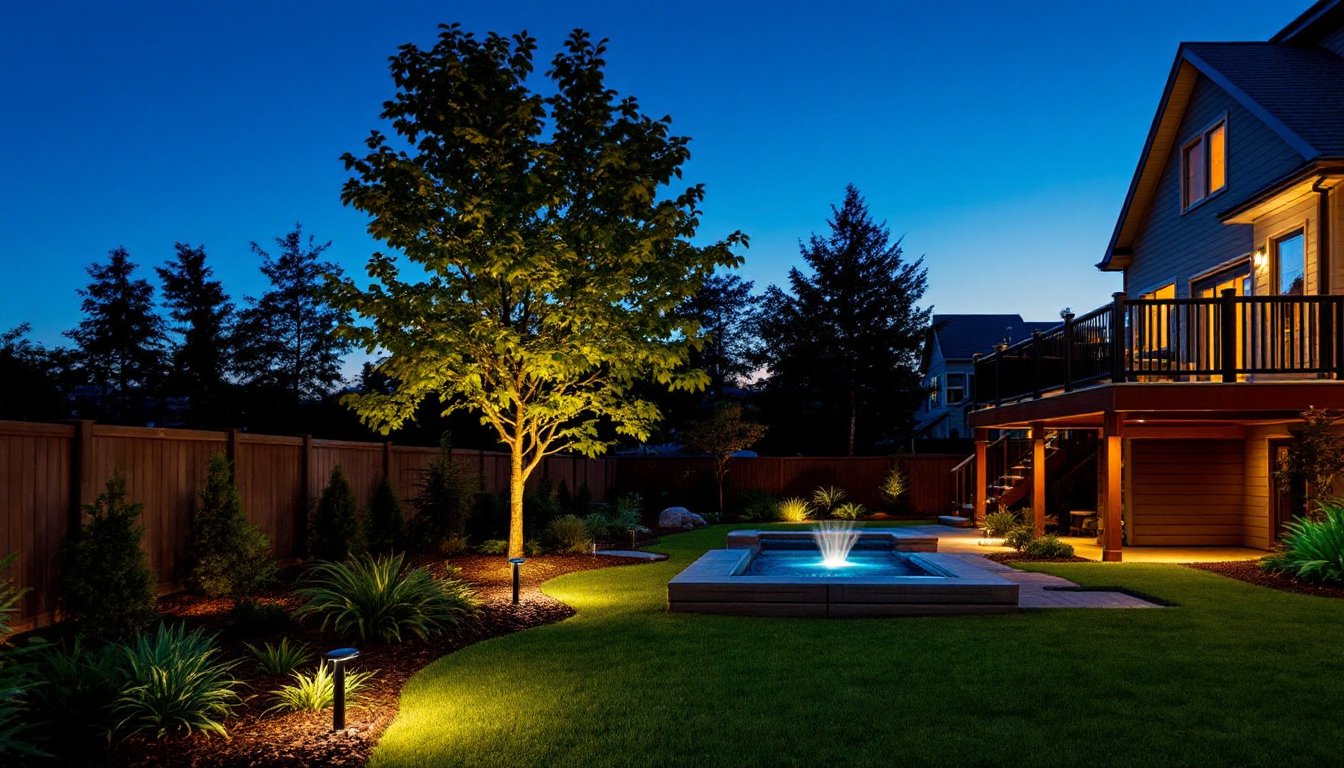

Upgrading to 120V LED landscape lighting transforms an outdoor space from barely visible at dusk to fully illuminated and inviting. Unlike low-voltage systems that require a transformer, 120V landscape lighting runs directly off standard household power, offering brighter output and simpler installation for most homeowners. LED technology has matured significantly since its early adoption, delivering reliable, energy-efficient lighting that lasts years longer than halogen or incandescent alternatives. Whether lighting a pathway, accentuating deck stairs, or spotlighting a tree, the right 120V LED system combines performance, durability, and cost-effectiveness. This guide walks through the options available, what features actually matter, and how to install and maintain a system that works year-round.
Key Takeaways
- 120V landscape lighting LED fixtures deliver 75–80% lower energy costs than incandescent or halogen alternatives while lasting 25,000 to 50,000 hours—roughly 8 to 10 years of nightly use.
- Choose fixtures with IP65 or higher ratings, anodized aluminum or stainless steel housings, and 3000K color temperature for optimal outdoor performance and durability.
- Proper installation requires outdoor-rated UF cable buried 12 inches minimum, GFCI protection, and compliance with local electrical codes to ensure safety and prevent premature failures.
- Spotlights, path lights, and deck lights serve different purposes; path lights (3–8 watts) provide ambient guidance while spotlights (10–20 watts) highlight specific features with 500–1,500 lumens of brightness.
- Annual maintenance of 120V LED landscape lighting systems is minimal—inspect housings for cracks, clean lenses, and verify connections remain dry and secure.
- A typical 15-amp circuit powers 12 to 20 LED landscape fixtures comfortably, making 120V systems simpler and more cost-effective than low-voltage alternatives requiring transformers.
Why 120V LED Landscape Lighting Is Worth The Investment
120V landscape lighting eliminates the step-down transformer that low-voltage systems require, meaning you’re working with standard electrical circuits already in your home. This translates to fewer components, less wiring complexity, and typically easier troubleshooting if something fails. The brighter output, often 500 to 1,500 lumens per fixture, covers larger areas than low-voltage lights, so you need fewer fixtures to achieve the same coverage.
Energy costs are another major factor. LED bulbs consume 75–80% less power than equivalent incandescent or halogen landscape lights, and they last 25,000 to 50,000 hours compared to 1,000 to 5,000 hours for traditional bulbs. A fixture running eight hours nightly will go roughly eight to ten years on a single LED bulb. Over that period, you’re looking at meaningful savings on both electricity and replacement bulbs.
Durability matters outdoors. Quality 120V LED fixtures rated IP65 or higher (indicating water and dust resistance) withstand rain, snow, and temperature swings without degradation. Aluminum and stainless steel housings resist corrosion far better than painted metal, particularly in coastal climates or areas with road salt. Upfront cost is higher, a decent 120V LED spotting fixture runs $40–$150 depending on features, but the longevity and efficiency justify the expense.
Types Of 120V LED Landscape Lights Available
120V LED landscape lighting comes in several categories, each suited to different purposes and installation contexts. Understanding the main types helps you choose fixtures that match your layout and lighting goals.
Spotlights And Path Lights
Spotlights are directional fixtures designed to highlight specific features, a tree, architectural detail, water feature, or plantings. They typically have adjustable aiming (often on a swivel mounting) and produce a focused beam ranging from 20 to 60 degrees depending on the lens. A flood light spreads illumination wider, while a spot light concentrates it into a narrower cone. Spotlights are usually mounted on stakes or brackets and draw 10–20 watts per fixture.
Path lights are low-profile, upright fixtures, typically 8 to 18 inches tall, placed along walkways, garden borders, or driveway edges. They provide subtle ambient light rather than task illumination and consume 3–8 watts each. Path lights serve a dual purpose: they light the ground safely and act as visual guides. Unlike solar path lights (which dim in overcast weather), 120V LED path lights deliver consistent brightness regardless of weather or season. Look for lights with diffuser covers that soften glare and distribute light evenly downward.
Deck And Step Lights
Deck and step lights are recessed or surface-mounted fixtures installed directly into stair treads, deck railings, or fascia boards. They’re typically square or rectangular, 3 to 4 inches wide, and consume 2–5 watts per fixture. Recessed deck lights sit flush with the surface: surface-mounted versions protrude slightly. Both improve safety by marking steps and elevation changes while adding ambient accent lighting.
These fixtures must be rated for damp or wet locations (IP67 minimum for recessed versions). Wiring runs beneath the deck or through interior wall cavities, routing requires planning before installation. Deck lights work best in groups of 6 to 12 along a full length of stairs or railing, spaced 12 to 24 inches apart depending on desired brightness and aesthetic preference.
Key Features To Look For When Selecting Your System
Not all 120V LED landscape fixtures perform equally. A few core specifications separate reliable systems from those that fail prematurely or disappoint with performance.
Color Temperature matters more than many homeowners expect. Measured in Kelvin (K), warmer light (2700K–3000K) resembles incandescent and feels welcoming: cooler light (4000K–5000K) mimics daylight and appears more clinical. For residential landscapes, 3000K is the sweet spot, it’s warm enough to feel inviting yet bright enough to serve practical purposes. Commercial or modern architectural styles may benefit from 4000K.
Lumens and Wattage tell you actual brightness. Avoid relying solely on wattage equivalency claims. A quality 12-watt LED spotlight delivers light comparable to a 50-watt halogen fixture. Check the packaging or spec sheet for lumens output. Path lights typically range 100–300 lumens: spotlights, 500–1,500 lumens. More isn’t always better, overlit landscapes feel harsh. Test brightness with a few fixtures before committing to a large installation.
IP Rating indicates water and dust resistance. IP65 means dust-tight and protected against water jets from any angle: IP67 adds temporary immersion protection. For outdoor fixtures, IP65 is acceptable: IP67 is preferable for fixtures in splash zones or near irrigation.
Material and Finish determine longevity. Anodized aluminum resists corrosion and weathering better than painted finishes. Stainless steel (particularly 316-grade) excels in coastal environments. Avoid bare steel or low-grade aluminum: they rust or oxidize quickly, especially in humid regions. Check that lenses are borosilicate glass or impact-resistant acrylic, polymers degrade under UV exposure and become brittle over time.
Dimming Capability adds flexibility. Some 120V LED systems pair with standard wall dimmers (if the fixture is rated dimmable): others require a dedicated outdoor dimming system. If you want to adjust brightness for different moods or energy conservation, verify dimmer compatibility before purchase.
Warranty is a practical indicator of manufacturer confidence. Reputable fixtures come with 3–5 year warranties covering premature LED failure or housing defects. Anything less suggests corner-cutting.
Installation And Maintenance Tips For Long-Lasting Performance
Proper installation and routine care extend the life of your 120V LED landscape system and prevent common failures.
Planning and Layout come first. Sketch your landscape and mark fixture locations on paper. Identify existing outlets or plan new circuits for large installations. Standard household circuits handle multiple landscape lights: a typical 15-amp circuit powers roughly 12 to 20 LED fixtures (depending on wattage) comfortably. If you’re adding dedicated circuits, that’s structural electrical work, hire a licensed electrician. Never overload an existing outlet or circuit.
Wiring must be outdoor-rated (UF or UF-B cable), not standard indoor Romex. Bury underground runs at least 12 inches deep (18 inches preferred in areas with frequent digging). Above-ground wiring should be UV-resistant conduit or run along fascia and protected from damage. All outdoor electrical work should follow local National Electrical Code (NEC) standards: verify requirements with your building department or a licensed electrician.
Grounding and GFCI Protection are non-negotiable. Outdoor circuits must be served by GFCI (ground-fault circuit interrupter) outlets or breakers. This protection disconnects power instantly if a ground fault is detected, preventing electric shock. Install your landscape lighting on a dedicated GFCI circuit if possible, or plug into a GFCI outlet.
Installation Steps:
- Turn off power at the breaker before working on any circuit.
- Run wiring from the breaker or outlet along protected pathways (trenches, conduit, or under fascia).
- Install junction boxes where wiring transitions from underground to surface or where branches occur.
- Mount spotlights on stakes or brackets: recess path lights into prepared soil or landscape fabric.
- Secure all above-ground wiring with clips every 12–18 inches.
- Weatherproof all connections with silicone caulk or waterproof electrical tape.
- Test each fixture before backfilling trenches or completing the installation.
Maintenance is minimal. Once a year, inspect housings for cracks or water ingress, clean lenses with a soft cloth and mild soap, and verify that soil or mulch hasn’t buried fixtures (this traps heat and shortens LED life). In winter, clear snow and debris from tops of upright fixtures. Check wire connections at junctions or exposed runs to ensure they remain dry and secure. Most 120V LED fixtures require virtually no other upkeep, LEDs don’t burn out, and electronic drivers are sealed from moisture if properly installed.
Conclusion
Choosing 120V LED landscape lighting delivers reliable, energy-efficient outdoor illumination that enhances safety and curb appeal. By selecting fixtures with solid IP ratings, appropriate color temperature, and proven materials, you’re investing in a system that performs consistently for a decade or more. Smart installation, routing wiring correctly, respecting electrical codes, and grounding properly, ensures safety and trouble-free operation. With a modest amount of planning and attention to detail, a 120V LED landscape system elevates your outdoor space while keeping maintenance and energy costs low.