
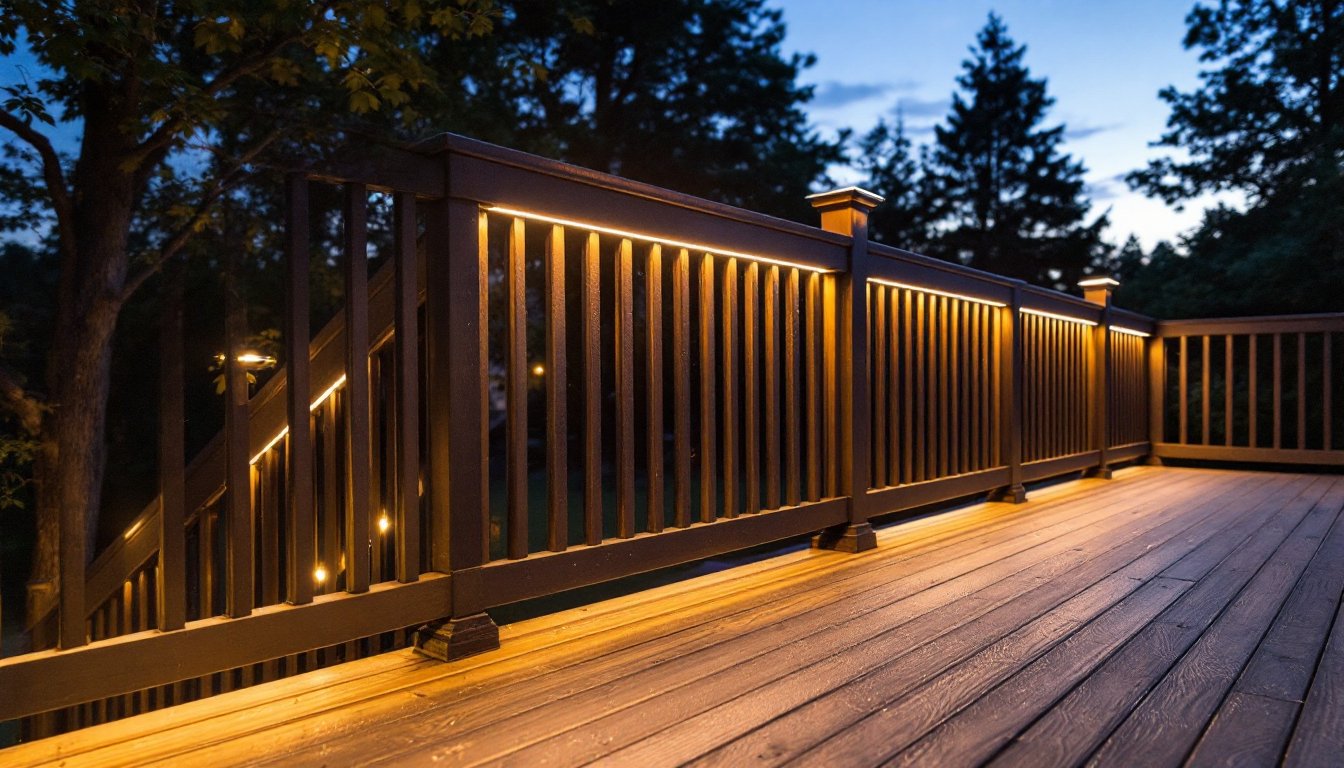

Deck rail lighting transforms an outdoor space from a daytime hangout into an inviting evening retreat. Whether a homeowner wants to light a gathering spot for entertaining or simply add an extra layer of safety to deck stairs and railings, the right fixtures make all the difference. Modern deck rail lighting has evolved beyond basic spotlights, today’s options blend function, aesthetics, and energy efficiency. From solar-powered post caps to low-voltage LED inline fixtures, there’s a solution for nearly every deck size, style, and budget. This guide walks through the essentials of choosing, installing, and maintaining deck rail lighting that works as hard as it looks good.
Key Takeaways
- Deck rail lighting combines safety and ambiance by illuminating stairs and railings while extending your outdoor living season into the evening.
- LED fixtures dramatically reduce energy costs—a 10-watt LED post cap delivers the brightness of a 40-watt halogen while consuming a fraction of the power.
- Solar-powered post caps require zero wiring and are ideal for decks far from electrical outlets, though low-voltage wired systems offer more consistent brightness regardless of weather.
- Inline rail lights mounted between pickets provide subtle, distributed lighting across the full railing length and work well on both new and existing decks.
- Avoid over-lighting your deck; 100–200 lumens per fixture creates a comfortable, inviting atmosphere, and starting small allows you to add more lights if needed.
- Proper placement strategy—such as spacing post caps 4–6 feet apart and supplementing with step lights on stairs—ensures both safety and visual appeal without harsh shadows.
Why Deck Rail Lighting Matters for Your Outdoor Space
Deck rail lighting serves both practical and aesthetic purposes. Functionally, it prevents tripping hazards on stairs and railings by illuminating edges and transitions, a safety feature that’s especially valuable in transitional seasons when dusk arrives early. Many insurance companies and building codes encourage stairway lighting as a safety best practice, though specific requirements vary by jurisdiction.
Beyond safety, deck rail lighting extends your outdoor living season into the evening. Warm LED light creates an inviting ambiance for everything from casual dinners to gatherings with friends. Unlike overhead porch lights that can feel harsh and clinical, rail-mounted fixtures provide softer, more directional lighting that highlights the deck’s lines and landscaping.
Energy efficiency is another win. LED fixtures consume a fraction of the power required by older incandescent bulbs, a 10-watt LED post cap light delivers comparable brightness to a 40-watt halogen fixture while cutting electricity costs significantly. Solar-powered options eliminate wiring altogether, making them a no-brainer for decks far from an electrical outlet.
Types of Deck Rail Lighting Solutions
LED Post Cap Lights
Post cap lights sit atop deck railing posts, casting light downward and across the deck surface. They’re the most visible and architecturally prominent choice, so style matters as much as function. Solar-powered post caps are popular because they require zero wiring, just drop them on the post, and they charge during the day and illuminate automatically at dusk. Most solar options produce 20–40 lumens of light per fixture, which is adequate for ambient lighting but not flood-level brightness.
Low-voltage LED post caps (typically 12V or 24V systems) offer more consistent brightness regardless of weather or season, since they draw power from a dedicated power supply rather than relying on sun exposure. Wired options do require running cables from a power source, but they’re reliable and operate through cloudy days without dimming.
Post cap materials range from powder-coated aluminum and stainless steel to plastic resin. Aluminum holds up best in salt-air and coastal environments. For a more decorative look, homeowners can choose caps with glass or frosted inserts that diffuse light more evenly.
Railing Balusters and Inline Lights
Inline rail lights mount directly into the rail itself, either integrated into composite or metal balusters, or inserted as separate modules between pickets. These fixtures provide more subtle, distributed lighting across the full length of the railing, which many prefer for a refined look.
Composite balusters with built-in LED cores are increasingly common, especially in high-end composite decking systems. The light diffuses through the baluster material, creating a soft glow without visible hot spots. Installation is straightforward during deck construction, but retrofitting them into an existing deck is possible only if the balusters can be easily removed.
Separate inline modules, small rectangular or cylindrical fixtures designed to slip between pickets or mount to the rail itself, work on both new and existing decks. They’re typically solar or low-voltage LED, and spacing them 24–36 inches apart provides adequate coverage for safety and ambiance. Because they’re lower-profile than post caps, they blend better with modern minimalist designs.
Choosing the Right Lighting Style and Placement
Start by considering your deck’s existing aesthetic. A rustic timber deck suits warm amber or warm-white LEDs (2700K color temperature), which evoke the glow of candlelight. Contemporary composite decks often pair better with cooler white LEDs (4000K) for a sharper, more modern feel. Avoid blue or RGB color-changing lights unless your design specifically calls for novelty, they rarely age well and can feel gimmicky.
Placement strategy determines how effectively lights perform. Stair treads need direct illumination on the front edge, a post cap alone won’t light the step itself. Consider supplementing with inline rail lights or small step lights mounted to the stringer (the board supporting the stairs). At the railing top, post caps spaced 4–6 feet apart provide adequate ambient light: closer spacing looks better but increases cost and isn’t always necessary.
Brightest light isn’t always best. Over-lit decks look harsh and ruin the relaxing atmosphere lighting should create. Most deck rail applications need just 100–200 lumens per fixture for comfortable evening use. Solar post caps are inherently modest in output, which often works perfectly: if you need more brightness, switch to low-voltage wired systems rather than cramming in extra lights.
Shadow patterns matter, too. Lights positioned low on the railing cast long shadows across the deck surface, useful for defining edges but distracting if too dramatic. A mix of post cap and lower inline lights balances visual interest without overwhelming the eye.
Installation Tips and Best Practices
For solar post cap lights: Clean the post top thoroughly and ensure it’s completely dry before mounting. Most solar fixtures use a simple screw-down mechanism, hand-tight is usually sufficient, but check the manufacturer’s spec to avoid over-tightening and cracking the fixture. Verify the solar panel faces true south (or the sunniest exposure in your region) for optimal charging. Clean panels monthly or after dusty weather so the battery charges fully.
For low-voltage wired systems: Run power supply cable through the deck structure or under a hidden rail seam, not along the surface where it’ll catch a foot. Use outdoor-rated 12/2 or 10/2 low-voltage wire depending on total fixture amperage and run length, longer runs may require heavier gauge to prevent voltage drop. Bury or conceal the cable where possible. A 12V or 24V transformer converts household current and should be installed inside a weatherproof box, typically mounted on the house or under a deck beam.
Consider a timer or motion sensor if you want lights to operate only during certain hours. This extends battery life on solar systems and reduces energy draw on wired setups. Install lights when the deck is complete and any finishing stain or paint is fully cured: avoid mounting fixtures over wet finishes.
Safety checklist: Wear work gloves and safety goggles when cutting or drilling rail components. If tapping into household electrical power for a low-voltage transformer, consult a licensed electrician, the connection should be on a dedicated 15-amp circuit with proper breaker protection. Many jurisdictions require permits for any work that adds electrical loads to your home, so check local codes before starting. Test all fixtures before final installation to catch dead bulbs or loose connections early.
Conclusion
Deck rail lighting doesn’t have to be complicated. Whether you go solar and simple or run low-voltage lines for consistent brightness, the key is choosing fixtures that match your deck’s style and your lighting needs. Start with a handful of post caps or inline lights, observe how they perform over a week or two, then add more if needed. Most failures come from over-lighting rather than under-lighting, so resist the urge to pack every post with a fixture. Well-chosen deck rail lighting pays dividends every evening, safer stairs, a more inviting outdoor room, and the confidence to host gatherings after dark.