
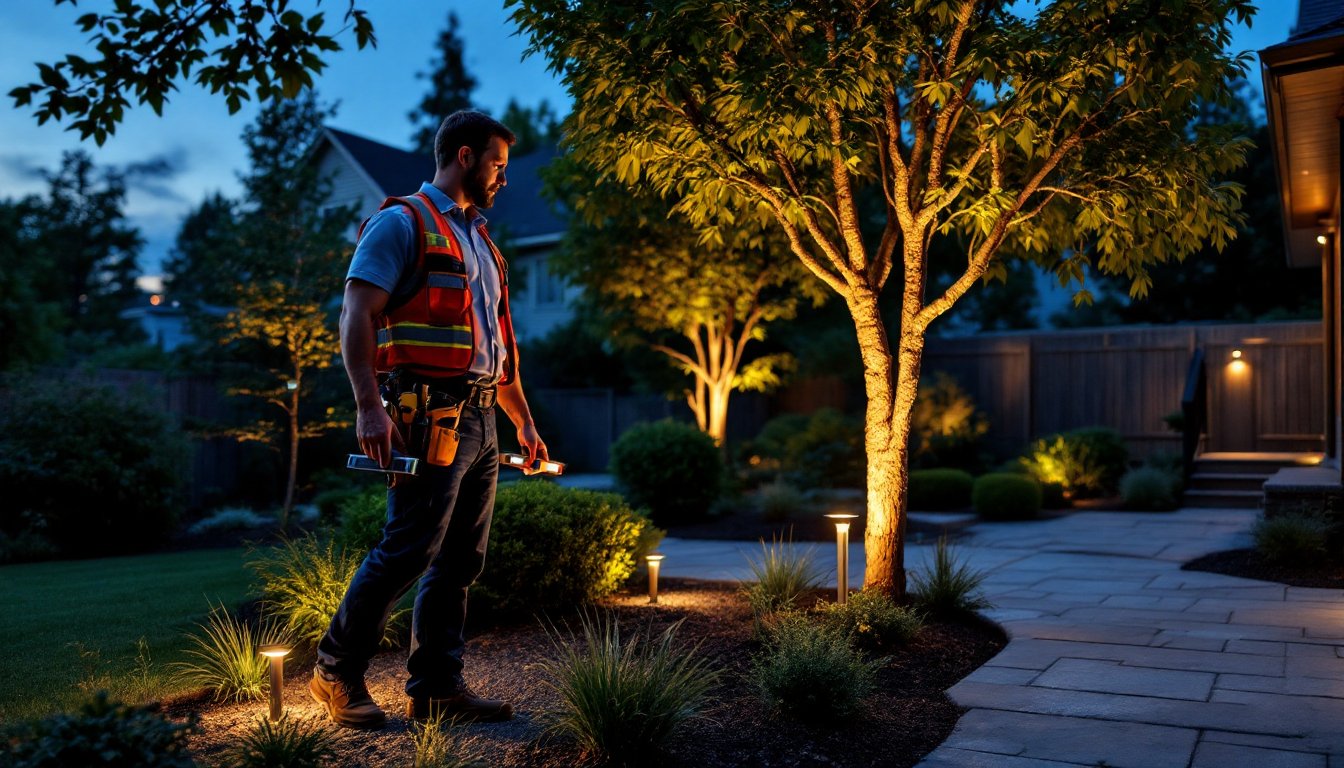

Landscape lighting transforms a backyard from an unusable patch after dark into an inviting outdoor living space. But unlike a simple deck stain or fence repair, professional lighting requires planning: electrical code compliance, proper wiring, fixture placement for both function and aesthetics, and equipment that withstands weather. A qualified landscape lighting contractor handles the technical and design work so the homeowner doesn’t have to. This guide walks through what these professionals do, why hiring one matters, and how to find the right fit for the job.
Key Takeaways
- A landscape lighting contractor handles electrical design, code compliance, fixture placement, and installation—ensuring safety and longevity that DIY kits cannot match.
- Professional landscape lighting design uses layering (uplighting, path lighting, accent, and ambient) with proper color temperature and brightness to create inviting outdoor spaces without glare or light trespass.
- Licensed landscape lighting contractors carry insurance and pull required permits, protecting homeowners from fire hazards, shock risks, and legal complications associated with improper electrical work.
- When choosing a landscape lighting contractor, verify licensing, insurance, design portfolio, and references; ask about system type (low-voltage LED, hardwired, or solar), warranty duration, and maintenance support before signing.
- Commercial-grade LED fixtures installed by professionals last 10+ years and maintain brightness, while budget alternatives fail within a season—making professional installation a cost-effective long-term investment.
What Does a Landscape Lighting Contractor Do?
A landscape lighting contractor designs and installs outdoor lighting systems for yards, pathways, decks, and gardens. The scope goes well beyond screwing in a bulb, it includes site assessment, electrical design, equipment selection, trenching for buried wiring, fixture installation, and final testing.
They assess factors like property layout, existing trees and structures, desired ambiance, and foot traffic patterns to recommend fixture types and placement. A contractor specifies whether to use low-voltage LED systems (most common for residential work, safer and energy-efficient), hardwired 120V circuits (more expensive, for large installations), or solar fixtures (limited brightness, ideal for accents). They ensure all wiring meets local electrical codes, typically the National Electrical Code (NEC), though specific requirements vary by jurisdiction.
Contractors also calculate power draw, determine if the existing electrical service can handle added load, and decide whether a dedicated circuit or GFCI protection is needed. They manage the physical work: digging trenches for underground cable, mounting fixtures to structures, connecting transformers, and programming smart controls if the homeowner wants app-based dimming or scheduling. Most installations take a few days to a week, depending on system complexity and property size.
Benefits of Professional Landscape Lighting Installation
DIY landscape lighting kits exist and tempt many homeowners, but professional installation delivers results worth the cost.
Safety and compliance top the list. Improper electrical work creates fire and shock hazards. A licensed contractor knows local codes, pulls required permits, obtains inspections, and carries liability insurance. If something goes wrong, a trench hits a gas line, a fixture fails early, the contractor’s insurance and warranty protect the homeowner. Permits aren’t always glamorous, but they’re legally required for hardwired outdoor circuits in most jurisdictions and protect resale value.
Design expertise separates a cohesive lighting plan from a scattered collection of fixtures. A contractor thinks about layering light, uplighting for trees, path lighting for safe navigation, accent lighting for water features, and ambient lighting for entertaining. They understand color temperature (warm 2700K for relaxation, cooler 4000K for task areas), brightness (measured in lumens), and fixture placement to avoid glare and light trespass onto neighbors’ properties.
Equipment quality and longevity matter. Contractors source commercial-grade LED fixtures rated for outdoor use, with durable housings and proper weatherproofing. A cheap solar stake light from a big-box store lasts a season: a $200 commercial fixture lasts 10+ years and maintains brightness. Contractors also handle maintenance and repairs under warranty, not the homeowner troubleshooting a dead transformer at dusk.
Key Factors to Consider When Choosing a Contractor
Not all landscape lighting contractors are equal. Vetting takes time but saves headaches and money later.
Credentials and Experience
Look for contractors who are licensed electricians or work under one. Landscape lighting involves electrical work, and licensing proves training and accountability. Ask if they carry liability and workers’ compensation insurance, non-negotiable for anyone digging in your yard or working with electricity.
Experience matters. A contractor who’s done 50+ residential lighting projects has seen property layouts, soil conditions, and customer preferences you haven’t. Ask how long they’ve been in business and whether they specialize in landscape lighting or offer it as an afterthought alongside lawn care. Specialization often means better design and equipment knowledge.
Also ask about continuing education. LED technology and smart controls evolve: a contractor who doesn’t stay current may recommend outdated fixtures or miss efficiency gains.
Design Portfolio and References
Request a portfolio of past projects, photos of installed systems in daylight and evening. Look for consistency: do the systems look intentional, or scattered? Do they enhance the property without overwhelming it? Quality contractors eagerly share work.
Contact references, at least two or three recent clients. Ask whether the contractor showed up on time, communicated clearly about costs and timeline, cleaned up afterward, and stands behind the warranty. Ask if the homeowner would hire them again and whether the system still works well a year later. References reveal character and reliability that an estimate won’t.
Questions to Ask Before Hiring
Before signing a contract, ask these questions to avoid surprises:
On scope and design:
- How will you assess my property and lighting needs? (They should ask about your lifestyle, entertaining habits, and aesthetic preferences.)
- What type of system do you recommend, and why? (Low-voltage, hardwired, hybrid? They should justify the choice.)
- How many fixtures and what brightness levels? (Lumens, not just “bright.”)
- Will you provide a written design plan before installation? (Yes, always.)
On permits and codes:
- Will you pull required permits and obtain inspections? (They should handle this, not you.)
- What electrical codes apply to my area? (Shows competence.)
- Do you carry all needed insurance and licenses? (Ask to see proof.)
On timeline and cost:
- What’s the project timeline? (From design approval to completion.)
- Is the estimate itemized by fixture, labor, and materials? (Transparency matters.)
- Do you offer payment plans or financing? (Some do: some require payment upon completion.)
- What happens if costs exceed the estimate? (Get this in writing.)
On warranty and maintenance:
- How long is the warranty on fixtures, labor, and wiring? (Typically 2–5 years for labor, longer for commercial fixtures.)
- Do you offer maintenance plans for seasonal adjustments or repairs? (Useful for peace of mind.)
- Who do I contact if something fails after installation?
A professional contractor answers thoroughly and puts answers in writing. Vague responses are a red flag.
Conclusion
Hiring a landscape lighting contractor isn’t a luxury, it’s the practical choice for a safe, beautiful, code-compliant outdoor lighting system. The upfront cost saves money long-term by avoiding amateur electrical mistakes, choosing durable equipment, and getting a design that actually works. Check credentials, review portfolios, contact references, and ask hard questions. A good contractor walks you through the entire process, stands behind the work, and leaves you with a lit yard you’ll enjoy for years.