
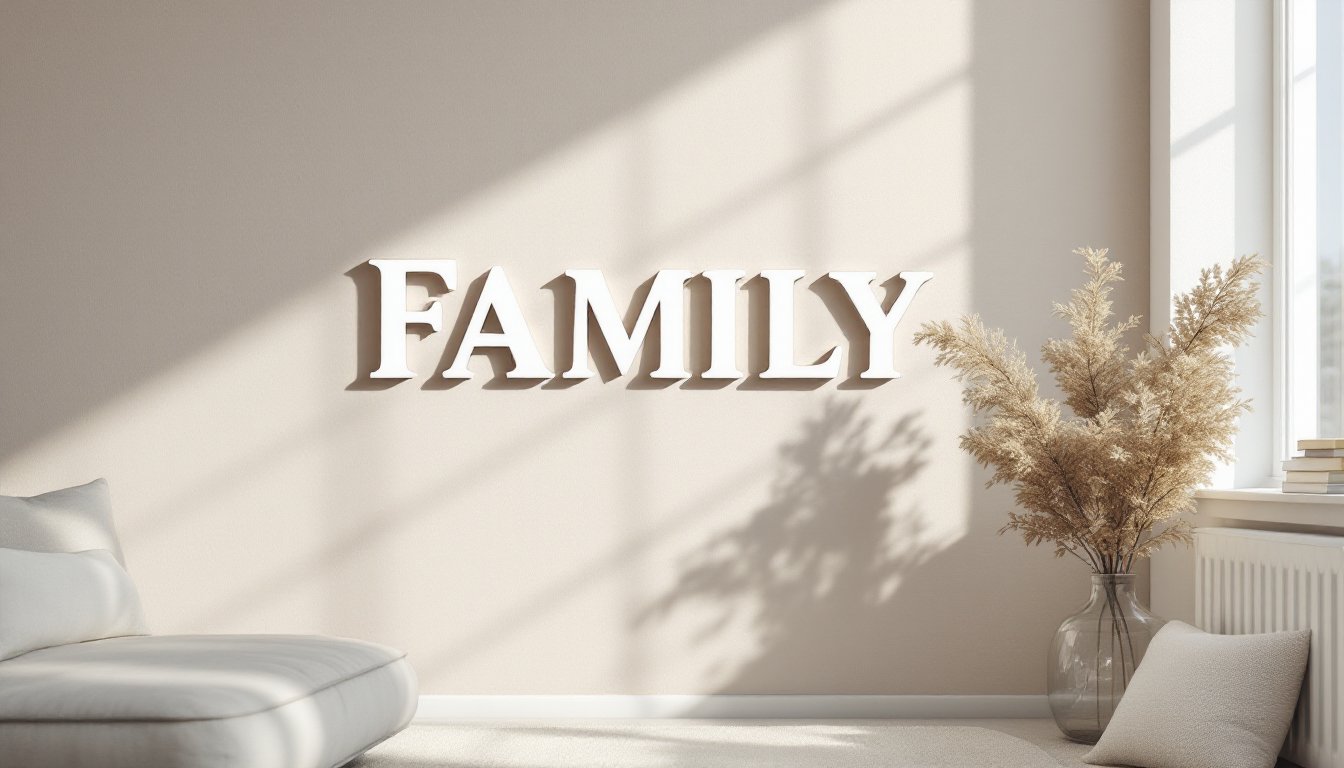

Blank walls don’t have to stay blank. Home letters wall decor has become one of the fastest-growing DIY trends because it delivers instant personalization without major renovation work. Whether a homeowner wants to display a family name, a motivational phrase, or an initial monogram, letter wall decor provides a customizable way to add character to any room. The beauty of this approach is its flexibility, letters can work in living rooms, nurseries, bedrooms, or home offices, and they’re adaptable to nearly any design aesthetic. What makes this trend stick around is that it’s affordable, installable without professional help, and genuinely impactful. Let’s walk through choosing, styling, and hanging letter wall decor that actually looks intentional rather than thrown together.
Key Takeaways
- Home letters wall decor is an affordable, DIY-friendly way to personalize any room with family names, initials, or motivational phrases without requiring professional help.
- Proper material selection—wood for versatility, metal for durability, or foam for renter-friendly installations—directly impacts the longevity and look of your letter wall decor.
- Size matters: letters should be roughly one-eighth of your wall width, and wider spacing creates a modern feel while tighter spacing works for cozy, vintage aesthetics.
- Clean your wall thoroughly, mark placement with a level, and use appropriate anchors (studs, toggle bolts, or masonry anchors) based on your wall type to ensure secure installation.
- Choosing colors that either match your wall for a subtle effect or contrast sharply for visual pop keeps your letter wall decor intentional and coordinated with your room’s design.
- Step back frequently during installation and allow proper cure time (typically 24 hours) to achieve a professional-looking display that tells your home’s story.
What Are Home Letters and Why They’re Popular Now
Home letters are three-dimensional or flat wall-mounted characters, typically made from wood, metal, plastic, or composite materials, arranged to spell words, initials, or phrases. They’re distinct from wall decals or paint stencils because they add texture, shadow, and dimensional depth to a wall.
Why the uptick? Several factors converge. First, social media (especially Instagram and Pinterest) has normalized personalized home styling beyond high-end interior design budgets. Second, working from home means people are investing more thoughtfully in spaces where they spend significant time. Third, the materials have improved, modern letter options are sturdy, diverse in finish, and easier to install than ever. A homeowner can order pre-made letters online, pick them up at a local craft store, or even 3D-print custom options.
Beyond aesthetics, there’s a psychological element: personalization makes a space feel intentional and owned. When a visitor walks into a room and sees a family name or a meaningful phrase on the wall, it signals that someone thought about this space. That matters more than people often admit.
Popular Styles and Design Trends for Letter Wall Decor
Modern and Minimalist Approaches
Modern letter arrangements prioritize clean lines, consistent typography, and restrained color palettes. Think white wooden letters on a soft gray wall, or sleek black metal characters against warm beige. Spacing matters here, letters are typically centered, evenly spaced, and mounted at eye level (roughly 60–66 inches from the floor to the center of the text).
Minimalist designs often use lowercase letters, sans-serif fonts, or geometric shapes. A single initial in a large scale can anchor an entire wall. Homeowners pursuing this look avoid clutter around the letters: the wall itself should feel calm and intentional. Matte finishes (wood stain, powder-coated metal) work better than glossy or reflective surfaces in these settings.
Vintage and Rustic Aesthetics
Vintage letter decor leans into character and patina. Distressed wood letters, cast iron metal characters, or reclaimed timber-look prints evoke cabin, farmhouse, or eclectic retro vibes. These styles tolerate (and often benefit from) imperfection, chipped edges, uneven finishes, and contrasting textures are features, not flaws.
Rustic arrangements might layer letters with other wall decor: a wreath, vintage signage, or woven wall hangings. Colors tend warmer and earthier, creams, rust, forest green, deep brown. Spacing can be tighter or asymmetrical without feeling chaotic because the busy texture reads as intentional. Many DIYers source vintage letters at antique markets or thrift stores and refinish them, which adds genuine history alongside affordability.
How to Choose the Right Letters for Your Home
Start by deciding material. Wood is affordable, versatile, and easy to paint or stain. Metal (aluminum, steel, or cast iron) looks polished and durable but costs more. Resin and foam are lightweight options for renter-friendly installations. Plastic works for temporary displays or children’s rooms but can look cheap if low-quality.
Next, consider size and spacing. A common mistake is choosing letters too small for the wall. As a rule, the height of letters should be roughly one-eighth of the wall width. For a 10-foot wall, aim for letters 12 inches tall or taller. Wider spacing feels modern and calm: tighter spacing feels cozy or intentional in vintage schemes.
Font and style must match your room’s overall design. Serif fonts (with small lines at letter ends) feel formal or traditional. Sans-serif fonts feel contemporary. Script fonts add elegance but can be harder to read at a distance. If you’re uncertain, measure or mock up the layout using cardboard cutouts before buying.
Color coordination is critical. Letters should either match your wall color (for a subtle, embossed effect) or contrast sharply (for visual pop). Avoid letters that fight with existing artwork or furniture. White on warm gray, black on white, and natural wood on cream are reliable combinations that rarely disappoint.
Finally, think about permanence. Are you renting? Adhesive-backed foam letters or removable wall hooks work better than drilling into drywall. Are you staying put? Permanent installation with anchors or studs is worthwhile.
Installation and Arrangement Tips
Preparation is everything. Clean the wall thoroughly with a dry cloth or light damp cloth, dust, grease, and loose paint prevent adhesive from sticking. Let the wall dry completely if wet-cleaned. Use a level and a pencil to lightly mark where letters will hang. A laser level works faster than a standard spirit level for longer layouts.
For adhesive mounting (using construction adhesive or heavy-duty wall tape), apply the adhesive to the back of each letter according to product instructions, usually a bead around the perimeter and one down the center. Press firmly for 30 seconds. Allow cure time (typically 24 hours) before moving anything.
For screw or nail mounting, locate wall studs using a stud finder if the wall is drywall. Studs (typically 16 inches on center) provide the strongest anchoring. For drywall without studs, use toggle bolts or heavy-duty drywall anchors, never rely on plastic wall plugs alone for anything heavier than a few pounds. For stone or concrete, use masonry anchors.
When arranging multiple letters, use a template. Measure the combined width of all letters plus spacing, then find the midpoint of your wall. Mark that point lightly with pencil, then work outward. This centers the phrase and avoids off-kilter displays.
Let gravity work for you, step back frequently as you install. What looks correct up close often looks off-center from across the room. A second pair of hands makes centering and spacing much easier.
After installation, wipe away pencil marks with a soft eraser and inspect each letter for level. For high-traffic areas or homes with children and pets, double-check adhesive after one week.
Conclusion
Home letters wall decor transforms ordinary walls into personal statements with minimal tools and expense. The key is choosing materials and styles that match your room, preparing the wall properly, and taking time with layout and installation. Whether a homeowner gravitates toward clean modern minimalism or textured vintage charm, personalized letter displays prove that small additions have outsized impact. Done well, this is one of the most rewarding DIY projects because the payoff, a wall that tells your story, shows immediately.